“Replaceable You”: A GizmoMD Book Interview with Author Mary Roach
“We can rebuild him. We have the technology. We can make him better than he was. Better . . . stronger . . . faster.” These iconic words were part of the opening lines of the hit TV series, The Six-Million Dollar Man,…
The Latest
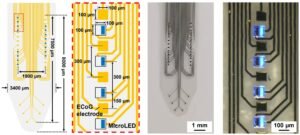
Flexible Neural Sheet Reaches Deep Brain Regions Without Penetrating Tissue
Studying deep brain activity normally requires inserting rigid probes directly into neural tissue, a process that can cause inflammation, scarring, and long term disruption of the very circuits researchers hope to understand. Neuroscientists have long sought a way to record from deeper cortical layers without physically penetrating the brain. A team of engineers and neuroscientists from Meijo University in Japan has now developed a flexible neural sheet that can slide into natural spaces between brain structures and record electrical activity from regions that were previously accessible only through invasive penetration. Their approach offers a gentler alternative for mapping neural circuits…
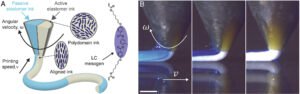
3D Printed Artificial Muscles Bend and Twist on Demand Using Nature Inspired Design
Soft robots and biomedical devices often struggle to achieve the complex, coordinated motions that biological muscles perform with ease. Traditional synthetic actuators can contract or expand, but they rarely bend, twist, and coil in controlled ways. Researchers at Harvard University’s John A. Paulson School of Engineering and Applied Sciences have developed a new 3D printing strategy that addresses this limitation by creating programmable filaments that behave like artificial muscles. Their approach allows slender, hair like structures to bend, twist, expand, or contract when heated or cooled, giving engineers a new way to design motion into soft materials. The research team…
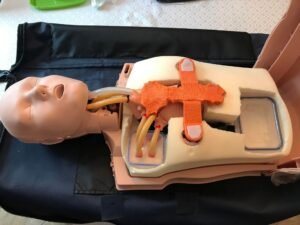
Space Ready CPR Simulator Reveals How Reduced Gravity Alters Blood Flow During Resuscitation
Medical emergencies in space pose a serious challenge because the human body behaves differently in reduced gravity, and lifesaving procedures developed on Earth may not work the same way in orbit. Cardiopulmonary resuscitation is one of the most critical interventions during a cardiac arrest, yet very little is known about how chest compressions affect blood flow when gravity is no longer pulling fluids downward. Researchers at Concordia University have created a CPR simulator designed specifically for space environments to study how blood circulates during resuscitation in microgravity. Their goal is to help astronauts perform effective CPR during long duration missions…
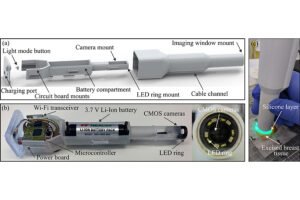
Handheld Probe Maps Cancerous Tissue in Real Time to Guide More Precise Surgery
Cancer surgeons often struggle to distinguish healthy tissue from malignant tissue during an operation, and this uncertainty can lead to incomplete tumor removal or unnecessary damage to surrounding structures. A team of researchers has developed a handheld optical probe that addresses this long standing challenge by mapping cancerous tissue in real time. Their device gives surgeons immediate feedback about the biochemical makeup of tissue, allowing them to make more confident decisions while operating. The technology is built around a technique called Raman spectroscopy, which uses light to detect the molecular composition of a sample. When the probe shines a laser…
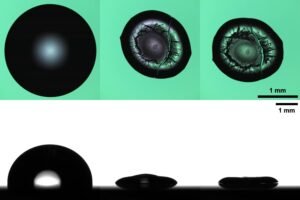
Polymer Bristles Offer a New Way to Keep Medical Surfaces Free of Proteins and Germs
Hospitals struggle with surfaces that attract proteins and germs, creating a pathway for infections that threaten vulnerable patients. Even with strict cleaning protocols, many materials used in medical devices and clinical environments allow biological residue to stick, which can help bacteria survive and spread. Engineers at the University of Toronto have developed a new surface coating that tackles this problem by using microscopic polymer bristles to prevent proteins and microbes from attaching in the first place. Their work points toward safer medical tools, cleaner hospital environments, and new strategies for infection control. The research team focused on a long standing…
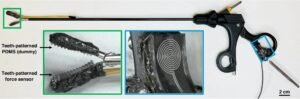
Soft Touch Sensors Restore Surgeons’ Sense of Feel in Minimally Invasive Procedures
Keyhole surgery helps patients recover faster, but it removes one of the surgeon’s most important tools: the ability to feel how much force is being applied to fragile tissue. Without tactile feedback, even experienced surgeons can unintentionally grip too hard or too softly, increasing the risk of tissue damage. Researchers at NYU Abu Dhabi have developed a new class of soft, flexible sensors that address this problem by restoring real time force sensing to minimally invasive instruments. Their goal is to bring back the intuitive touch that surgeons lose when operating through long, rigid tools. The sensors are made from…
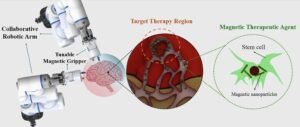
Magnetic Microrobotics Could Revolutionize Targeted Cancer Treatment
Conventional cancer therapies often struggle to reach deep or irregular tumor sites without harming surrounding tissue. Scientists at the University of Essex have developed a new magnetic control system that could make future treatments far more precise. Their innovation, called the “Tuneable Magnetic End Effector” (TME), enables the manipulation of microrobots and magnetic particles inside the body with unprecedented accuracy, opening the door to minimally invasive procedures that deliver drugs or perform microsurgery directly at the disease site. Developed by the Robotics for Under Millimetre Innovation (RUMI) Lab, the TME generates magnetic fields that can be switched, shaped, and redirected…
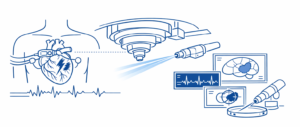
Noninvasive Proton Beam Therapy Shows Promise for Treating Dangerous Heart Rhythm Disorders
Patients with life‑threatening heart rhythm disorders such as ventricular tachycardia often face limited treatment options. Standard therapies include medications, implantable defibrillators, and catheter ablation, but these approaches can fail when the arrhythmia originates deep within scarred heart tissue. Researchers at the Mayo Clinic are testing a new, noninvasive method that uses proton beam therapy, which traditionally reserved for cancer treatment, to precisely target and neutralize the electrical circuits that trigger these dangerous rhythms. Ventricular tachycardia occurs when damaged heart muscle creates abnormal electrical pathways that cause the heart to beat too fast. Catheter ablation, the current gold standard, destroys these…
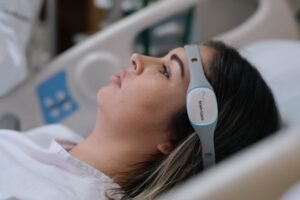
Brazilian Innovation Protects ICU Patients from Brain Injury Using Real Time Oxygen Monitoring
Critically ill patients in intensive care units often face a hidden threat: oxygen deprivation in the brain that can lead to long term cognitive damage or even death. Traditional monitoring systems track heart rate, blood pressure, and blood oxygen levels, but they do not directly measure how much oxygen actually reaches the brain. Researchers in Brazil have developed a new technology that fills this gap, offering continuous, noninvasive monitoring of cerebral oxygenation to help prevent brain injuries in ICU patients. The innovation comes from a collaboration between scientists at the University of Campinas (UNICAMP) and the startup Brain4care. Their system…
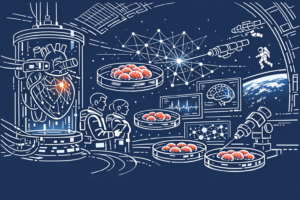
Space Based Heart Experiments Reveal New Clues for Treating Heart Failure and Building Stronger Engineered Tissues
Heart failure remains a leading cause of death worldwide, and progress is often slowed by how long it takes for disease related changes to appear in patients on Earth. In normal gravity, the heart and muscles weaken gradually over years, making it difficult to study early mechanisms of failure or to test new therapies quickly. By moving the problem into space, researchers are compressing that timeline. Arun Sharma and his team are using the microgravity environment of the International Space Station to study how heart tissue weakens, adapts, and can be rebuilt, with the goal of improving both heart failure…
GizmoMD Exclusives
“Replaceable You”: A GizmoMD Book Interview with Author Mary Roach

Subscribe to GizmoMD Weekly!

23andMe: A GizmoMD Review (May 2017)

GizmoMD Boards the Orbis Flying Eye Hospital (December 2017)
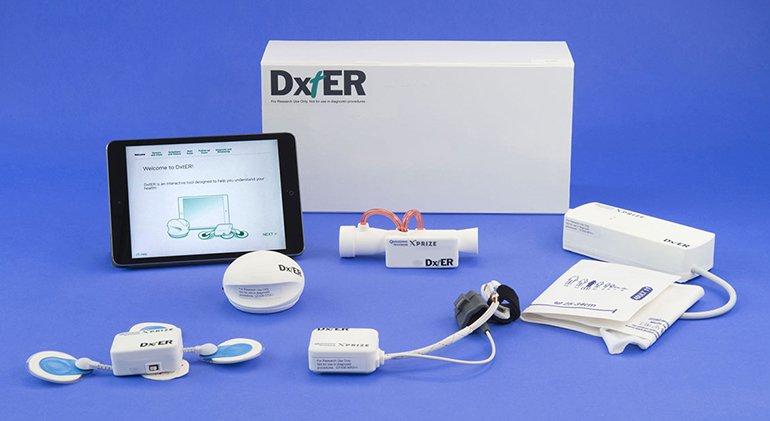
Tricorders For Everyone! Dr. Basil Harris Shares What’s Next for the Prize-Winning DxtER Tricorder (April 2017)