
“Replaceable You”: A GizmoMD Book Interview with Author Mary Roach
“We can rebuild him. We have the technology. We can make him better than he was. Better . . . stronger . . . faster.” These iconic words were part of the opening lines of the hit TV series, The Six-Million Dollar Man,…


The Latest
Biohybrid Mesh Integrates Electronics With Human Cells To Provide Continuous Power
Wearable and implantable medical devices depend on batteries that are bulky, rigid, and eventually run out of charge, forcing replacements that can require surgery and limit device longevity. Researchers at the University of Massachusetts Amherst developed an ultrathin, flexible biohybrid mesh that integrates electronics directly with human cells, enabling a continuous and reliable electrical supply drawn from the body itself. The tech addresses one of the most difficult challenges in implantable and wearable electronics: eliminating the battery entirely. The research team designed the mesh to mimic how the human body distributes energy. Instead of depending on a centralized power source,…
Optical Sensor Particles Allow Real‑Time Tissue Health Monitoring Using Only Light
Tissue engineers face a major obstacle when creating complex 3D‑printed or implanted biological structures: there are very few ways to monitor cell health noninvasively and in real time. Existing methods often require piercing or damaging the tissue to measure metabolite levels, and available technologies are bulky, limited, or unsuitable for continuous monitoring. Researchers at Texas A&M University developed a light‑based sensing approach that embeds microscopic optical sensor particles directly into printed or natural tissues, enabling instant, noninvasive assessment of nutrient levels and overall tissue health. The challenge becomes more severe as scientists work toward larger and more complex bioprinted structures,…
Wearable Device Reveals Hidden Hormone Spikes Linked to High Blood Pressure
High blood pressure often develops without clear symptoms, and many patients may unknowingly have an underlying hormonal disorder that routine testing fails to detect. Researchers at the University of Bristol and collaborating institutions found that people with primary aldosteronism experience repeated bursts of hormone production throughout the day and night, including while asleep when blood tests are rarely performed. These hidden hormone spikes may explain why the condition frequently goes undiagnosed, despite affecting up to one in five individuals with hypertension. The study uses a portable device developed at the University of Bristol to continuously monitor hormone levels in patients’…
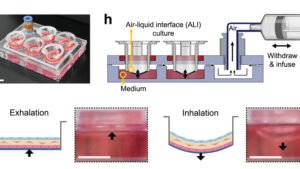
Ultrathin Artificial Lung Reproduces Alveolar Motion for Virus and Drug Studies
Lung diseases are difficult to study because the alveoli constantly expand and contract, and this motion influences how lung cells grow, function, and respond to inflammation. Conventional cell‑culture systems cannot reproduce this movement, and even lung‑on‑a‑chip devices often rely on synthetic materials that fail to mimic real tissue. Researchers at the Pohang University of Science and Technology (POSTECH) in Korea developed an ultrathin artificial lung inspired by the stability and flexibility of soap bubbles, enabling realistic alveolar motion and allowing scientists to observe how lung cells behave under dynamic conditions. The team drew inspiration from the thin film of a…
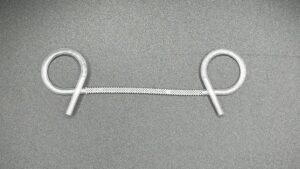
3D‑Printed Biodegradable Stent Uses Lattice Architecture To Improve Gastric Leak Treatment
Gastric leaks are a serious complication that can occur after weight‑loss surgery, leading to infection, prolonged hospitalization, and repeated medical interventions. Current drainage stents used to treat these leaks were originally designed for bile ducts rather than the stomach, and they must be removed once healing is complete, requiring an additional procedure. Researchers at NYU Abu Dhabi developed a biodegradable, 3D‑printed gastric stent with an internal lattice architecture that improves drainage performance and may eliminate the need for device removal after treatment. The new stent, called “BRIDGE”, uses a highly structured internal lattice that more than doubles drainage performance compared…
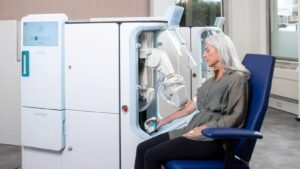
FDA Authorizes Robotic System To Perform Blood Draws
Blood draws are among the most common medical procedures in the United States, yet many patients experience delays because of a nationwide shortage of trained phlebotomists. The U.S. Food and Drug Administration has authorized a fully autonomous robotic blood‑draw device called “Aletta”, developed by Vitestro in the Netherlands, to help address this gap. The authorization allows the system to be used in adult outpatient settings under the oversight of a supervisor trained in phlebotomy. Aletta autonomously performs every step of a venipuncture procedure once a patient or supervisor presses a button to begin. The device first guides the patient to…
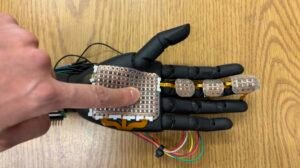
Electronic Skin System Enables Prosthetics To Sense Temperature and Pressure
Many amputees struggle with prosthetic devices that cannot provide meaningful sensory feedback, leaving them unable to feel temperature, pressure, or texture during everyday tasks. Existing electronic skins attempt to address this gap, but they are often expensive, difficult to customize, limited in sensing resolution, and unable to conform well to curved or irregular surfaces. Researchers at Washington State University developed an electronic skin system that detects both pressure and temperature at a much finer scale than current commercial glove sensors, offering a potential path toward prosthetics that more closely mimic human tactile sensation. The team designed a customizable sensing system…
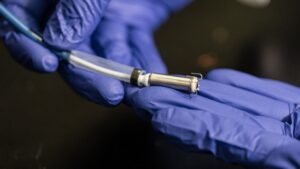
Pacemaker Nanogenerator Harvests Heartbeat Energy To Power Itself
Pacemakers require periodic battery replacement, a process that can be risky, costly, and burdensome for patients who depend on long‑term cardiac rhythm management. Leadless intracardiac pacemakers reduce complications compared with traditional chest‑implanted models, but their batteries still occupy more than half the device’s size and last only seven to ten years. Removing a depleted device from inside the heart is difficult, so expired pacemakers are often left in place while new ones are implanted alongside them. Researchers at the University of Wisconsin–Madison developed a battery‑free pacemaker powered entirely by a patient’s heartbeat, offering a potential path toward implants that last…

Wearable Sensor System Uses AI To Generate Continuous Blood Pressure Waveforms
Patients in intensive care often experience rapid and dangerous changes in blood pressure, yet the standard method for continuous monitoring requires inserting a catheter directly into an artery. This approach provides accurate, beat‑by‑beat measurements but carries risks such as bleeding, clot formation, infection, and restricted mobility. Conventional arm cuffs avoid these complications but offer only intermittent readings, which can miss sudden fluctuations. Researchers at Johns Hopkins University have developed a wearable sensor system combined with artificial intelligence that generates continuous blood pressure waveforms without entering the bloodstream, offering a potential alternative to arterial lines for critical care and other settings.…

Genetic Switches Enable 3D‑Printed Bone Tissue To Support Blood Vessel Growth
Severe bone injuries caused by trauma, cancer, or infection often fail to heal because engineered bone tissue struggles to form the blood vessels needed to deliver oxygen and nutrients. Without vascularization, even advanced bioprinted constructs cannot mature or integrate with the body. Researchers at Pennsylvania State University developed a strategy that programs living stem‑cell spheroids with genetic switches to promote both bone formation and blood‑vessel growth, addressing one of the central challenges in bone tissue engineering. The team began with commercially sourced, undifferentiated stem cells and introduced specific strands of genetic information to guide their behavior. By layering these cells…
GizmoMD Exclusives
“Replaceable You”: A GizmoMD Book Interview with Author Mary Roach

Subscribe to GizmoMD Weekly!

23andMe: A GizmoMD Review (May 2017)

GizmoMD Boards the Orbis Flying Eye Hospital (December 2017)
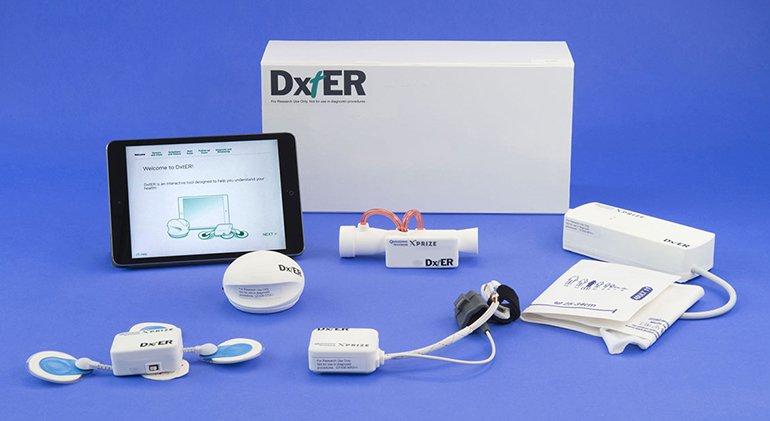
Tricorders For Everyone! Dr. Basil Harris Shares What’s Next for the Prize-Winning DxtER Tricorder (April 2017)