
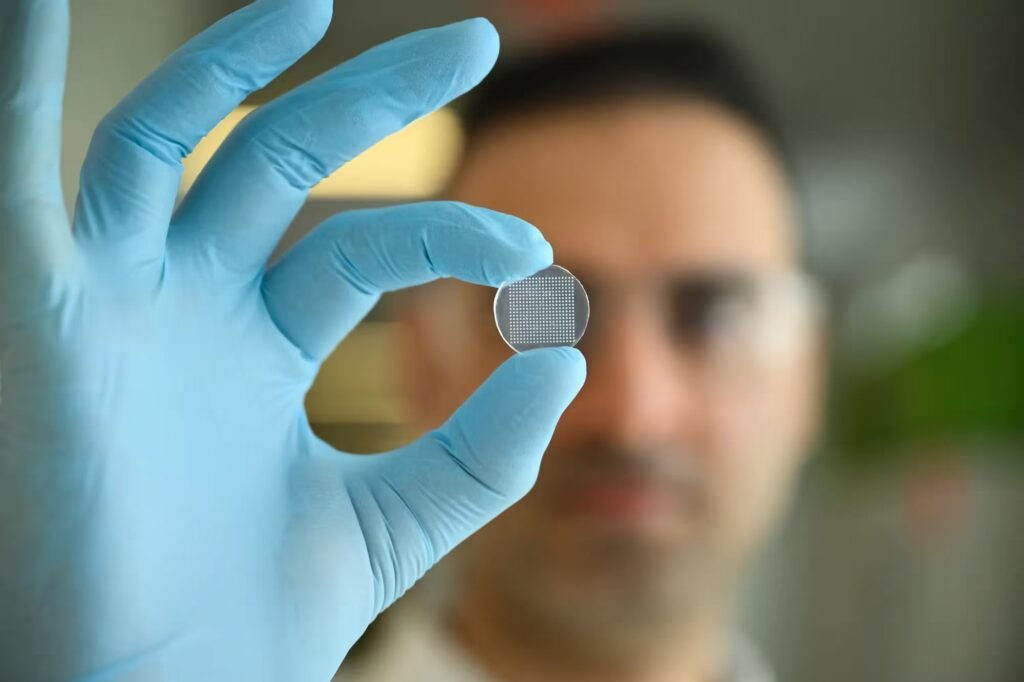
A new advance from The Jackson Laboratory introduces a painless microneedle skin patch that can monitor immune activity directly from the skin, offering an alternative to blood draws and surgical biopsies. Researchers at JAX, working with MIT, designed the bandage‑like device to capture inflammatory signals within minutes and collect specialized immune cells within hours, giving clinicians access to information that is often difficult or impossible to obtain through routine testing. The patch is about the size of a quarter and uses tiny microneedles to sample immune cells that reside in the skin, a population that plays a central role in how the body responds to infection, vaccination, cancer, and autoimmune disease.
The team developed the patch to address a major gap in immune monitoring. Many of the most informative immune cells, including tissue‑resident memory T cells, do not circulate in the bloodstream and therefore cannot be captured through standard blood tests. By sampling directly from the skin, the microneedle patch provides access to these cells without the discomfort or risks associated with biopsies. Early testing shows that the device can detect inflammatory signals rapidly and collect rare immune cell populations that are typically missed in clinical evaluations.
Researchers are already using the patch to study immune responses in aging and in skin‑related autoimmune conditions such as vitiligo and psoriasis. Because the device can be applied repeatedly and painlessly, it enables longitudinal monitoring that would be impractical with traditional methods. This capability could help clinicians track how patients respond to vaccines, infections, or immunotherapies, and may support more personalized treatment decisions. The study describing the technology appears in Nature Biomedical Engineering, underscoring its potential impact on both research and clinical practice.
The patch’s design also makes it suitable for broader deployment. It requires no specialized equipment to apply, and the sampling process is quick enough to integrate into routine care. The researchers envision future versions that could be used outside clinical settings, enabling at‑home immune monitoring for patients who need frequent assessment. By capturing immune activity directly from the skin in a minimally invasive way, the JAX microneedle patch represents a shift toward more accessible, real‑time immune health tracking.
Here’s a video explaining more about the patch:
Article from the Jackson Laboratory: Painless skin patch offers new way to monitor immune health
Abstract in Nature Biomedical Engineering: Leveraging tissue-resident memory T cells for non-invasive immune monitoring via microneedle skin patches
