“Replaceable You”: A GizmoMD Book Interview with Author Mary Roach
“We can rebuild him. We have the technology. We can make him better than he was. Better . . . stronger . . . faster.” These iconic words were part of the opening lines of the hit TV series, The Six-Million Dollar Man,…



The Latest
Paintable Electrodes Enable Flexible and Artistic Wearable Health Sensors
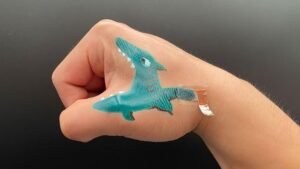
Many medical sensors used to monitor heart and muscle activity can feel stiff, uncomfortable or difficult to keep attached to the skin, especially when patients move or sweat. Engineers at the Pennsylvania State University have developed paintable electrodes that can be brushed directly onto the skin like face paint, creating colorful, flexible designs that work as accurate medical sensors. Their goal is to make clinical monitoring more comfortable and more adaptable to everyday life while still capturing high‑quality signals such as electrocardiograms and electromyograms. The paintable electrodes are made from a conductive ink that begins nearly transparent and can be…
Cooling Nanofiber Skin Speeds Healing in Infected Wounds
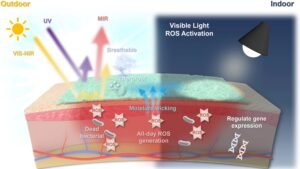
Treating infected wounds is difficult because the skin needs protection, cooling and antibacterial support, yet most dressings can only provide one or two of these benefits at a time. Researchers at The Hong Kong Polytechnic University and their collaborators have created a new type of wound dressing that brings all three together. Their bionic cooling skin is designed to feel and behave more like natural skin while lowering temperature and fighting bacteria, which helps infected wounds heal more comfortably and effectively. The material is built from very thin fibers welded together in a way that gives the dressing strength and…
Ultrasound‑Activated Microparticles Provide a New Approach to Wound Cleaning
Cleaning wounds and surgical instruments is often difficult because bacteria and debris often cling to surfaces that are hard to reach with conventional methods. Researchers at the University of Illinois Urbana‑Champaign have developed a new approach that uses tiny microparticles to generate cavitation bubbles capable of dislodging contaminants more efficiently. Their work demonstrates how controlled bubble formation can improve both medical wound care and the cleaning of surgical tools. The team designed microparticles that create cavitation when exposed to ultrasound. Cavitation occurs when small bubbles rapidly form and collapse, producing localized forces strong enough to lift debris from surfaces. In…
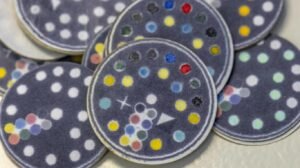
Silk‑Based Colorimetric Patch Offers a Noninvasive Way to Monitor Newborn Health
Monitoring premature infants is challenging because traditional sensors rely on wires, adhesives and repeated blood draws that can irritate fragile skin and cause stress during critical stages of development. Researchers from Tufts University and several universities in Germany have developed a featherlight silk‑based sticker that tracks four essential health signals without needles or electronic monitors. Their work shows how a simple color‑changing patch combined with an AI system can provide continuous, noninvasive monitoring inside neonatal incubators. The patch is smaller than a coin and captures temperature, pH, sodium and glucose from the tiny amounts of interstitial fluid that naturally pass…
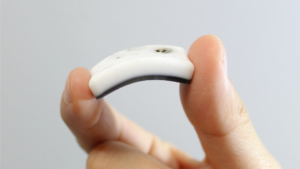
Soft Wearable Near‑Infrared Device Enables Comfortable Home Monitoring of Sleep and Brain Health
Understanding how sleep supports brain health requires tools that can capture subtle physiological changes without disrupting rest. During sleep, the glymphatic system clears metabolic waste by moving cerebrospinal fluid through channels around blood vessels and exchanging it with interstitial fluid in neural tissue. This fluid movement, often described as brain water dynamics, plays a central role in memory processing, cognitive function and neural recovery. When sleep quality declines, the efficiency of this clearance can fall, allowing waste to accumulate and potentially affecting long‑term brain health. Traditional methods for studying these processes rely on MRI or polysomnography, which are invasive, expensive…
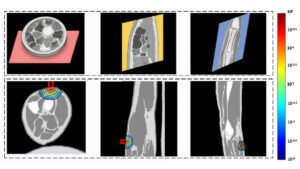
Infrared Hydration Index Offers More Reliable At‑Home Monitoring for Atopic Dermatitis
Managing atopic dermatitis is difficult because skin hydration fluctuates with temperature, daily conditions and treatment responses, yet most tools for assessing hydration are superficial and inconsistent. Researchers have developed a near‑infrared optical system paired with a temperature‑aware algorithm that provides more stable and informative hydration measurements. Their work addresses key gaps in at‑home skin care by creating a digital biomarker capable of capturing deeper and more clinically relevant information about the skin. The team focused on the limitations of current hydration assessment methods, which often fail to penetrate into the deeper layers affected by atopic dermatitis. They built a system…

Wearable Cardiac Monitoring System Detects Hidden Arrhythmias and Stroke Risk Earlier
Many dangerous heart rhythm disorders go undetected because symptoms are intermittent, traditional monitoring is brief, and early warning signs often appear only during daily activity. Researchers at Kaunas University of Technology in Lithuania have developed a wearable cardiac monitoring system that identifies hidden arrhythmias and stroke‑related risk factors more reliably by combining long‑term data collection with advanced signal analysis. Their work demonstrates how continuous monitoring outside the clinic can reveal abnormalities that standard electrocardiograms frequently miss. The technology is designed to capture subtle changes in heart rhythm that may indicate atrial fibrillation or other arrhythmias associated with stroke. The system…
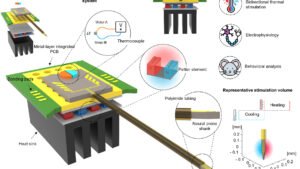
Temperature‑Controlled Brain Implant Enables Precise Bidirectional Modulation of Neural Circuits
Neurological disorders remain difficult to treat because most neuromodulation technologies can only activate or suppress neural activity in one direction, limiting their ability to provide fine control over complex brain circuits. A research team at Korea University College of Medicine has developed a miniaturized brain implant that uses temperature to both increase and decrease neuronal activity, offering a new strategy for next‑generation brain–computer interfaces and closed‑loop neuromodulation systems. Their work demonstrates how localized heating and cooling can be delivered deep inside the brain to achieve targeted bidirectional control. The implant integrates a thermoelectric Peltier device with a silicon‑based neural probe,…
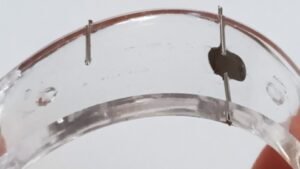
Breakthrough in Soft Robotics May Enhance Assistive and Rehabilitation Devices
Soft robots often struggle to generate strong, fast movements because their flexible materials cannot store and release energy as efficiently as rigid mechanical systems. Scientists at the University of Bristol have developed a new approach that allows soft robotic structures to harness stored elastic energy in a controlled way, enabling rapid and powerful motion without sacrificing the safety and adaptability that make soft robotics valuable. Their work demonstrates how a simple change in how soft materials are arranged can dramatically improve performance across a wide range of applications. The team created a soft robotic arm that uses a combination of…
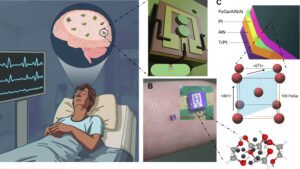
Ultra‑Small Magnetoelectric Antennas Offer a New Path for Safer, Smarter Implantable Medical Devices
Implantable medical devices often struggle to balance size, heat generation and data capacity, making long‑term use uncomfortable and limiting their ability to diagnose or treat disease. Researchers led by the University of Glasgow have developed a new class of ultra‑small antennas, called µBots, that can wirelessly transmit rich streams of data through biological tissue while remaining cooler, smaller and more energy efficient than conventional radio‑frequency implants. Their work demonstrates how magnetoelectric antennas built on acoustically active substrates can support advanced sensing and neuromodulation applications inside the body. The µBots combine acoustic and electromagnetic physics to create antennas that exploit unusual…
GizmoMD Exclusives
“Replaceable You”: A GizmoMD Book Interview with Author Mary Roach

Subscribe to GizmoMD Weekly!

23andMe: A GizmoMD Review (May 2017)

GizmoMD Boards the Orbis Flying Eye Hospital (December 2017)
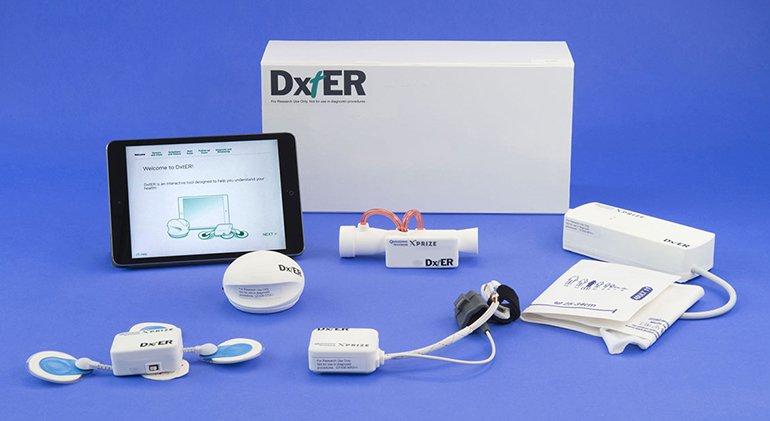
Tricorders For Everyone! Dr. Basil Harris Shares What’s Next for the Prize-Winning DxtER Tricorder (April 2017)