
“Replaceable You”: A GizmoMD Book Interview with Author Mary Roach
“We can rebuild him. We have the technology. We can make him better than he was. Better . . . stronger . . . faster.” These iconic words were part of the opening lines of the hit TV series, The Six-Million Dollar Man,…


The Latest
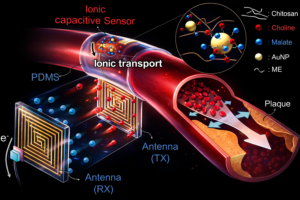
Low-Frequency Wireless Sensor Could Enable Safer, Real-Time Monitoring of Arteriosclerosis
Arteriosclerosis, the stiffening and thickening of arterial walls, is a major driver of heart attacks and strokes, but it is difficult to monitor continuously in daily life. Most current diagnostic tools rely on hospital equipment, short snapshots of vascular health, or wired sensors that are not practical for long-term use. Wireless systems exist, but they often operate at higher frequencies that can raise concerns about electromagnetic interference with other devices or with the human body. A research team from the Korea Advanced Institute of Science and Technology (KAIST) has addressed this gap by developing a low-frequency wireless sensor designed specifically…
Steerable Optical Fiber Could Transform Laser Surgery for the Voice Box
Laser surgery for growths on the vocal folds often requires general anesthesia because standard optical fibers cannot reach deep or angled areas of the larynx. This limitation leaves many patients without safe treatment options, especially those with heart conditions or other risks that make anesthesia dangerous. Researchers at Worcester Polytechnic Institute have developed a flexible optical fiber that can be guided through an endoscope and precisely steered to hard‑to‑reach spots, offering the possibility of performing these procedures safely in outpatient settings. The new device consists of a thin nickel‑titanium sheath only 1.6 millimeters wide, with notches that allow it to…

Earbuds That Listen to Your Heart: Researchers Turn Everyday Devices Into Health Monitors
Heart disease remains one of the most difficult conditions to monitor outside a clinical setting because most diagnostic tools require patients to lie still, remove clothing, and wear specialized sensors for only a few minutes at a time. This creates a major gap in care. Many early signs of heart problems appear in the subtle mechanical rhythms of the heart, not just in how fast it beats. These signals are rarely captured during short clinic visits. Researchers at Carnegie Mellon University have now shown that ordinary earbuds, the same kind people use for music or phone calls, can detect these…
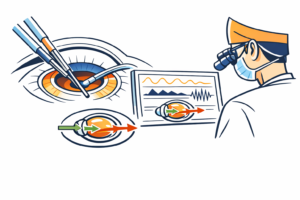
New Real‑Time Eye‑Surgery Technology Could Transform Glaucoma Treatment and Improve Surgical Precision
Glaucoma surgery has long faced a major limitation: surgeons cannot see how fluid is actually moving inside the eye while they operate. They can measure eye pressure before and after a procedure, but not during the critical moments when surgical decisions matter most. This gap makes outcomes unpredictable, and more than half of patients undergoing common glaucoma surgeries still fail to achieve full success without medications. A new technology developed at the Icahn School of Medicine at Mount Sinai in New York aims to change that. The system, called miDOC (micro‑interventional Dynamic Outflow Curve), gives surgeons real‑time insight into how…
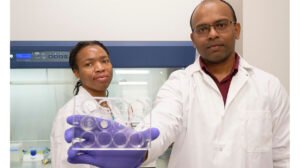
3D‑Printed Nanocarriers Could Deliver Cancer Drugs Directly to Tumors and Reduce Harsh Side Effects
Chemotherapy remains one of the most widely used cancer treatments, but it often affects the entire body rather than just the tumor. Because these drugs target fast‑dividing cells, they also damage healthy tissues like hair follicles, the digestive tract, and bone marrow. This is why patients frequently experience hair loss, nausea, fatigue, and other difficult side effects. Researchers at the University of Mississippi are exploring a new approach that could make cancer treatment far more targeted and far less punishing. The Ole Miss team has developed tiny 3D‑printed drug carriers, called “spanlastics”, that can be implanted directly at a tumor…
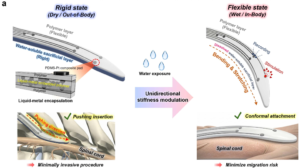
Shape‑Shifting Spinal Implant Uses Electricity to Treat Chronic Diseases More Safely
Many chronic conditions — from high blood pressure to diabetes — are now understood to involve miscommunication within the nervous system. As a result, neuromodulation, a technique that uses gentle electrical signals to rebalance nerve activity, is emerging as a promising alternative to long‑term drug therapy. A research team at POSTECH in South Korea has developed a new spinal cord stimulator that could make these treatments safer, more effective, and easier to use. One of the biggest challenges in neuromodulation is designing a device that can be inserted safely into the narrow spinal canal while still being soft enough to…
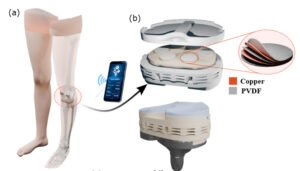
Smart Knee Implants Move Closer to Reality With Self‑Powered Sensors That Track Joint Problems
Knee replacements are meant to last a lifetime, yet many patients still face complications like joint loosening or imbalance that often go unnoticed until the damage is severe. With nearly 800,000 knee replacements performed each year in the United States — a number expected to rise sharply as the population ages — surgeons and patients need better ways to detect problems early. Researchers at Binghamton University are developing technology that could make future implants far smarter and far safer. The team’s approach centers on tiny energy‑harvesting components called piezoelectric and triboelectric transducers. These materials generate small amounts of electricity when…
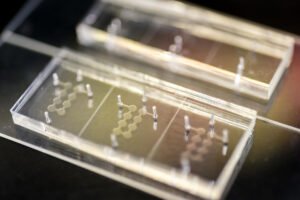
Organ‑on‑a‑Chip Compresses 40 Years of Human Aging into Four Days for Rapid Longevity Drug Testing
Age‑related diseases are rising quickly as more people live into their 60s, 70s, and 80s, yet scientists still lack fast, reliable ways to study how human tissues age or how potential anti‑aging treatments actually work. Traditional research tools are slow, expensive, and often fail to predict what will happen in real people. A team at the University of California Berkeley has created a new organ‑on‑a‑chip system that changes this landscape by recreating decades of human aging in just four days. The technology uses tiny devices that hold human fat and liver cells grown from stem cells. These tissues sit in…
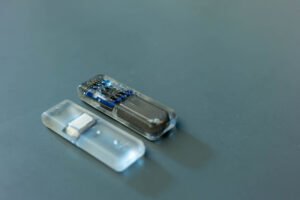
Oxygen‑Generating Implant Supports Dense Cell Factories for Long‑Term Drug Delivery
Cell‑based drug delivery has long promised a way to provide continuous, therapeutic‑level dosing from a single implant, but the approach has been limited by a fundamental biological constraint: densely packed cells cannot survive without a steady supply of oxygen. This challenge becomes even more severe under the skin, a minimally invasive implantation site that is convenient and low risk but poorly oxygenated. Researchers at Rice University, together with collaborators at Carnegie Mellon University and Northwestern University, have engineered a compact implant that solves this oxygen problem while also protecting therapeutic cells and supporting high‑density drug production. The system, called the…
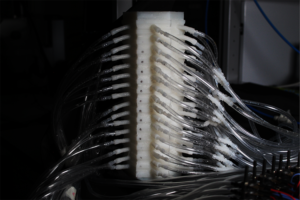
Robotic Esophagus Model Recreates Human Swallowing to Transform Dysphagia Research
Swallowing disorders affect hundreds of millions of people worldwide, yet researchers have lacked a realistic way to study how the esophagus actually moves during a swallow. Existing benchtop models cannot reproduce the coordinated muscle activity that drives food from the throat to the stomach, leaving major gaps in understanding dysphagia and limiting the development of effective treatments. A team at University College Dublin, working with collaborators at MIT and Harvard Medical School, has created the first robotic system capable of accurately replicating the complex mechanics of human swallowing. The device, called “RoboGullet”, uses soft‑robotic components to mimic the two distinct…
GizmoMD Exclusives
“Replaceable You”: A GizmoMD Book Interview with Author Mary Roach

Subscribe to GizmoMD Weekly!

23andMe: A GizmoMD Review (May 2017)

GizmoMD Boards the Orbis Flying Eye Hospital (December 2017)
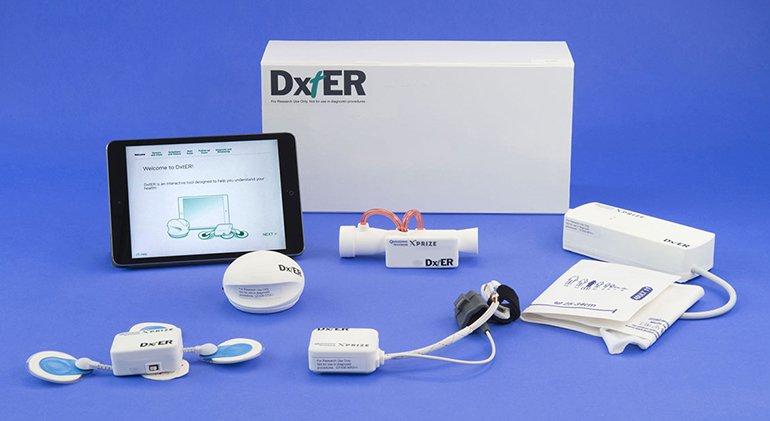
Tricorders For Everyone! Dr. Basil Harris Shares What’s Next for the Prize-Winning DxtER Tricorder (April 2017)