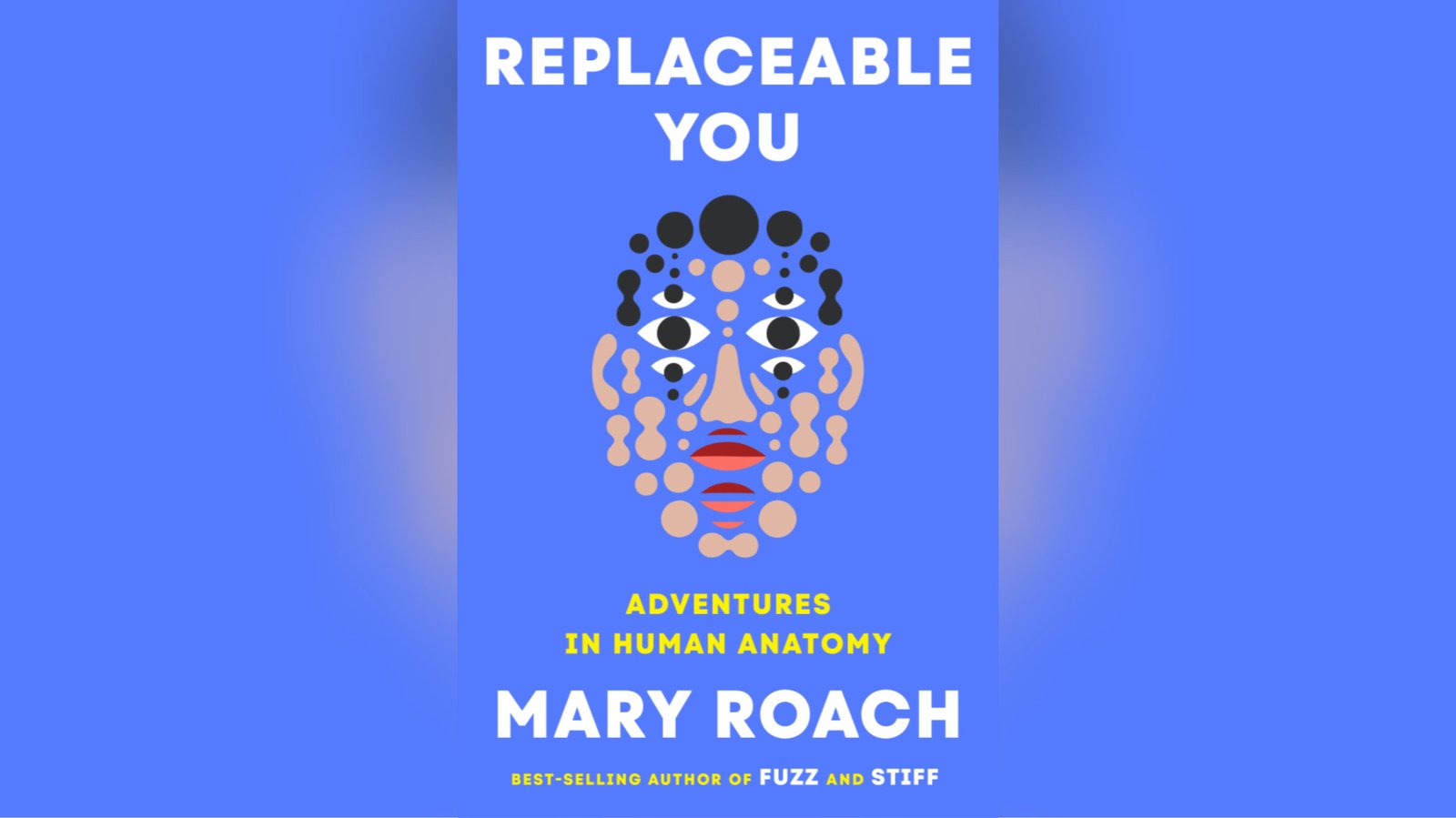
“Replaceable You”: A GizmoMD Book Interview with Author Mary Roach
“We can rebuild him. We have the technology. We can make him better than he was. Better . . . stronger . . . faster.” These iconic words were part of the opening lines of the hit TV series, The Six-Million Dollar Man,…

The Latest
Soft Robotic Heart Model Recreates Disease to Improve Cardiac Device Testing and Treatment Planning
Heart disease remains difficult to study because conventional laboratory models cannot reproduce the complex motion, internal structures and disease mechanics of the human heart. Researchers at UNSW Sydney have developed a soft robotic model of the left side of the heart that mimics real cardiac behavior, including valve leakage and impaired relaxation, offering a controllable platform for studying disease and testing new medical devices. The fully synthetic system uses flexible materials, artificial muscles and detailed anatomical features to recreate how the heart contracts, twists and regulates blood flow. The model includes silicone membranes that form the internal chambers and soft…
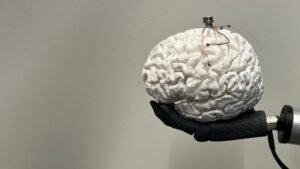
Shared Brain Interface Principles Bring Artificial Vision and Touch Closer to Unified Restoration Technology
Patients with severe sight loss or loss of motor function often have few treatment options because damaged neural pathways cannot be repaired easily, leaving them without reliable ways to regain vision or tactile sensation. Researchers now report that two major branches of brain‑computer interface technology, long developed separately for artificial vision and artificial touch, are built on nearly identical principles. This finding suggests that a single technological framework could support restoration of multiple senses, potentially accelerating progress for patients with otherwise untreatable conditions. The review, led by Chalmers University of Technology in Sweden, examines visual cortical prostheses and somatosensory cortical…
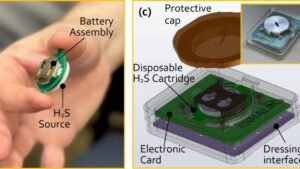
New Injectable Hydrogel Offers a Targeted Way to Treat Hard‑to‑Heal Wounds
Chronic and hard to reach wounds remain difficult to treat because many therapies cannot stay in place long enough or deliver drugs precisely where they are needed. Researchers at Texas A&M University have developed a new approach that uses an injectable hydrogel to deliver treatment directly into damaged tissue while adapting to the wound’s shape and environment. The technology is designed to address the limitations of current wound care methods, which often struggle with irregular wound geometry, poor drug retention and the need for repeated applications. The team created a hydrogel that begins as a liquid and solidifies once inside…
Acoustically Readable Microneedle Patch Enables Enzyme‑Free Continuous Glucose Monitoring
Continuous glucose monitoring remains difficult to maintain over long periods because most commercial sensors rely on glucose oxidase enzymes that degrade within days or weeks, forcing frequent replacements and increasing cost. Researchers from the Shenzhen Institute of Advanced Technology, the Hong Kong Polytechnic University, and the Korea Advanced Institute of Science and Technology have developed an alternative that avoids enzymes entirely by using a microneedle patch made from glucose responsive hydrogel. The device, called the acoustically readable microneedle patch, or ARMPatch, is designed to work with standard ultrasound probes to measure glucose related swelling in real time without requiring implanted…
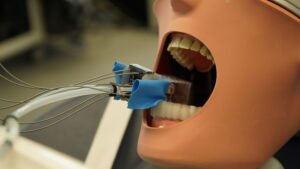
Miniature Dental Robot Aims to Streamline Crown Preparation and Reduce Treatment Visits
Dental crown procedures often require multiple appointments because preparing a damaged tooth, taking impressions, and fitting a temporary crown must be completed before the permanent crown can be placed. Researchers at the University of Basel have developed a miniature robot designed to simplify this process by preparing teeth automatically according to a digital plan. The prototype, known as the Miniature Intraoral Robot, or MIR, is intended to reduce the number of visits needed for crown treatment by performing precise tooth preparation after a single scan. The robot measures only 43 by 26 by 28 millimeters, making it small enough to…
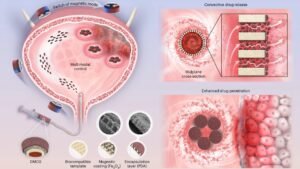
Algae Microbots Improve Drug Delivery for Bladder Cancer Treatment
Bladder cancer treatment often falls short because chemotherapy drugs struggle to penetrate deeply into tumor tissue, limiting their effectiveness and requiring longer exposure times or higher doses. Researchers at the University of Edinburgh and Xiamen University have developed algae based microbots that aim to overcome this challenge by transporting chemotherapy drugs directly into tumors with far greater precision. The approach uses natural microalgae engineered into magnetic biohybrid robots that can be guided through the bladder using externally controlled magnetic fields. Their ability to move collectively and navigate tight spaces allows them to deliver drugs more efficiently than conventional instillation methods.…
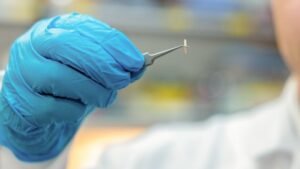
Injectable Wireless Device Offers New Approach for Treating Chronic Pain and Movement Disorders
Chronic pain and movement disorders remain difficult to treat because many therapies require invasive surgery, implanted hardware, or long term medication that may not provide consistent relief. Researchers at NYU Abu Dhabi and Cleveland Clinic Abu Dhabi have developed an injectable device that aims to simplify how nerve related conditions are managed by delivering controlled electrical stimulation without the need for surgery, batteries, or wires. The device is small enough to be delivered through a standard needle and can be positioned near a target nerve to influence its activity. Once in place, it receives power wirelessly from outside the body,…
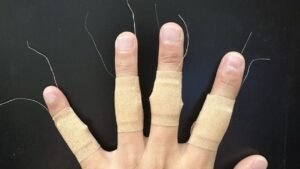
Wearable Hand Sensors Improve Stroke Rehabilitation by Tracking Real World Recovery
Stroke survivors often struggle to regain hand function because traditional rehabilitation tools cannot capture how the hand is used in daily life. Researchers at the University of Houston have developed wearable sensors that measure hand movement continuously, providing clinicians with detailed information about recovery outside the clinic. The system uses small devices placed on the fingers to track motion and quantify how often and how effectively the hand is used during everyday activities. This approach aims to close the gap between clinical assessments and real world performance, which can differ significantly for many patients. The sensors record fine grained data…

Ultrasound Pacemaker Offers Noninvasive Method to Stabilize Irregular Heart Rhythms
Irregular heart rhythms can lead to serious complications because the heart cannot pump blood effectively when its electrical signals become disorganized. Researchers at the Massachusetts Institute of Technology have developed a noninvasive ultrasound based pacemaker that aims to restore normal rhythm without the need for implanted devices or surgical procedures. The approach uses focused ultrasound pulses to stimulate specific regions of the heart and guide it back into a stable pattern. The work demonstrates that ultrasound can be used to control cardiac pacing from outside the body, offering a potential alternative for patients who cannot undergo invasive treatments. The system…
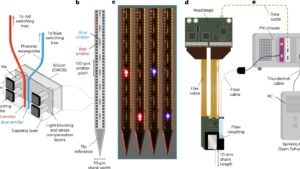
Neuropixels Opto Reveals How Deep Brain Circuits Operate With Unprecedented Precision
Understanding how neurons communicate within deep brain regions has long been limited by tools that can either record electrical activity or manipulate specific cells, but not both at the same time. A new technology called “Neuropixels Opto” is addressing this challenge by combining electrophysiology and optogenetics into a single probe capable of simultaneously monitoring and influencing neuronal activity. The system, developed through an international collaboration led by researchers at University College London, offers a way to study how individual neurons contribute to complex behaviors and neurological disorders. The work was published in Nature Methods and represents a major advance in…
GizmoMD Exclusives
“Replaceable You”: A GizmoMD Book Interview with Author Mary Roach

Subscribe to GizmoMD Weekly!
23andMe: A GizmoMD Review (May 2017)

GizmoMD Boards the Orbis Flying Eye Hospital (December 2017)
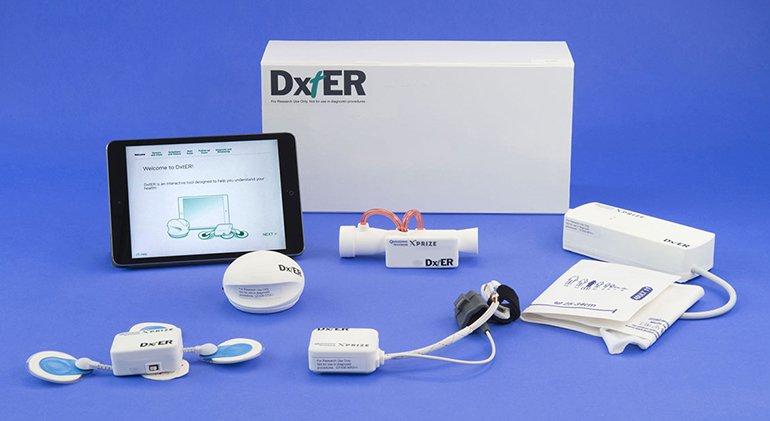
Tricorders For Everyone! Dr. Basil Harris Shares What’s Next for the Prize-Winning DxtER Tricorder (April 2017)