“Replaceable You”: A GizmoMD Book Interview with Author Mary Roach
“We can rebuild him. We have the technology. We can make him better than he was. Better . . . stronger . . . faster.” These iconic words were part of the opening lines of the hit TV series, The Six-Million Dollar Man,…



The Latest
Nanofiber Based Multidrug Platform Offers New Strategy Against Recurrent Glioblastoma
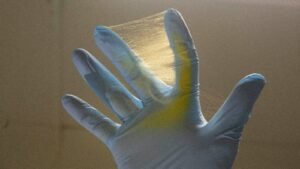
Glioblastoma remains one of the most difficult cancers to treat because its tumor cells adapt quickly and often survive even the most aggressive therapies. Researchers are developing new approaches that can deliver multiple drugs directly to the tumor site in an effort to overcome this resistance. One promising strategy from the University of Cincinnati uses a nanofiber based mesh that can hold several anticancer agents at once and release them in a controlled manner after surgical removal of the tumor. This system is designed to maintain therapeutic pressure on residual cancer cells and reduce the likelihood of recurrence. The platform…
New Heart Patch Therapy Shows Clinical Benefit for Severe Heart Failure
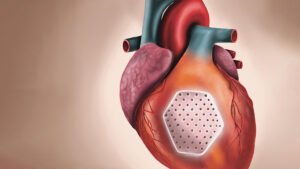
Severe heart failure leaves patients with few meaningful options because damaged heart muscle cannot regenerate and the heart gradually loses its ability to pump blood effectively. A new approach out of the University Medical Center Göttingen (UMG) and the University Hospital of Schleswig-Holstein (UKSH) in Germany using engineered heart tissue is beginning to show that biological repair may be possible, offering a potential alternative to mechanical support or transplantation. The therapy centers on a living heart patch created from human induced pluripotent stem cell derived cardiomyocytes combined with a collagen based scaffold. This patch is designed to contract like native…

Wearable Ultrasound Patch Offers Continuous Monitoring for High Risk Pregnancies
Many complications in high risk pregnancies go undetected because standard ultrasound exams provide only brief snapshots of fetal health rather than continuous information. Researchers at the University of California, San Diego have developed a soft, wearable ultrasound patch that aims to close this gap by offering long duration, real time monitoring of the fetus and umbilical cord. The patch adheres to the abdomen and maintains stable imaging even as the fetus moves, which has been one of the most difficult challenges in extending ultrasound beyond short clinical sessions. The device is built from a flexible array of ultrasound transducers embedded…
Intelligent Tattoo Detects Skin Cancer Before It Appears
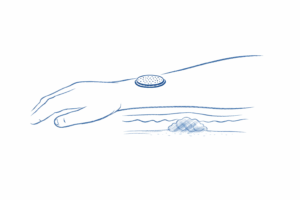
Skin cancer often develops invisibly beneath the surface long before visible lesions appear, making early detection difficult. Researchers at the University of Montreal have created a temporary “intelligent tattoo” that can identify micro‑melanomas before they become visible. The system, called “SMEAR‑ULM” , measures subtle temperature changes on the skin to reveal early metabolic activity linked to cancer. The tattoo uses a patch of painless microneedles that deposit specialized nanoparticles just beneath the skin. These particles act as sensors, detecting minute thermal variations caused by abnormal cellular metabolism. The patch communicates these signals through an ultrafast imaging system. The technology was…
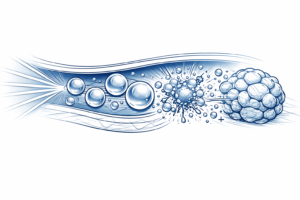
Smart Microbubbles Deliver Targeted Therapy for Cancer and Heart Disease
Many treatments for cancer and cardiovascular disease struggle to deliver drugs to the right place without harming healthy tissue. A University of Central Florida researcher has created smart microbubbles that carry therapeutic agents directly to diseased areas and release them only when activated by ultrasound. This approach is designed to improve accuracy and reduce side effects. The microbubbles are tiny gas filled spheres with a biocompatible shell that can hold drugs, genetic material, or nanoparticles. When exposed to focused ultrasound, they vibrate and burst, releasing their contents exactly where they are needed. This controlled release allows physicians to concentrate therapy…
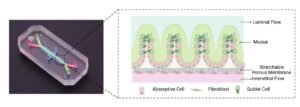
Organ‑on‑a‑Chip Model Decodes Inflammatory Bowel Disease to Reveal Personalized Treatment Pathways
Inflammatory bowel disease remains difficult to study because its complex immune and microbial interactions cannot be replicated in traditional lab models. Researchers at Harvard University’s Wyss Institute have developed a microfluidic “gut‑on‑a‑chip” system that recreates the dynamic environment of the human intestine, allowing scientists to observe how inflammation develops and how individual patients respond to therapy. Their goal is to uncover molecular signatures that could guide personalized treatment for Crohn’s disease and ulcerative colitis. The chip contains living human intestinal cells cultured alongside immune cells and gut bacteria under controlled flow conditions. This setup mimics the mechanical motions and biochemical…
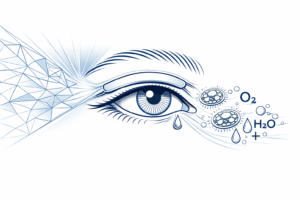
Photosynthesising Eye Implant Uses Light to Treat Dry Eye Disease Without Drugs
Dry eye disease affects millions of people and is often treated with eye drops that must be applied repeatedly throughout the day. Researchers at the National University of Singapore have created a new light powered implant that offers a drug free alternative by using a photosynthetic reaction to produce therapeutic molecules directly inside the eye. Their invention aims to provide long lasting relief without the inconvenience of frequent medication. The device is a tiny, flexible implant that sits beneath the eyelid. It contains a layer of engineered microalgae capable of performing photosynthesis when exposed to ambient light. During this process,…

3D Printed Ceramic Bone Implants Mimic Natural Bone Structure for Personalized Reconstruction
Bone reconstruction remains difficult when large defects occur, because current implants often fail to match the mechanical behavior and biological complexity of natural bone. Researchers at Tampere University in Finland are working to solve this problem by developing 3D printed ceramic implants that closely replicate the architecture and performance of real bone. Their goal is to create patient specific implants that integrate more effectively with the body and support long term healing. The team focuses on calcium phosphate ceramics, which are chemically similar to the mineral component of bone. These materials are already used in clinical settings, but traditional manufacturing…
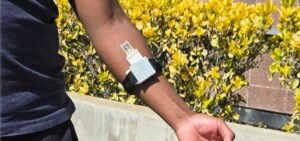
Wearable Sweat Sensor Enables Long Term Molecular Health Monitoring Without Batteries
Long term molecular health monitoring has been difficult to achieve because most wearable sensors lose accuracy as their sensing surfaces degrade. University of California, Irvine researchers have developed a new bioelectronic sweat sensor that solves this problem by regenerating its sensing interface on demand and operating without a battery. Their goal is to create a practical, continuous monitoring platform that can track key biomarkers outside clinical settings for weeks at a time. The device is called the In Situ Regeneratable, Environmentally Stable, Multimodal, Wireless, Wearable Molecular Sweat Sensing System, or “IREM W2MS3”. It is a flexible skin patch that communicates…
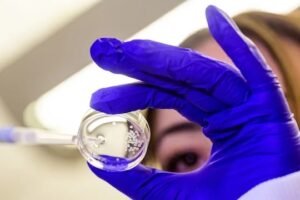
Implantable Cytokine Factories Show Early Promise in First Human Trial for Advanced Ovarian Cancer
Patients with recurrent ovarian cancer often face limited treatment options because tumors become resistant to chemotherapy and spread throughout the abdominal cavity. Systemic immunotherapies can help some patients, but high dose cytokines such as interleukin 2 are too toxic when delivered through the bloodstream. Researchers at Rice University and the University of Texas MD Anderson Cancer Center have completed the first human trial of implantable cytokine factories designed to deliver concentrated immune stimulation directly to tumors while keeping systemic exposure low. Their early results suggest that this localized approach may offer a safer and more effective way to activate the…
GizmoMD Exclusives
“Replaceable You”: A GizmoMD Book Interview with Author Mary Roach

Subscribe to GizmoMD Weekly!

23andMe: A GizmoMD Review (May 2017)

GizmoMD Boards the Orbis Flying Eye Hospital (December 2017)
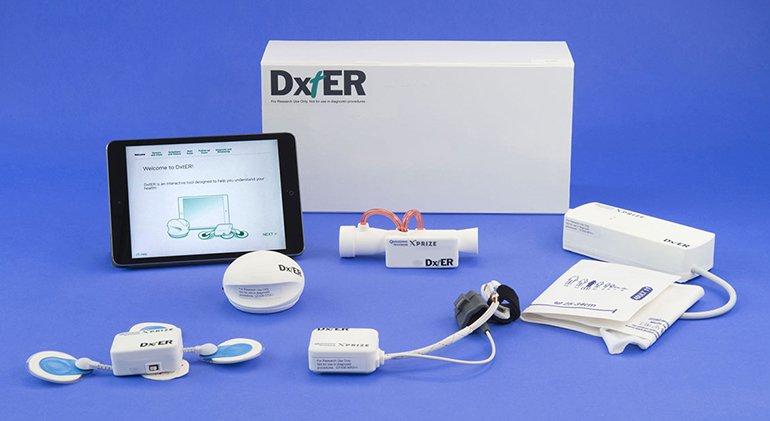
Tricorders For Everyone! Dr. Basil Harris Shares What’s Next for the Prize-Winning DxtER Tricorder (April 2017)