
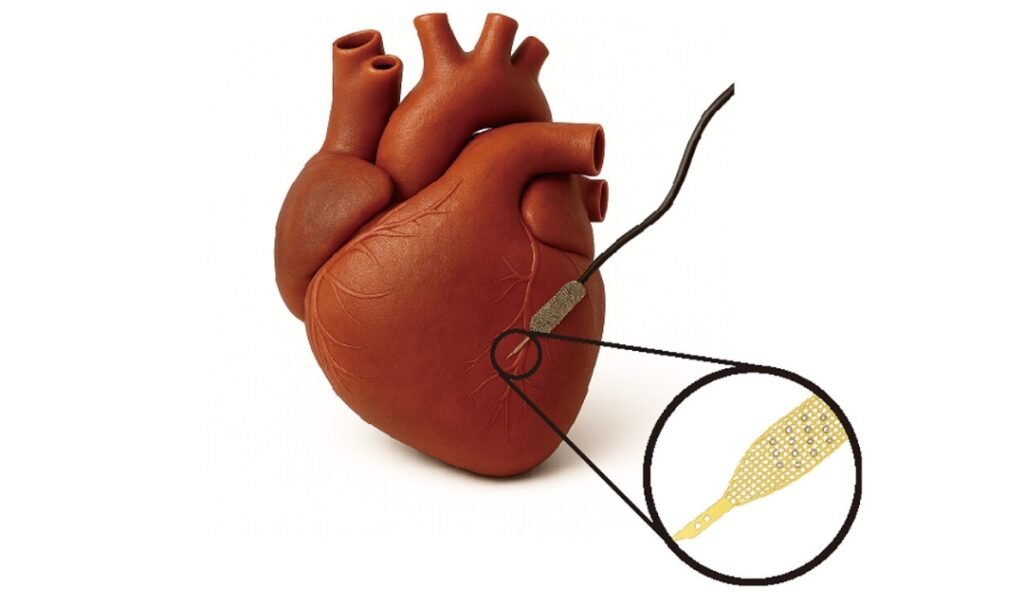
Researchers at Harvard University John A. Paulson School of Engineering and Applied Sciences and the Department of Stem Cell and Regenerative Biology have developed soft electronic cardiac patches that integrate nanoelectronics with stem cell–derived heart tissue. The goal is to improve the safety and effectiveness of stem cell therapies for repairing damaged hearts.
Stem cell–derived cardiomyocytes hold promise for regenerating heart tissue after injury, but a major challenge has been their tendency to cause irregular rhythms when transplanted. Until now, clinicians have lacked tools to monitor how these cells behave once inside the heart. The Harvard team’s new platform embeds flexible electronics into cardiac patches, allowing continuous recording of electrical activity and providing real‑time insight into how transplanted cells mature and connect with native tissue.
The researchers tested the system with human induced pluripotent stem cell–derived cardiomyocytes. They found that the electronic patches could track electrical signals and reveal whether transplanted cells were integrating properly. This monitoring capability is designed to help identify safer strategies for stem cell therapy and reduce the risk of arrhythmias.
The study also explored the use of RADA16, a self‑assembling peptide scaffold, to support cell maturation. The combination of RADA16 with the electronic patches improved structural organization and electrical coupling of transplanted cells.
Article from Harvard SEAS: Soft “Cyborg” Cardiac Patches Could Improve Stem Cell Heart Repair
Abstract in Science: Flexible nanoelectronics reveal arrhythmogenesis in transplanted human cardiomyocytes
