
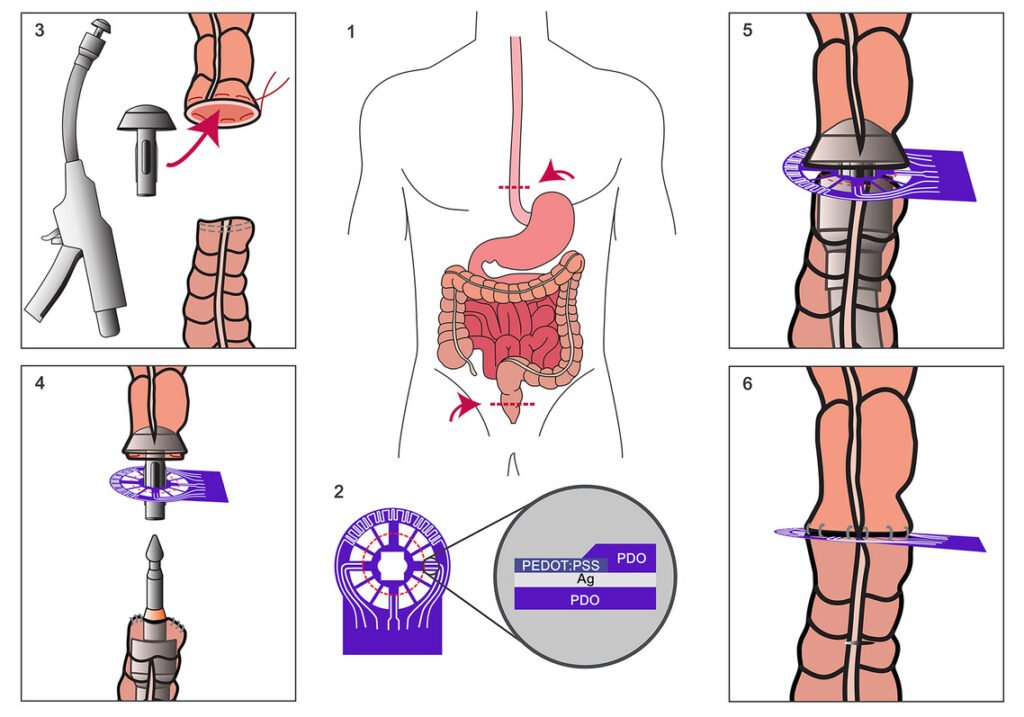
An interdisciplinary team from Dresden University of Technology, Rostock University Medical Centre, and Dresden University Hospital has introduced an innovative implantable sensor film that enables reliable early detection of blood flow disorders following intestinal surgery. These disorders, particularly at intestinal anastomoses where sections of the bowel are surgically reconnected, represent one of the highest‑risk complications in abdominal surgery.
The newly developed sensor film is both implantable and fully resorbable, meaning it dissolves naturally in the body after use. This eliminates the need for removal procedures and reduces the risk of long‑term complications. By continuously monitoring blood supply at the surgical site, the film can identify problems before they become life‑threatening, giving clinicians a critical window to intervene.
The research team emphasized that current monitoring methods often fail to detect complications early enough, leading to severe outcomes such as leakage, infection, or sepsis. The sensor film addresses this gap by providing direct, localized feedback on tissue perfusion.
This advance offers hope for improving patient safety after intestinal operations, particularly in high‑risk cases. By enabling earlier detection of compromised blood flow, the sensor technology could significantly reduce mortality and improve recovery outcomes.
Article from Dresden University of Technology: New Sensor Technology Can Detect Life-Threatening Complications After Intestinal Surgery at an Earlier Stage
Abstract in Advanced Science: Real-Time In Vivo Monitoring of Anastomotic Intestinal Ischemia Using Implantable Resorbable Organic Sensors
