
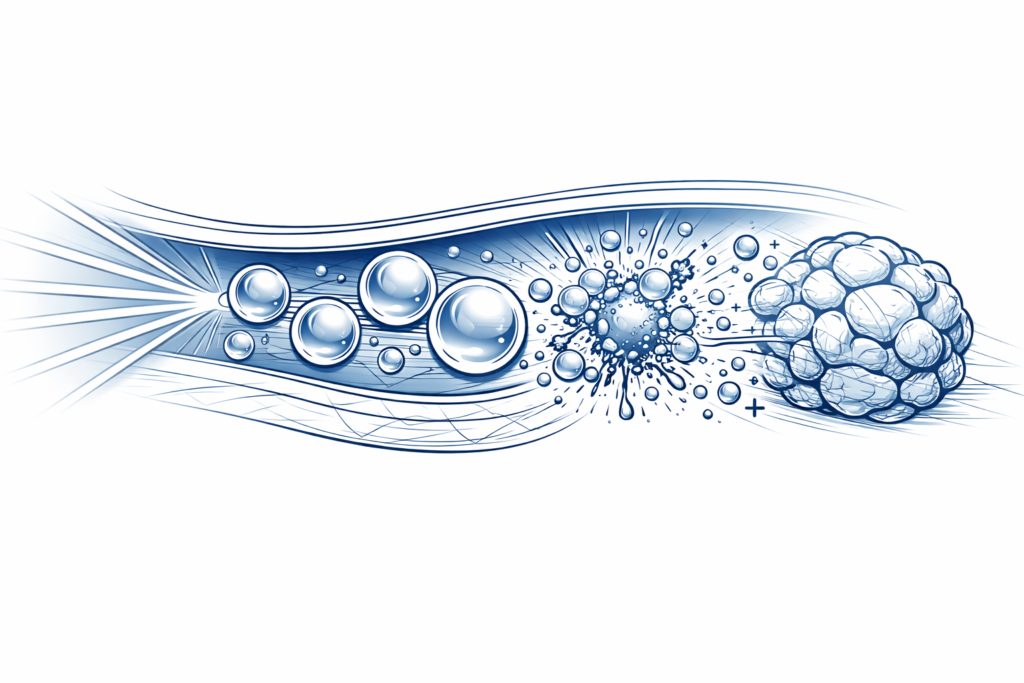
Many treatments for cancer and cardiovascular disease struggle to deliver drugs to the right place without harming healthy tissue. A University of Central Florida researcher has created smart microbubbles that carry therapeutic agents directly to diseased areas and release them only when activated by ultrasound. This approach is designed to improve accuracy and reduce side effects.
The microbubbles are tiny gas filled spheres with a biocompatible shell that can hold drugs, genetic material, or nanoparticles. When exposed to focused ultrasound, they vibrate and burst, releasing their contents exactly where they are needed. This controlled release allows physicians to concentrate therapy at tumor sites or damaged heart tissue while limiting exposure to the rest of the body. The bubbles also enhance ultrasound imaging, which makes it possible to track treatment delivery in real time.
In laboratory studies, the microbubbles successfully released chemotherapy drugs into tumors and delivered regenerative molecules to heart tissue after injury. Their small size allows them to move through narrow capillaries and reach areas that conventional drug carriers cannot. The researcher is also developing surface coatings that help the bubbles recognize specific cell types, which could further increase targeting precision.
The system combines treatment and imaging in a single platform. By linking drug delivery with real time feedback, clinicians can adjust therapy as it unfolds. The technology may be adaptable to other conditions, including neurological and inflammatory diseases, where localized treatment is essential.
This work shows how ultrasound responsive microbubbles can support precise, minimally invasive therapy with improved control and visibility.
