
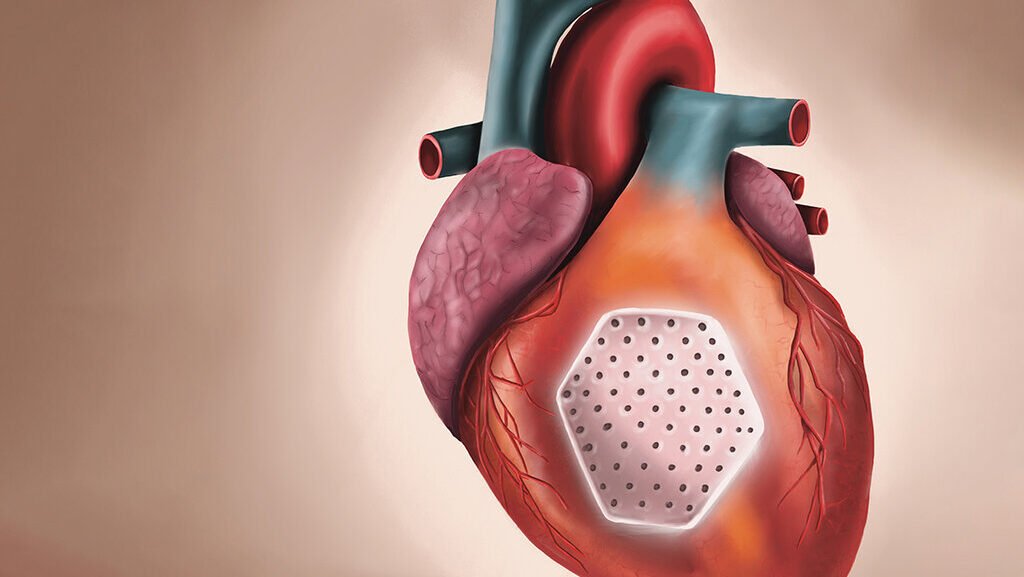
Severe heart failure leaves patients with few meaningful options because damaged heart muscle cannot regenerate and the heart gradually loses its ability to pump blood effectively. A new approach out of the University Medical Center Göttingen (UMG) and the University Hospital of Schleswig-Holstein (UKSH) in Germany using engineered heart tissue is beginning to show that biological repair may be possible, offering a potential alternative to mechanical support or transplantation. The therapy centers on a living heart patch created from human induced pluripotent stem cell derived cardiomyocytes combined with a collagen based scaffold. This patch is designed to contract like native heart muscle and support the weakened ventricle when placed on the surface of the failing heart.
In a recent clinical study, patients with advanced heart failure received this engineered tissue as part of a carefully monitored procedure. These individuals had severely reduced cardiac function and had exhausted conventional therapies. After implantation, clinicians observed improvements in heart performance, suggesting that the patch contributed to the pumping action of the heart. One patient who had suffered a major heart attack and experienced a dramatic decline in ejection fraction reported that the therapy offered a chance to regain stability without relying on mechanical circulatory support. His experience illustrates how the patch may help patients who face progressive decline despite medication and rehabilitation.
The development of this therapy reflects years of work in regenerative cardiology. Traditional treatments can slow the progression of heart failure but do not replace the scar tissue that forms after injury. The engineered patch aims to address this limitation by adding functional muscle capable of contracting in synchrony with the patient’s own heart. Researchers involved in the study describe the early clinical results as a significant step because they demonstrate that engineered heart tissue can survive in the human body and contribute to improved function. The work also highlights the importance of collaboration between academic researchers and biotechnology partners who helped translate laboratory findings into a clinical product.
Although the study involved a small number of patients, the findings point toward a future in which biological reconstruction of the heart may become part of standard care for severe heart failure. Larger trials will be needed to determine long term safety, durability, and effectiveness. Even so, the early evidence suggests that engineered heart muscle could eventually offer a new therapeutic path for patients who currently have limited options.
Article from UMG: New Hope for Severe Heart Failure: Heart Patch Shows Clinical Efficacy
Abstract in the New England Journal of Medicine: Stem-Cell–Derived Biologic Ventricular Assist Tissue in Heart Failure
