
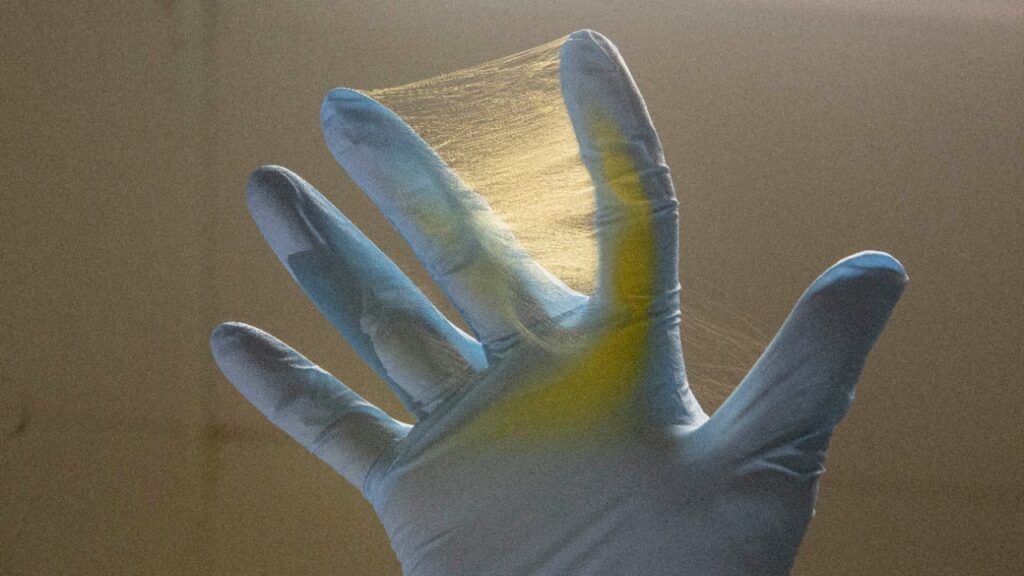
Glioblastoma remains one of the most difficult cancers to treat because its tumor cells adapt quickly and often survive even the most aggressive therapies. Researchers are developing new approaches that can deliver multiple drugs directly to the tumor site in an effort to overcome this resistance. One promising strategy from the University of Cincinnati uses a nanofiber based mesh that can hold several anticancer agents at once and release them in a controlled manner after surgical removal of the tumor. This system is designed to maintain therapeutic pressure on residual cancer cells and reduce the likelihood of recurrence.
The platform is created using electrospinning, a technique that forms thin fibers under an electric field. These fibers can be layered and loaded with different drugs, allowing for both immediate and sustained release. In this work, scientists incorporated three drugs that are already approved for treating glioblastoma. Laboratory studies showed that the drugs were more effective when delivered together, demonstrating a synergistic effect that enhanced their ability to kill tumor cells. Because the mesh can be placed directly in the surgical cavity, it bypasses the blood brain barrier, which often limits the effectiveness of systemically administered drugs.
Researchers emphasize that glioblastoma’s rapid evolution requires treatment strategies that attack the disease from multiple angles. The nanofiber mesh is intended to provide a multidrug approach that adapts to the tumor’s complexity. Neurosurgeons involved in the project note that the material can be integrated into existing surgical workflows, making it a practical option for postoperative care. The study also highlights the importance of combining engineering, cancer biology, and clinical expertise to design a system that can address the unique challenges of brain tumors.
Although the work is still in the preclinical stage, the findings suggest that localized, sustained delivery of multiple drugs could improve outcomes for patients with glioblastoma. The ability to maintain drug exposure at the site where recurrence is most likely may help slow or prevent the return of the disease. Continued research will determine how the platform performs in more advanced models and whether it can be translated into clinical use. The early results indicate that this multidrug nanofiber approach could become an important addition to the treatment landscape for a cancer that has long resisted conventional therapies.
Article from UC: Multidrug treatment using nanofibers shows promise for glioblastoma
Abstract in ACS Biomaterials Science & Engineering: Codelivery Material System of Polymer Microfiber Structures for Synergistic Localized Therapy of Glioblastoma
