
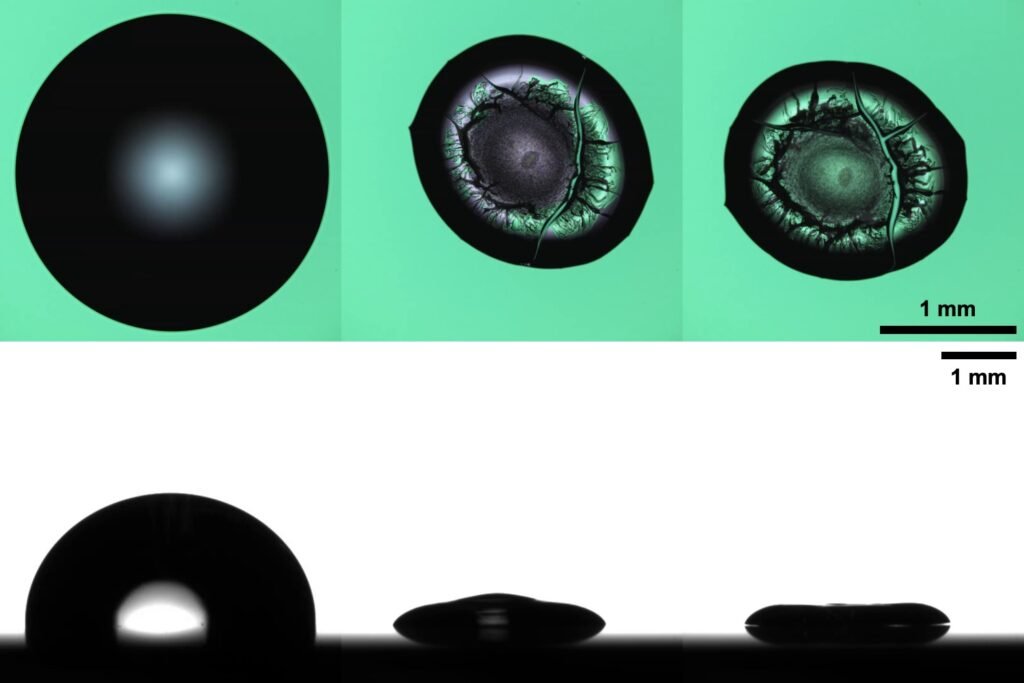
Hospitals struggle with surfaces that attract proteins and germs, creating a pathway for infections that threaten vulnerable patients. Even with strict cleaning protocols, many materials used in medical devices and clinical environments allow biological residue to stick, which can help bacteria survive and spread. Engineers at the University of Toronto have developed a new surface coating that tackles this problem by using microscopic polymer bristles to prevent proteins and microbes from attaching in the first place. Their work points toward safer medical tools, cleaner hospital environments, and new strategies for infection control.
The research team focused on a long standing challenge in materials science. Most surfaces, even those designed to be smooth or chemically resistant, still allow proteins to bind. Once proteins accumulate, bacteria can anchor themselves and form biofilms that are difficult to remove. Traditional antimicrobial coatings often rely on chemicals that can degrade over time or contribute to resistance. The Toronto group wanted a physical solution that would remain effective without releasing any active agents.
Their answer is a coating made of densely packed polymer bristles only a few micrometers long. These bristles create a soft, flexible forest that moves slightly when touched by proteins or microbes. Because the bristles bend and shift, they prevent biological material from settling into a stable position. The result is a surface that is mechanically inhospitable to adhesion. Proteins cannot form the initial layer that bacteria depend on, and germs have difficulty attaching long enough to colonize.
To test the concept, the researchers applied the bristled coating to various materials commonly used in medical settings. Laboratory experiments showed that the surfaces resisted protein buildup far better than untreated controls. When exposed to bacteria, the coated samples showed dramatically reduced microbial attachment. The team also demonstrated that the bristles could be tuned by adjusting their length, density, and stiffness, allowing the coating to be customized for different applications.
One of the most promising aspects of the technology is its durability. Because the coating works through physical structure rather than chemical release, it maintains its effectiveness over time. The researchers envision uses in catheters, surgical tools, diagnostic equipment, and high touch hospital surfaces where contamination risk is high. They also note that the bristles can be manufactured using scalable techniques compatible with existing medical device production.
By creating a surface that proteins and germs cannot easily cling to, the University of Toronto team offers a new approach to infection prevention. Their polymer bristle coating could help reduce hospital acquired infections and improve the safety of medical devices without relying on chemicals that lose potency or contribute to resistance.
Here’s a quick animation of the coating in action:
Article from the University of Toronto: Polymer ‘bristles’ could help repel proteins — and germs — from surfaces in medical settings
Abstract in Chemical Engineering Journal: Liquidlike polydimethylsiloxane polymer brushes spontaneously delaminate drying protein-laden droplets
