
Scott Jung

Scott Jung is a Silicon Valley-based medical and health technology reporter and advocate, with a focus on wearables, telemedicine, and health technology in emerging countries. He previously was at Medgadget and represented them at CES and Digital Health Summit, TEDMED, Stanford Medicine X, and SXSW. Always on the lookout for innovative medical technology worldwide, Scott has been invited to visit Colombia, Poland, and many other countries around the world to share how medtech is enriching the lives of its people. Scott holds a B.S. degree in Biomedical Engineering from the University of Southern California and an M.S. degree in Medical Product Development Management from San José State University. Scott is always looking for the next big thing in medical technology and digital health. Interested in helping him transform lives? Get in touch with him at https://scottju.ng

Wearable Ultrasound Patch Offers Continuous Monitoring for High Risk Pregnancies

Many complications in high risk pregnancies go undetected because standard ultrasound exams provide only brief snapshots of fetal health rather than continuous information. Researchers at the University of California, San Diego have developed a soft, wearable ultrasound patch that aims […]

Wearable Ultrasound Patch Offers Continuous Monitoring for High Risk Pregnancies Read More »

Smart Microbubbles Deliver Targeted Therapy for Cancer and Heart Disease

Many treatments for cancer and cardiovascular disease struggle to deliver drugs to the right place without harming healthy tissue. A University of Central Florida researcher has created smart microbubbles that carry therapeutic agents directly to diseased areas and release them

Smart Microbubbles Deliver Targeted Therapy for Cancer and Heart Disease Read More »

Organ‑on‑a‑Chip Model Decodes Inflammatory Bowel Disease to Reveal Personalized Treatment Pathways

Inflammatory bowel disease remains difficult to study because its complex immune and microbial interactions cannot be replicated in traditional lab models. Researchers at Harvard University’s Wyss Institute have developed a microfluidic “gut‑on‑a‑chip” system that recreates the dynamic environment of the

Organ‑on‑a‑Chip Model Decodes Inflammatory Bowel Disease to Reveal Personalized Treatment Pathways Read More »

3D Printed Ceramic Bone Implants Mimic Natural Bone Structure for Personalized Reconstruction

Bone reconstruction remains difficult when large defects occur, because current implants often fail to match the mechanical behavior and biological complexity of natural bone. Researchers at Tampere University in Finland are working to solve this problem by developing 3D printed

3D Printed Ceramic Bone Implants Mimic Natural Bone Structure for Personalized Reconstruction Read More »

Wearable Sweat Sensor Enables Long Term Molecular Health Monitoring Without Batteries

Long term molecular health monitoring has been difficult to achieve because most wearable sensors lose accuracy as their sensing surfaces degrade. University of California, Irvine researchers have developed a new bioelectronic sweat sensor that solves this problem by regenerating its

Wearable Sweat Sensor Enables Long Term Molecular Health Monitoring Without Batteries Read More »

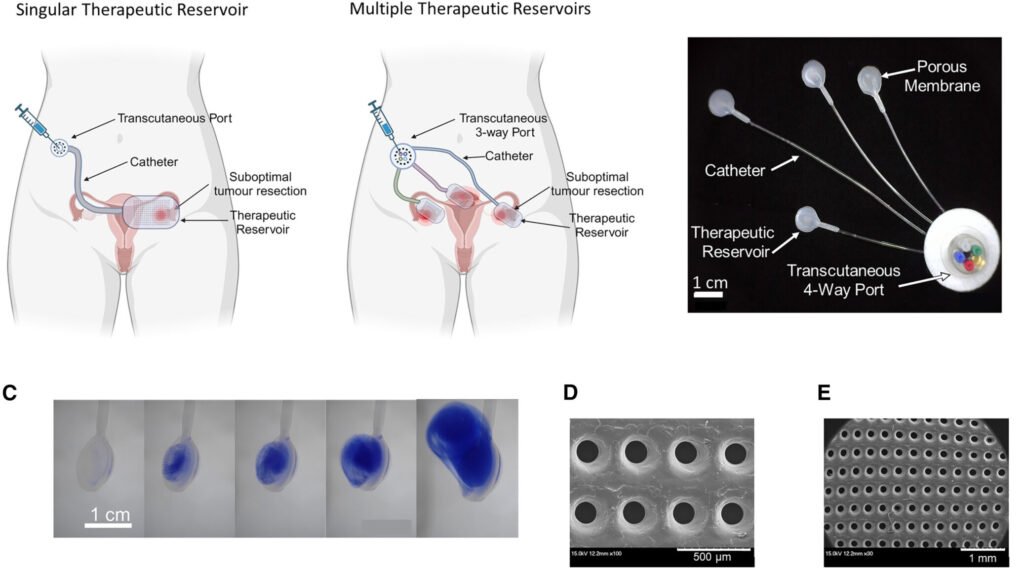
Implantable Cytokine Factories Show Early Promise in First Human Trial for Advanced Ovarian Cancer

Patients with recurrent ovarian cancer often face limited treatment options because tumors become resistant to chemotherapy and spread throughout the abdominal cavity. Systemic immunotherapies can help some patients, but high dose cytokines such as interleukin 2 are too toxic when

Implantable Cytokine Factories Show Early Promise in First Human Trial for Advanced Ovarian Cancer Read More »

3D Printed Artificial Muscles Bend and Twist on Demand Using Nature Inspired Design

Soft robots and biomedical devices often struggle to achieve the complex, coordinated motions that biological muscles perform with ease. Traditional synthetic actuators can contract or expand, but they rarely bend, twist, and coil in controlled ways. Researchers at Harvard University’s

3D Printed Artificial Muscles Bend and Twist on Demand Using Nature Inspired Design Read More »

Scroll to Top