
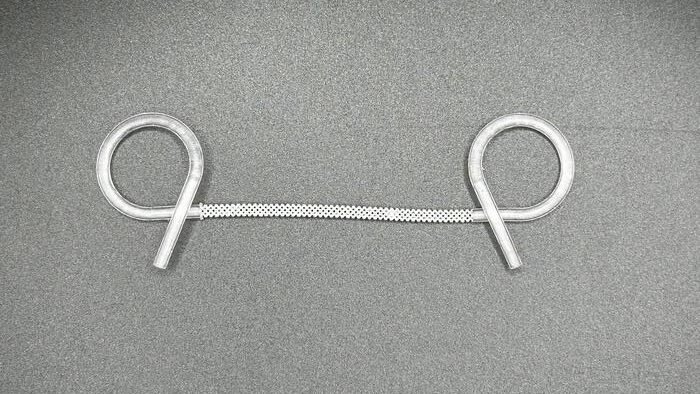
Gastric leaks are a serious complication that can occur after weight‑loss surgery, leading to infection, prolonged hospitalization, and repeated medical interventions. Current drainage stents used to treat these leaks were originally designed for bile ducts rather than the stomach, and they must be removed once healing is complete, requiring an additional procedure. Researchers at NYU Abu Dhabi developed a biodegradable, 3D‑printed gastric stent with an internal lattice architecture that improves drainage performance and may eliminate the need for device removal after treatment.
The new stent, called “BRIDGE”, uses a highly structured internal lattice that more than doubles drainage performance compared with conventional stents. Laboratory testing showed that the lattice design allows the device to withstand bends more than seven times tighter without kinking, helping maintain effective drainage even in complex anatomical environments. The researchers emphasized that the improvement comes from redesigning the internal architecture rather than altering the overall shape of the stent. By integrating a biodegradable material, the device safely breaks down after treatment, reducing the burden of repeat procedures.
The study builds on the team’s previously reported flower‑inspired gastric stent. In this new work, the researchers focused on engineering the stent from the inside out. The internal lattice design enhances flexibility, kink resistance, and fluid flow, addressing limitations of existing stents that often slip, drain slowly, or require multiple interventions. The biodegradable material ensures that once the gastric leak heals, the stent naturally degrades without requiring removal.
Gastric leaks occur in a small percentage of bariatric surgeries, but their consequences can be significant. Because current stents are not optimized for the irregular cavities created by these leaks, patients often undergo repeated procedures before the leak resolves. The research team designed BRIDGE specifically for this clinical challenge, using advanced 3D printing to create a structured internal geometry that supports more efficient drainage.
The researchers noted that medical devices are often adapted from other applications rather than designed for the specific clinical problem they aim to solve. By combining advanced manufacturing with biodegradable materials, the team created a stent that improves drainage while reducing treatment burden. They highlighted that reengineering medical technologies with architected internal structures can fundamentally improve performance.
Future work will explore how the lattice‑integrated biodegradable stent performs in additional testing environments and how its design principles might be applied to other drainage challenges in the body. The researchers view BRIDGE as a step toward more effective, patient‑specific solutions for treating gastric leaks.
