
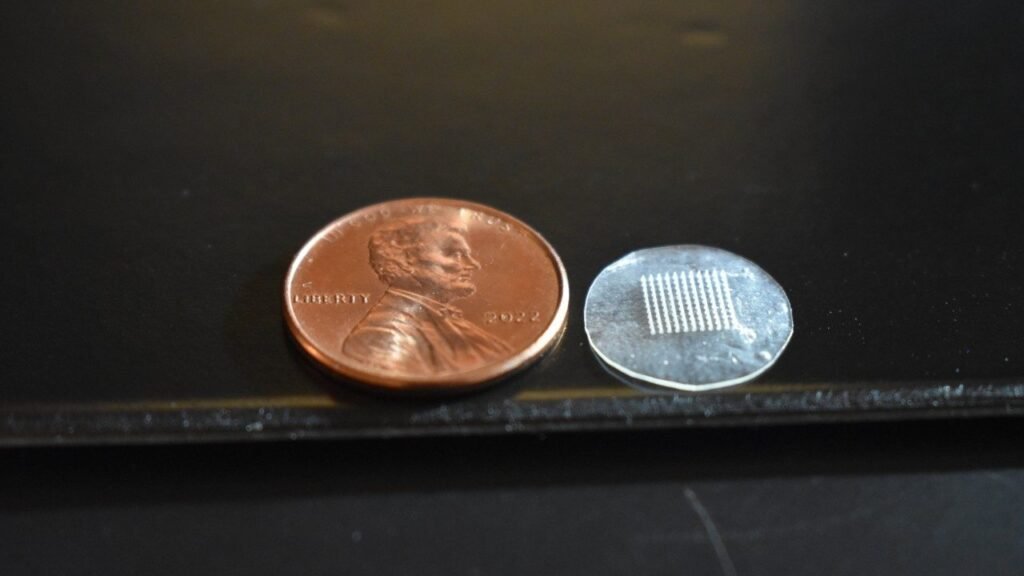
Opioid overdoses often become fatal because they occur without a bystander present to administer naloxone, the medication that rapidly reverses opioid effects. Synthetic opioids such as fentanyl act quickly and powerfully, leaving individuals unconscious before they can seek help. Researchers at Virginia Tech developed a wearable microneedle patch that detects fentanyl in the body and automatically releases naloxone, offering a potential safeguard for people at high risk of unwitnessed overdose. The device is designed to intervene autonomously, providing protection even when no one else is present.
The patch, called the “iNal” patch, uses an array of 121 microscopic needles that reach the interstitial fluid beneath the skin while causing minimal tissue disruption. Inside the microneedles are porous silica nanoparticles loaded with naloxone. These nanoparticles are sealed with fentanyl‑sensitive molecular gates that open only when fentanyl is detected. When fentanyl molecules reach the patch, they trigger the gates to open and release naloxone directly into the body. Higher fentanyl concentrations open more gates, enabling dose‑responsive delivery that matches the severity of the overdose. Because only a portion of the nanoparticle pores open during each activation, the patch retains naloxone for future exposures, allowing multiple release cycles over time.
This repeated‑release capability addresses a major clinical challenge. Fentanyl’s effects often last longer than naloxone’s, meaning overdose symptoms can return after an initial reversal. The iNal patch is engineered to respond again if fentanyl remains present, providing sustained protection without requiring manual intervention. In mouse studies, the patch rapidly reversed fentanyl‑induced overdose symptoms and restored normal physiological behavior, demonstrating its potential as an autonomous harm‑reduction tool.
The microneedle design also avoids the need for traditional injectable or nasal naloxone formats, which depend on human recognition of overdose symptoms. By integrating detection and delivery into a single closed‑loop system, the patch offers a new approach to overdose response that does not rely on bystanders. The researchers emphasized that the technology is intended as a safety net for individuals at high risk, particularly those prescribed opioids for pain management who may accidentally encounter fentanyl contamination.
Future work will focus on evaluating long‑term stability, performance across different skin types, and real‑world reliability. The concept may also inspire autonomous therapeutic systems for other medical emergencies where rapid, repeated intervention is critical.
Article from VT: Wearable smart patch could deliver automatic aid during a fentanyl overdose
Abstract in Advanced Science: A Fentanyl-Responsive Microneedle Patch for Harm Reduction
