
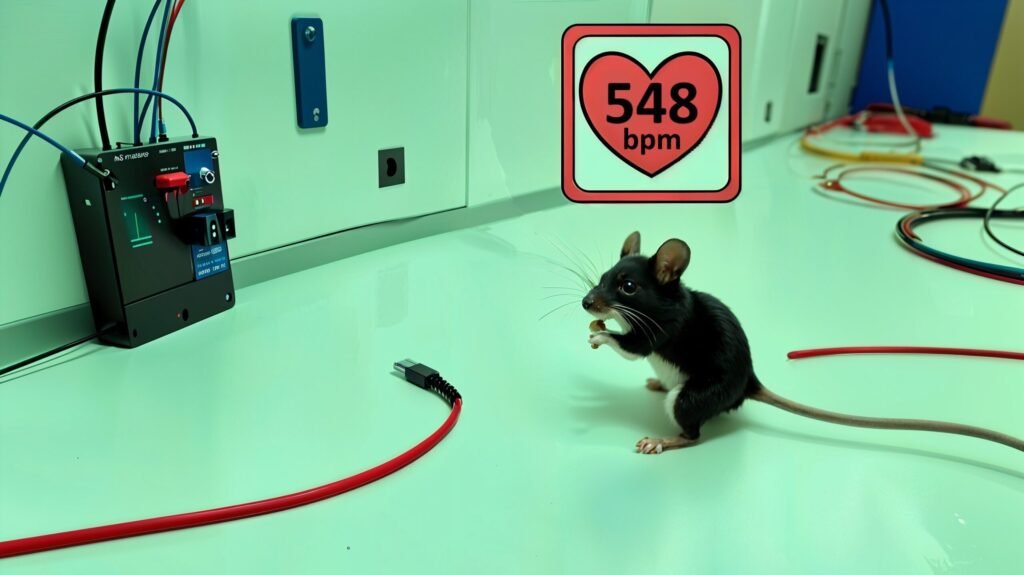
Many neurological disorders are treated with electrical stimulation delivered through surgically implanted electrodes. These devices can help manage severe epilepsy, Parkinson’s disease, essential tremor, and other conditions when medications fail, but they require invasive brain surgery and place rigid metal components deep within neural tissue. Researchers at Skolkovo Institute of Science and Technology (Skoltech) in Russia and collaborating institutions developed a new approach that uses biocompatible magnetic microparticles to stimulate nerves remotely, offering a potential alternative that is far less invasive.
The team demonstrated the concept by modulating the breathing and heart rate of a mouse through wireless stimulation of the vagus nerve. Instead of using a traditional electrode, they injected tiny magnetic microparticles into the nerve tissue. When exposed to a variable magnetic field, the particles acted like miniature electrodes, generating electrical signals that activated the nerve. Because the particles are roughly the size of individual neurons, they can be delivered through an injection rather than major surgery. The researchers emphasized that while an injection is still invasive, it is significantly less burdensome than implanting a multi‑centimeter metal electrode in the brain.
Previous attempts at magnetic stimulation relied on particles containing toxic metals such as cobalt or nickel, limiting their clinical potential. The Skoltech team designed nontoxic, biocompatible particles that avoid these safety issues. Their work builds on the growing recognition that electrical stimulation can benefit a wide range of neurological, movement, and psychiatric conditions. Existing electrode‑based therapies are already used for Parkinson’s disease, drug‑resistant epilepsy, obsessive‑compulsive disorder, and essential tremor, and they are being investigated for dementia, Tourette syndrome, chronic pain, addiction, and treatment‑resistant depression. The new microparticle approach aims to preserve these therapeutic advantages while reducing surgical risk.
The researchers noted that further miniaturization could make the technology even less invasive. If the particles can be made significantly smaller, nasal delivery might become possible, enabling them to reach the brain without injections. Although the current work focuses on proof‑of‑concept experiments in mice, the results suggest a path toward safer neuromodulation tools that could one day replace implanted electrodes for certain conditions. The study highlights how magnetic materials, when engineered for biocompatibility and precision activation, may open new avenues for treating neurological disorders with fewer surgical complications.
Article from Skoltech: Biocompatible microparticles remotely stimulate neural impulses in mice for safer alternative to brain electrodes in epilepsy, Parkinson’s, and more
Abstract in Advanced Functional Materials: Quantized Wireless Vagus Nerve Stimulation via Magnetoelectric Effect in Composite PLLA/Fe2O3-Nanorod Microparticles
