
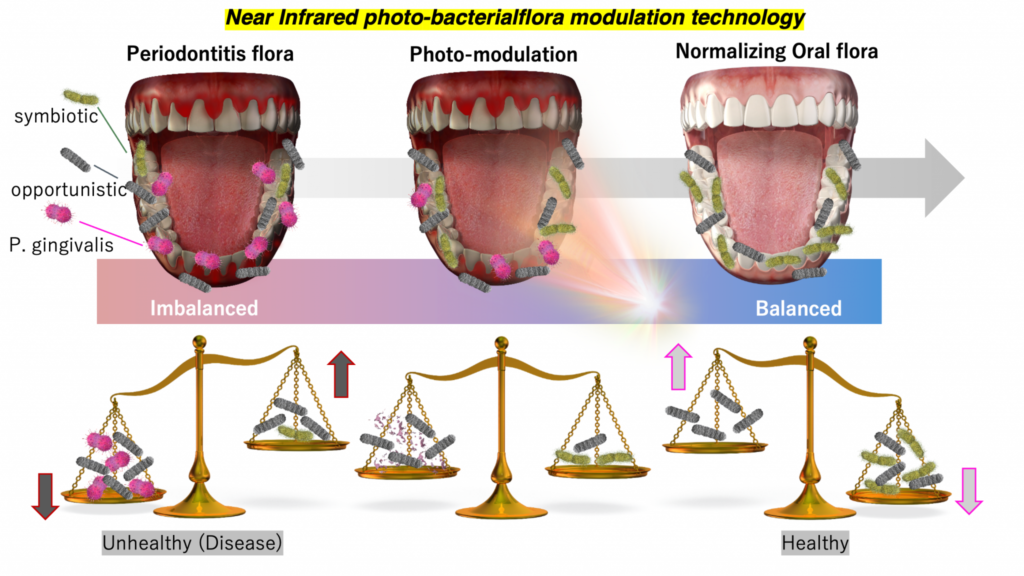
Gum disease often progresses because harmful bacteria disrupt the balance of the oral microbiome, leading to inflammation, bone loss, and long‑term damage to teeth. Conventional treatments such as antibiotics and antimicrobial photodynamic therapy remove both harmful and beneficial bacteria, which can destabilize the oral environment and trigger additional inflammation. Researchers at Nagoya University developed a targeted therapy that eliminates the key pathogen responsible for periodontitis while preserving the beneficial microbes that support oral health.
The therapy adapts a near‑infrared photoimmunotherapy method originally used in cancer treatment. It uses an antibody linked to a dye that binds specifically to the gum‑disease bacterium. When exposed to near‑infrared light, the dye disrupts the bacterium’s outer membrane, creating small holes that eliminate the pathogen without harming surrounding cells or beneficial microbes. This selective mechanism stands in contrast to traditional treatments that destroy entire bacterial populations and can injure gum tissue. Cell culture experiments showed that the targeted compound attached only to the harmful bacterium, leaving healthy gum cells and other oral bacteria unaffected.
To make the therapy practical and scalable, the research team used IgY antibodies derived from egg yolks of hens immunized against the pathogen. IgY can be produced in large quantities at low cost, making it suitable for clinical use. The resulting method, called near‑infrared photo‑antibacterial targeting therapy, was tested in human cell cultures and mouse models. In mice with periodontitis, the treatment significantly reduced alveolar bone loss and improved the balance of oral microbes compared with conventional approaches. Saliva analysis indicated that the therapy preserved beneficial bacteria while eliminating the harmful species responsible for disease progression.
The findings suggest that this targeted approach could offer a safer and more effective alternative to current gum‑disease treatments. By removing only the disease‑causing bacterium and maintaining the broader microbial community, the therapy supports healing while reducing the risk of inflammation and tissue damage. Researchers anticipate that future versions could be adapted to target additional oral pathogens and help personalize treatment for chronic gum disease.
Article from Nagoya University: New therapy eliminates gum disease bacterium while preserving beneficial oral microbes
Abstract in Journal of Translational Medicine: Near infrared photo-bacterialflora modulation technology realized controlling periodontitis: modulation of disease-associated dysbiosis in oral microbiota using near infrared photo-antibacterial targeting therapy (NIR-PAT2)
