
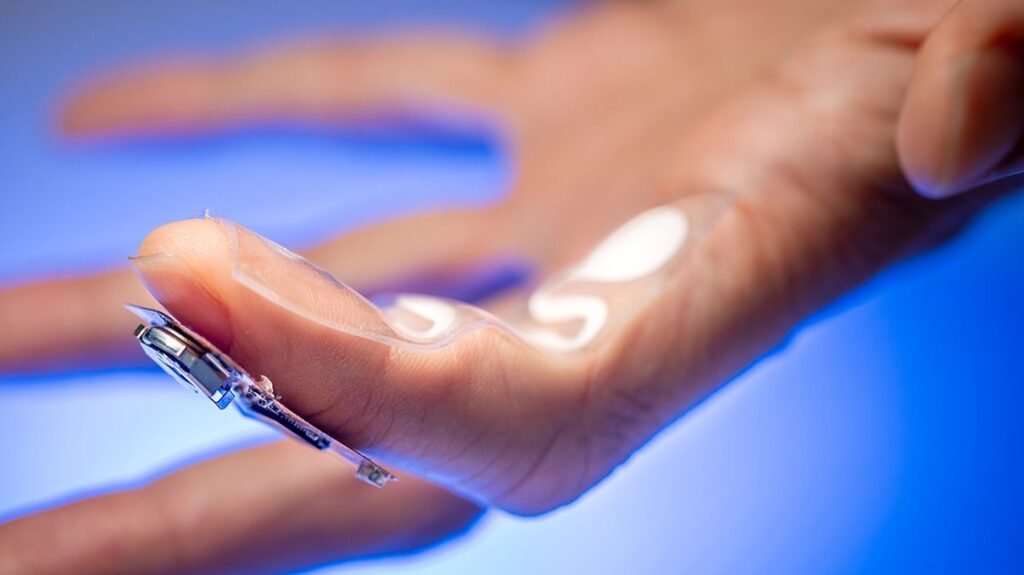
People living with Parkinson’s disease often face the challenge of maintaining consistent medication levels throughout the day. The effectiveness of treatment depends on how well the body absorbs and metabolizes each dose, yet traditional monitoring methods require blood samples or lab tests that are inconvenient and infrequent. A research team at the University of California San Diego has developed a fingertip patch that uses sweat to track medication levels continuously, offering a noninvasive way to personalize treatment.
The patch is powered by the wearer’s own sweat. It contains a flexible sensor that detects chemical markers associated with Parkinson’s medication as they appear in perspiration. When the user’s body releases small amounts of sweat, the patch converts that moisture into electrical energy, eliminating the need for batteries. The sensor then measures the concentration of the medication and transmits the data wirelessly to a mobile device for analysis. This allows clinicians to see how the drug is processed in real time and adjust dosage schedules accordingly.
The research team designed the patch to be small and comfortable enough to wear on the fingertip, where sweat glands are dense and responsive. The device uses microfluidic channels to guide sweat toward the sensing area, ensuring accurate readings even when moisture levels are low. Because the patch operates continuously, it can reveal fluctuations in drug absorption that might otherwise go unnoticed. This information could help doctors fine‑tune treatment plans to reduce side effects and improve symptom control.
Beyond Parkinson’s disease, the technology could be adapted to monitor other medications or biomarkers. The research team envisions future versions that track hydration, stress hormones, or metabolic health using the same sweat‑powered principle. The approach combines wearable electronics, chemical sensing, and energy harvesting in a single compact system, demonstrating how body fluids can serve as both power source and diagnostic medium.
The project reflects a growing trend toward personalized, real‑time health monitoring. By turning sweat into a source of both energy and information, the fingertip patch offers a glimpse of how wearable technology could make chronic disease management more precise and less invasive.
Article from UCSD: Sweat-Powered Fingertip Patch Accurately Monitors Parkinson’s Medication
Abstract in Proceedings of the National Academy of Sciences: A wearable patch for continuous levodopa monitoring in sweat: Towards exertion and power-free pharmacodynamic assessment in Parkinson’s disease
