
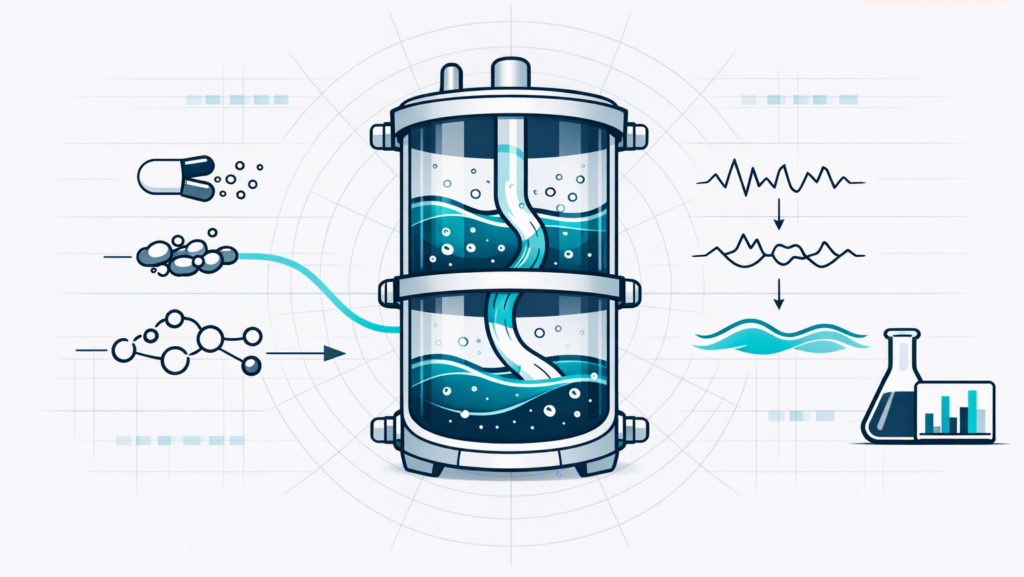
Many older adults struggle to digest and absorb enough protein to maintain muscle strength and overall health. As appetite changes and nutritional needs increase with age, traditional supplements often fail to deliver protein in a form the body can use efficiently. A research team at Aberystwyth University in Wales is addressing this challenge by developing new protein powders and evaluating them with an artificial stomach system designed to mimic human digestion.
The artificial stomach is the central tool in the project. It uses a bioreactor that recreates the temperature, acidity, and fluid movement found in the stomach and intestines. Simulated gastric and intestinal fluids flow through sequential chambers, allowing the research team to observe how different formulations break down over time. By analyzing the material that exits the system, the team can determine how much usable protein becomes available for absorption. This approach provides a realistic measure of protein quality and helps identify which ingredients release amino acids most effectively.
The powders being tested include blends of plant based, dairy, and hybrid proteins. They incorporate vitamins, minerals, and bioactive ingredients intended to support muscle maintenance and general wellbeing. To encourage regular use, the formulations are being developed in familiar flavors such as coffee and cocoa. The research team is also exploring natural functional ingredients like hemp seed and lion’s mane mushroom to enhance nutritional value.
The project includes collaboration with a regional research and development company and emphasizes sustainable sourcing from local producers. The research team aims to create protein powders that taste good, digest efficiently, and support healthier aging for people who often struggle to meet their daily protein needs. The artificial stomach allows the team to refine these products based on real digestive performance rather than relying solely on raw protein content.
Article from Aberystwyth University: New ‘super’ protein powders for active ageing tested with artificial stomach
