
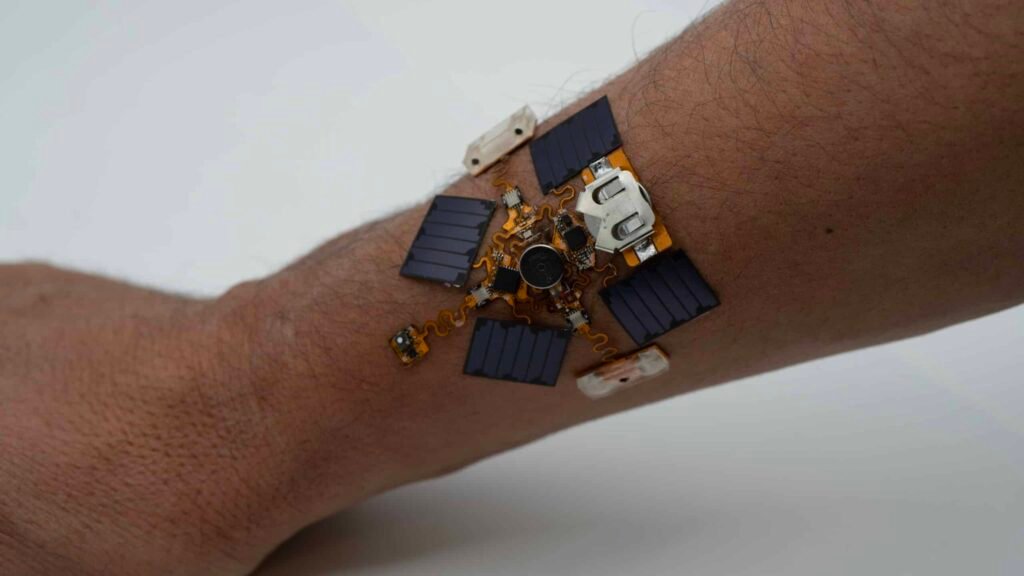
People often encounter environmental hazards without realizing it. Toxic gases, chemical contaminants, and heavy metals can be present long before they become visible or produce symptoms. Detecting these threats early is essential, but most sensing technologies rely on screens, alarms, or phone notifications that can be missed in noisy or fast‑moving environments. Researchers at North Carolina State University have developed a wearable patch that addresses this problem by turning environmental sensing into a tactile experience.
The patch is about the size of a driver’s license and adheres to the skin. It contains a modular array of sensors, a microcontroller, a small battery, and a haptic actuator. When the sensors detect a specific hazard, the actuator vibrates against the skin. Each hazard triggers a distinct vibration pattern, allowing the wearer to identify the threat without looking at a display. The textured interface helps ensure the vibrations are easy to feel, even during physical activity.
To support long periods of use, the patch incorporates thin‑film solar cells that harvest energy from ambient light. In typical conditions, the device can operate for up to twenty‑four hours. Because the sensors are modular, the patch can be configured to detect different environmental threats depending on the needs of the user. Most of the components are commercially available, which makes the system easier to scale and adapt.
The researchers also created a version designed for robots. This robotic e‑skin places the patch on top of a piezoelectric layer. When the patch vibrates, the piezoelectric material converts the motion into electrical signals that robots can interpret. This allows robots to detect hazards and respond autonomously, using the same tactile cues that humans receive.
