
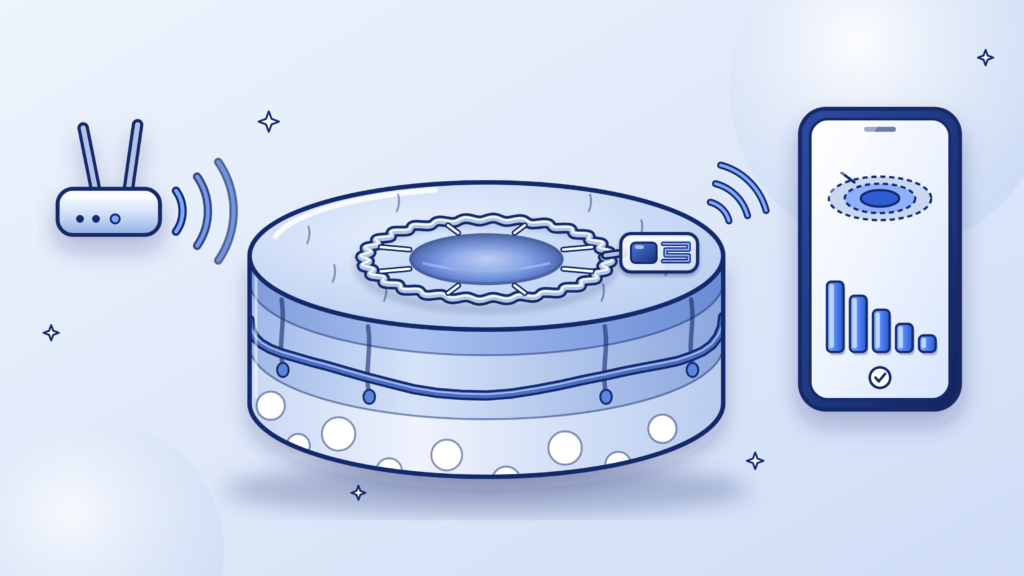
Skin wounds from injuries, surgery, or disease remain a major medical burden, especially when conditions such as diabetes or vascular disease slow healing. Standard care, including removing damaged tissue, closing the wound, and applying dressings, supports repair but does not actively guide the healing environment. The body’s own electric fields help direct skin cell movement, the growth of new blood vessels, and tissue remodeling, which has inspired therapies that apply electrical stimulation to wounds. However, many of these devices depend on short-range wireless power that requires precise alignment, or they need batteries and must be removed later, making continuous home care and long-term monitoring difficult. Researchers at Shanghai Jiao Tong University School of Medicine have developed a battery-free device that draws power from Wi-Fi-band radio signals at long range to stimulate wounds and track their healing.
The device uses an antenna and a power-management circuit to convert Wi-Fi-band radio signals into usable electricity, working at distances beyond 8 meters and removing the need for careful alignment. A stretchable, ring-shaped electrode made from a polymer and the metal molybdenum surrounds the wound and delivers a localized electric field. The same electrodes also periodically measure the wound’s electrical resistance and send that data wirelessly to a smartphone, information the research team says could help track healing progress. The electrodes stayed at safe temperatures during stimulation and came off naturally with the scab, so nothing needs to be removed.
The researchers tested the device on deep skin wounds in mice. Daily stimulation sped up wound closure and improved the formation of new tissue, collagen density, blood vessel growth, and hair follicle regeneration. Genetic analysis showed reduced activity in genes linked to inflammation and increased activity in genes involved in building skin, consistent with calmer inflammation and active regeneration. The device delivered stable output when bent and when wet, which is important for conforming to moving tissue. Cell studies showed that skin-repair cells remained healthy, and tests found no abnormalities in major organs.
The research team notes that the demonstration used a dedicated radio signal source and that larger animal studies are needed to fine-tune the voltage, frequency, and duration of stimulation before human use. Next steps include testing the device with ordinary ambient Wi-Fi, extending studies to larger animals and human wounds, and refining the stretchable electronics for large-scale manufacturing. The researchers say the resistance data could eventually be used to adjust stimulation to each stage of healing rather than applying a fixed dose. Because the device runs on Wi-Fi-band energy and connects to a smartphone, it could support monitoring in clinics or at home, especially where frequent dressing changes and specialist visits are a burden. The approach could also inform self-powered patches for nerve stimulation, health sensing, and connected home care.
