
Inside every healthy eye, a clear lens focuses incoming light onto the retina. When proteins within that lens become damaged or clump together, the lens grows cloudy and can no longer focus light properly, a condition known as a cataract. Cataracts are among the leading causes of vision loss and blindness, affecting an estimated 94 million people worldwide, and surgery is currently the only treatment. Researchers at Anglia Ruskin University in the United Kingdom have now grown realistic miniature human lenses in the lab from stem cells for the first time, opening a potential new route for understanding and eventually treating the condition.
Progress in this area has been held back in part because developing human lens tissue is very difficult to obtain and study. To work around this, the research team began with induced pluripotent stem cells, which are adult cells that have been reprogrammed back into a stem cell-like state. The team then developed a growth method that encouraged these cells to arrange themselves into lens-like structures, and identified the conditions needed for the tissue to closely resemble a natural human lens.
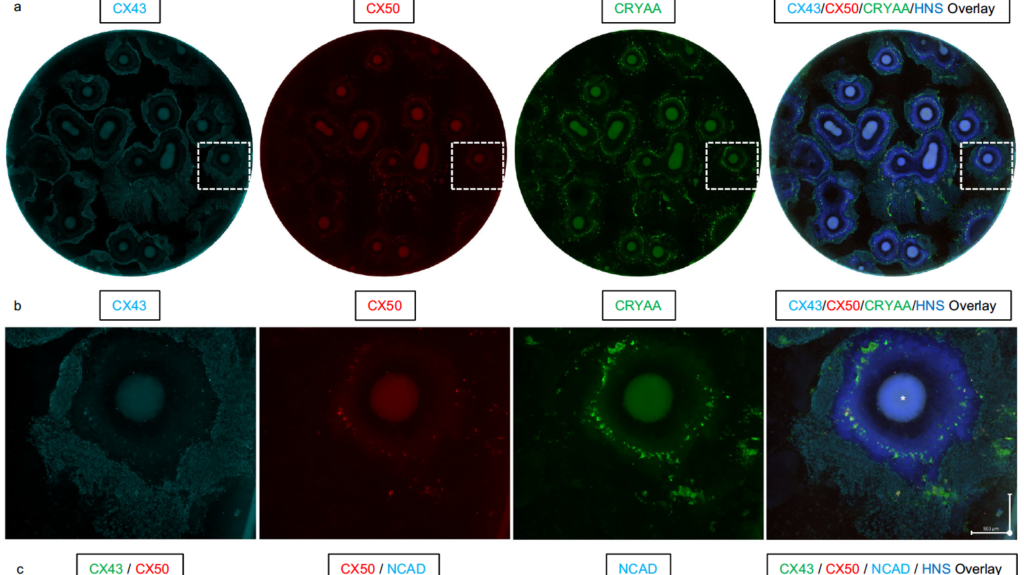
The resulting lens organoids share many key features of real human lenses. They contain the proteins that keep the lens transparent, structures resembling the protective capsule that surrounds the lens, and the highly organized fiber cells found inside natural lenses. Microscope images also revealed the distinct cell types that make up the eye’s lens, including the outer epithelial layer and the fiber cells.
The researchers also discovered that cells taken from these mini lenses could form new lens-like structures of their own. This suggests the system may reproduce some of the natural regenerative processes that occur as the lens develops.
Looking ahead, the research team believes these lab-grown tissues could help scientists learn how to prevent or treat cataracts. As the technology matures, the mini lenses could be used to test new medicines, deepen understanding of diseases that affect vision, and potentially contribute to future regenerative treatments for the eye.
Article from Anglia Ruskin University: ‘Mini lens’ grown in lab could help tackle cataracts
Abstract in npj Regenerative Medicine: Human iPSC-derived lens organoids recapitulate lens development and morphogenesis in vitro
