
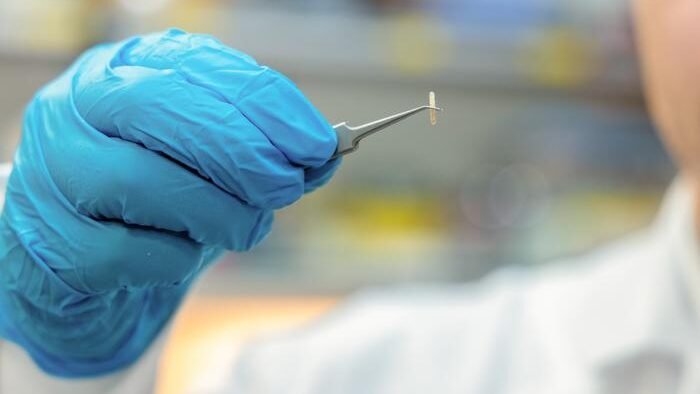
Chronic pain and movement disorders remain difficult to treat because many therapies require invasive surgery, implanted hardware, or long term medication that may not provide consistent relief. Researchers at NYU Abu Dhabi and Cleveland Clinic Abu Dhabi have developed an injectable device that aims to simplify how nerve related conditions are managed by delivering controlled electrical stimulation without the need for surgery, batteries, or wires. The device is small enough to be delivered through a standard needle and can be positioned near a target nerve to influence its activity. Once in place, it receives power wirelessly from outside the body, allowing clinicians or patients to adjust stimulation in real time.
The research team designed the device to provide a minimally invasive alternative to traditional implants. Because it can be inserted using a needle rather than through an operation, the approach reduces procedural risks and may expand access to advanced neuromodulation therapies. The device is roughly the size of a small seed and can be visualized using common medical imaging tools such as ultrasound and CT scans. This capability allows clinicians to confirm placement and monitor the device after injection. Once deployed, it delivers programmable electrical signals that can be tailored to the patient’s needs, offering a level of precision that is typically associated with more complex implanted systems.
Researchers emphasize that the technology represents a shift in how nerve related conditions can be treated. By removing the need for batteries and wires, the device avoids many of the complications associated with conventional implants. The wireless power system enables continuous control over stimulation without requiring internal power sources. The team notes that this approach could make neuromodulation safer and more accessible for patients who might not be candidates for surgery or who prefer less invasive options.
Preclinical testing showed that the device could reliably stimulate nerves under realistic conditions and activate targeted neural pathways in vivo. These results suggest that the technology may be suitable for a range of neurological conditions that benefit from precise modulation of nerve activity. The researchers describe the device as a bridge between noninvasive therapies and traditional implants, offering a combination of effectiveness and ease of delivery. By reducing the need for major procedures and simplifying how electrical stimulation is administered, the injectable system has the potential to improve patient care and broaden the availability of advanced treatments for chronic pain and movement disorders.
EurekAlert News Release: NYU Abu Dhabi and Cleveland Clinic Abu Dhabi researchers develop injectable device to control nerves without surgery
Abstract in Science Advances: An injectable, leadless bioelectronic interface for battery-free wireless peripheral neuromodulation
