
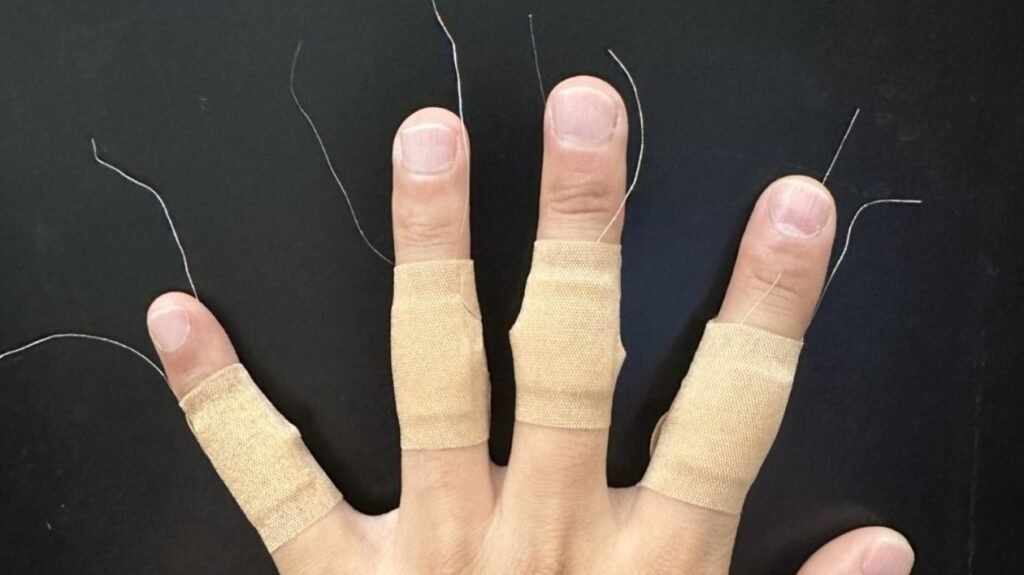
Stroke survivors often struggle to regain hand function because traditional rehabilitation tools cannot capture how the hand is used in daily life. Researchers at the University of Houston have developed wearable sensors that measure hand movement continuously, providing clinicians with detailed information about recovery outside the clinic. The system uses small devices placed on the fingers to track motion and quantify how often and how effectively the hand is used during everyday activities. This approach aims to close the gap between clinical assessments and real world performance, which can differ significantly for many patients.
The sensors record fine grained data about finger movement, grip patterns, and task engagement. By analyzing these measurements, researchers can identify how frequently the affected hand is used and how its performance changes over time. Early studies show that the data can reveal patterns that are not visible during short clinic visits. For example, some patients may perform well during supervised exercises but use their affected hand far less at home. Understanding these discrepancies can help therapists tailor rehabilitation programs to encourage more consistent use of the recovering hand.
Researchers emphasize that real world monitoring is essential for improving outcomes. Stroke rehabilitation often depends on repetition and practice, but patients may not realize how little they use their affected hand during daily tasks. The wearable sensors provide objective feedback that can motivate patients and guide therapists in adjusting treatment plans. The system also allows researchers to study how different rehabilitation strategies influence long term recovery, offering insights that could lead to more effective therapies.
The project reflects a broader effort to integrate wearable technology into neurological rehabilitation. By capturing continuous data in natural environments, the sensors offer a more accurate picture of functional recovery than clinic based assessments alone. The researchers believe that this approach could help identify which patients are at risk of slower progress and which interventions are most beneficial. As the technology develops, it may support personalized rehabilitation programs that adapt to each patient’s needs and promote more consistent improvement in hand function.
Article from UH: New Hand Sensors Turn Post‑Stroke Rehab Into an On‑Screen Game
Abstract in Advanced Healthcare Materials: Skin-Attachable Piezoelectric Patch Sensors for Self-Driven Rehabilitation of Stroke Patients by Simple Game
