
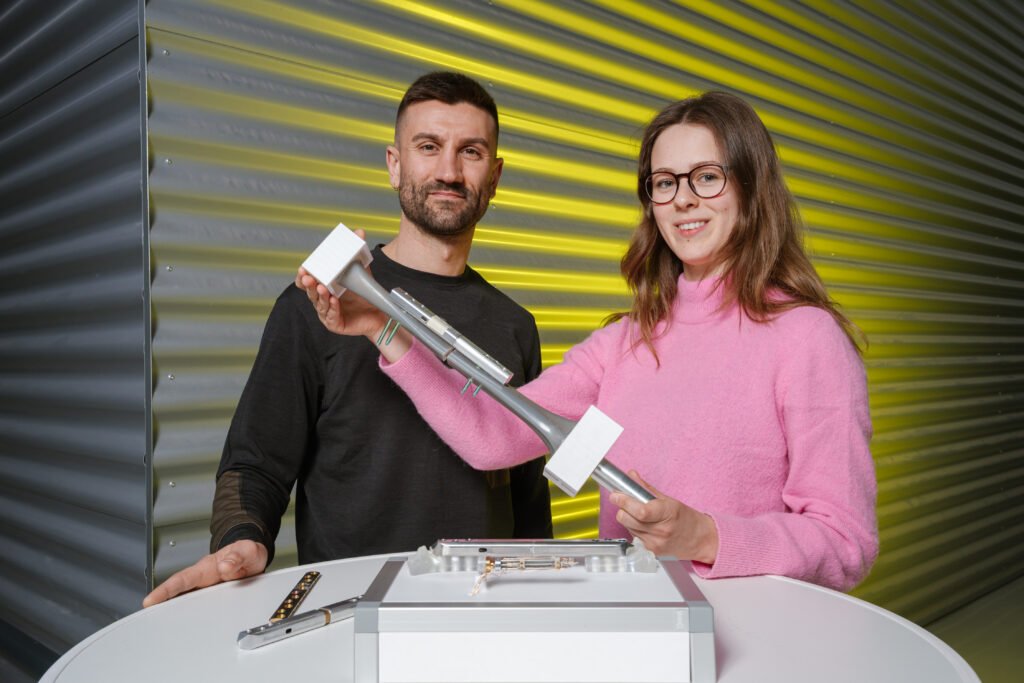
Bone fractures often leave clinicians waiting weeks before the first X‑ray reveals whether healing is on track, which means the earliest and most critical phase of recovery goes unmonitored. During this period, a fracture may fail to stabilize or may heal too slowly, but doctors have no way to see what is happening inside the body. Researchers at Saarland University in Germany are developing smart implants designed to close this information gap by monitoring the healing process from the moment the implant is placed and by providing mechanical support when needed.
The implants combine stabilization hardware with shape memory micro actuators that include built in sensing capabilities. These actuators can detect tiny movements at the fracture edges, which reveal whether new bone tissue is forming. As tissue grows, stiffness at the fracture site increases, and the implant can read this progression directly from its measurements. If healing slows or stalls, the implant can respond mechanically by adjusting its stiffness or applying controlled micro movements to stimulate bone regeneration. This active support is intended to encourage the biological processes that rebuild bone.
The project has already produced several prototypes and multiple patents. The implants are designed to continuously visualize how well or how poorly a fracture is healing inside the body, offering clinicians real time insight rather than delayed snapshots. The researchers are presenting a prototype at the annual Hannover Messe trade show that demonstrates both monitoring and active support. The implant measures micromotions that indicate healthy healing and can adapt its mechanical behavior to match the needs of the fracture. This approach aims to reduce complications, shorten recovery times, and provide a more personalized healing pathway for patients. By integrating sensing and actuation directly into the implant, the team hopes to create devices that guide bone regeneration rather than simply holding bones in place.
Article from Saarland University: Smart implants at Hannover Messe: How robotic micro-actuators are enhancing bone healing
