
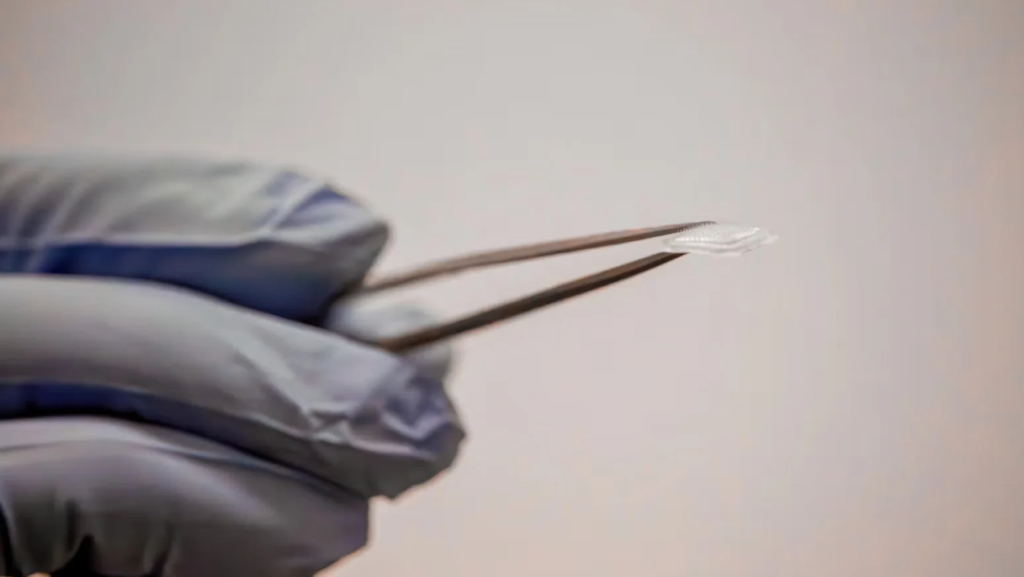
About 300 million people around the world have surgery on parts of the body other than the heart each year, and a growing number are sent home the same day. The days right after surgery are still a time of higher risk. About 20 percent of higher-risk patients experience heart injury after these surgeries, and about 90 percent of those cases cause no obvious symptoms. Many can only be diagnosed with a blood test, which is difficult once patients are home. Researchers at McMaster University have developed a wearable patch that continuously monitors for heart injury without repeated blood draws, offering a new way to keep watch over patients after they leave the hospital.
The patch tracks cardiac troponin, a protein released when the heart is damaged. It uses tiny, painless polymer microneedles that reach just beneath the skin without touching nerves or blood vessels. The microneedles collect interstitial fluid, the liquid that surrounds cells, and deliver it to a biosensor that can track troponin levels continuously over several days. Researchers at the University of Waterloo developed the microneedle technology that made this continuous sampling possible.
Continuous monitors already exist for substances such as glucose, but proteins are much harder to track. Troponin is present at very low levels in the bloodstream and is even more diluted in the fluid beneath the skin. Earlier versions of the research team’s technology monitored smaller molecules such as lactate using aptamers, which are short strands of DNA or RNA engineered to recognize specific biological targets. To detect proteins, the team combined antibodies, which recognize proteins, with aptamers, which produce a measurable signal. They also had to develop new sensing strategies, find a way to continuously refresh the sensor, and build everything into a device patients could comfortably wear.
The researchers tested the patch in mouse models of heart disease, an important step toward understanding how it could perform in clinical settings.
The research team plans further testing of the technology and is pursuing commercialization through Aptec Health, a startup founded to bring it to patients. While the immediate focus is monitoring patients after surgery, the researchers see broader possibilities across medicine. Many important health changes happen between clinic visits, and technologies like this could give a more continuous picture of what happens between appointments, providing the data that personalized medicine needs.
Article from McMaster University: New wearable sensor could help detect hidden heart damage after surgery
Abstract in Science Advances: Beyond metabolites: A wearable biointerface integrating antibody and aptamer probes for the real-time tracking of proteins in vivo
