
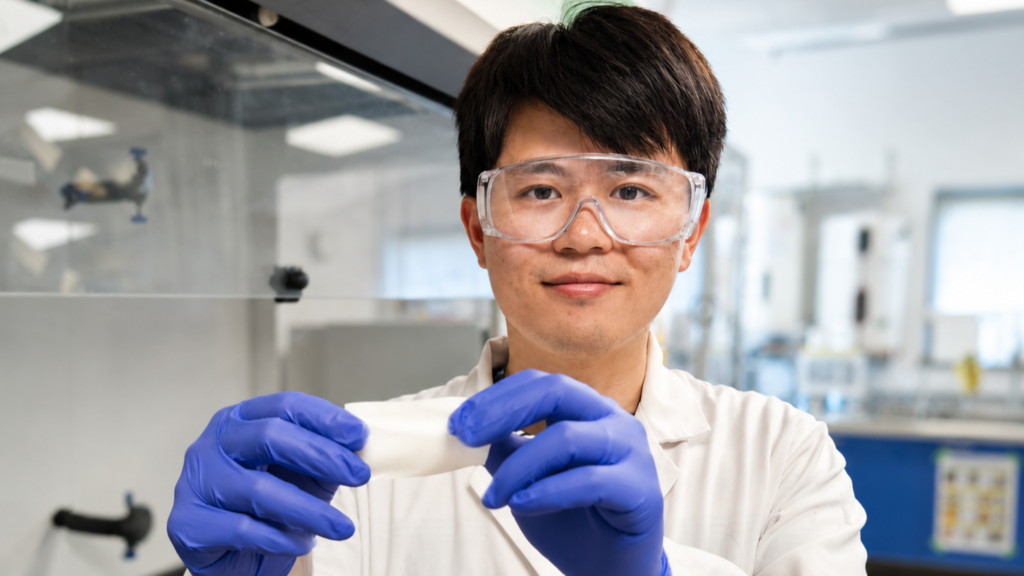
Wound infections often begin quietly, with bacteria entering a fresh injury and forming a protective biofilm within hours. Once this biofilm develops, infections become much harder to treat and can slow healing significantly. Researchers at the University of Bath have created a new plant‑based wound dressing designed to intervene during this early window, delivering antibiotics directly to the wound before the biofilm can take hold. Their goal is to provide a sustainable, effective alternative to petroleum‑based dressings while improving infection control.
The dressing is made from two layers of plant‑derived polymers that differ only slightly in chemical structure. When these polymers are electrospun into microscopic fibers, their small molecular differences translate into distinct physical behaviors. One layer becomes hydrophilic and suitable for carrying antibiotics, while the other becomes hydrophobic and helps maintain a stable healing environment. This two‑sided structure allows the dressing to release tetracycline rapidly on the wound‑facing side while repelling water on the outer side to moderate moisture loss.
Because biofilms can begin forming within hours, early antibiotic delivery is essential. The researchers found that their dressing releases tetracycline quickly enough to reach effective concentrations within four hours, reducing biofilm formation by more than ninety percent in laboratory tests. This early intervention helps prevent bacteria such as Staphylococcus aureus and Pseudomonas aeruginosa from establishing the protective layers that make infections difficult to treat. Tests using model wounds showed significant reductions in bacterial growth and biofilm formation after the dressing was applied.
The team also emphasized the sustainability of the material. Many advanced wound dressings rely on petroleum‑based plastics or require additional chemical treatments to achieve antimicrobial effects. In contrast, this dressing uses only plant‑based polymers and does not require chemical surface modification. By spinning the polymers into ultra‑fine fibers, the researchers were able to amplify subtle molecular differences into a functional, dual‑purpose material. This approach supports both environmental goals and clinical needs by offering a greener alternative without sacrificing performance.
Research testing of the dressing confirmed its strong antibacterial performance and its ability to maintain a protected healing environment. The work demonstrates how sustainable chemistry can be combined with biomedical engineering to create next‑generation wound care materials that act quickly, reduce infection risk and support healing more effectively.
Article from the University of Bath: Plant-based wound dressing fights infection before it takes hold
Abstract in Bioactive Materials: Janus electrospun nanofiber membranes from bio-based furan polyamides for antibacterial wound care
