
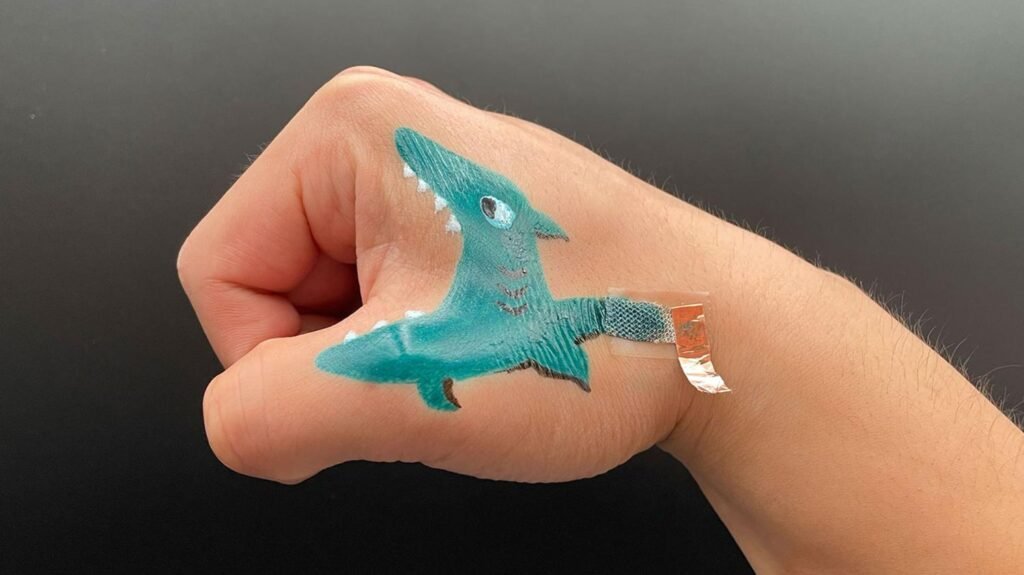
Many medical sensors used to monitor heart and muscle activity can feel stiff, uncomfortable or difficult to keep attached to the skin, especially when patients move or sweat. Engineers at the Pennsylvania State University have developed paintable electrodes that can be brushed directly onto the skin like face paint, creating colorful, flexible designs that work as accurate medical sensors. Their goal is to make clinical monitoring more comfortable and more adaptable to everyday life while still capturing high‑quality signals such as electrocardiograms and electromyograms.
The paintable electrodes are made from a conductive ink that begins nearly transparent and can be mixed with food coloring to create any color or pattern. When applied to the skin, the ink flows into tiny grooves and around hairs, forming a close connection that improves how well the sensor picks up electrical signals from the body. After drying in under ten minutes, the painted design becomes a working electrode capable of recording ECG signals that track heart rhythms and EMG signals that measure muscle activity. Because the ink molds itself to the skin’s natural texture, it avoids the small air gaps that often weaken readings from traditional stick‑on electrodes.
To make the system durable enough for medical use, the painted electrodes connect to a lightweight silver textile with a porous structure. This flexible fabric stretches with the body and allows moisture and hair to pass through, helping the electrodes stay comfortable during exercise or daily movement. The porous design also reduces irritation that can occur when sweat builds up under conventional sensors. In testing, the painted electrodes recorded clear ECG signals during activities such as running, squats and bicep curls. They also captured EMG signals strong enough to wirelessly control a robotic prosthetic hand, showing how the technology could support rehabilitation or assistive devices.
The researchers note that the electrodes can be washed off and reapplied, making them practical for repeated medical monitoring. A single bottle of ink can support multiple applications over days or weeks. They also highlight that the playful, customizable designs may help children feel more comfortable during heart or muscle monitoring by turning sensors into friendly artwork rather than clinical patches. Looking ahead, the team is exploring ways to add chemical sensing to the ink so it could track biomarkers like cortisol or glucose, expanding its potential role in personalized health monitoring.
