
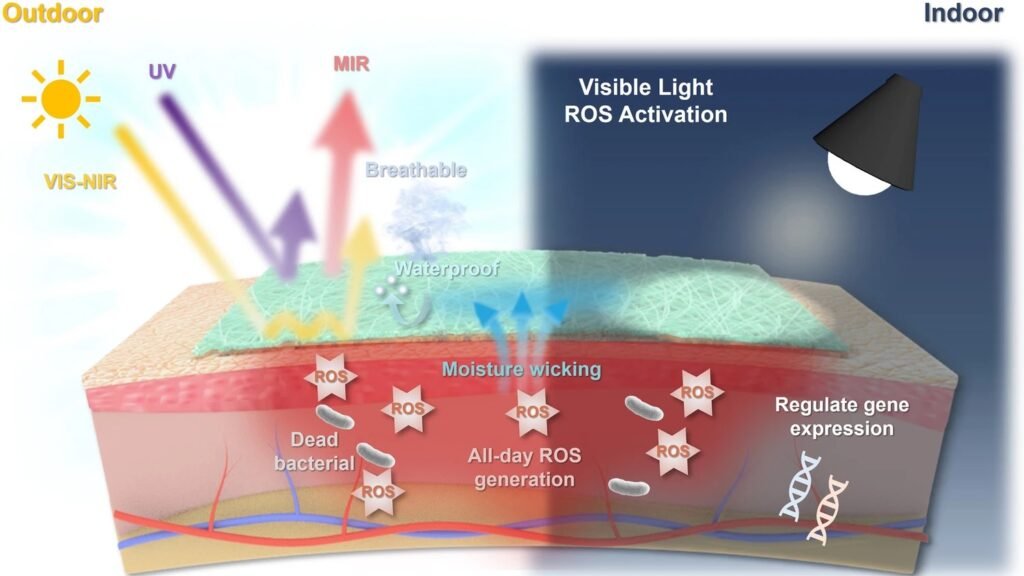
Treating infected wounds is difficult because the skin needs protection, cooling and antibacterial support, yet most dressings can only provide one or two of these benefits at a time. Researchers at The Hong Kong Polytechnic University and their collaborators have created a new type of wound dressing that brings all three together. Their bionic cooling skin is designed to feel and behave more like natural skin while lowering temperature and fighting bacteria, which helps infected wounds heal more comfortably and effectively.
The material is built from very thin fibers welded together in a way that gives the dressing strength and stretch similar to human skin. One side of the dressing is water‑repellent and reflects sunlight, allowing heat to escape and creating a gentle cooling effect. Tests showed that this cooling can lower the temperature of the wound area by about four degrees Celsius when exposed to sunlight. The other side of the dressing absorbs moisture and lets air and water vapor pass through, which helps keep the wound environment stable and reduces the discomfort that often comes with traditional dressings.
To help control infection, the researchers added tiny structures called metal organic frameworks to one side of the dressing. When exposed to visible light, these structures produce reactive oxygen species that can kill bacteria. This means the antibacterial action can be activated when needed without constantly exposing the wound to chemical treatments. The team explains that infected wounds often become warm and inflamed, and bacteria thrive under those conditions. By lowering temperature and providing targeted antibacterial activity, the dressing addresses two major challenges at once.
The researchers also studied how the dressing affects healing at the cellular level. Gene expression analysis showed that wounds treated with the bionic cooling skin healed more quickly than those treated with conventional materials. The dressing’s ability to mimic the feel and function of natural skin, combined with its cooling and antibacterial features, makes it different from common options like gauze or foam, which can be uncomfortable or less suitable for infected wounds.
The team notes that infected wounds are a growing global problem, especially with the large number of surgeries performed each year. Their bionic cooling skin offers a new direction for wound care by pairing passive cooling with active antibacterial support in a single, skin‑like material.
EurekAlert News Release: Bionic cooling skin for infected wound healing
Abstract in Nano-Micro Letters: Bionic Cooling Skin for Infected Wound Healing
