
Chronic and hard to reach wounds remain difficult to treat because many therapies cannot stay in place long enough or deliver drugs precisely where they are needed. Researchers at Texas A&M University have developed a new approach that uses an injectable hydrogel to deliver treatment directly into damaged tissue while adapting to the wound’s shape and environment. The technology is designed to address the limitations of current wound care methods, which often struggle with irregular wound geometry, poor drug retention and the need for repeated applications.
The team created a hydrogel that begins as a liquid and solidifies once inside the wound. This allows it to conform to complex spaces that are difficult to reach with traditional dressings or topical treatments. The material is engineered to respond to the wound environment by releasing therapeutic molecules in a controlled manner. Because the hydrogel can be injected, it offers a minimally invasive way to place treatment deep within tissue without requiring surgical exposure or extensive manipulation. The researchers describe the material as a platform that can be adapted to carry different types of drugs depending on the clinical need.
The hydrogel’s structure allows it to remain stable while still permitting the gradual release of therapeutic agents. This sustained delivery is intended to support tissue repair over longer periods than conventional wound treatments. The team tested the material in laboratory models and found that it could deliver drugs effectively while maintaining its integrity within the wound. The ability to localize treatment reduces the likelihood of systemic exposure, which can lessen side effects and improve overall safety. The researchers note that the hydrogel’s injectability and adaptability make it suitable for wounds that are difficult to access or that require precise placement of therapeutic compounds.
Another advantage of the material is its potential to reduce the number of clinical visits required for wound care. Because the hydrogel can be placed directly into the wound and remain there while releasing treatment, it may decrease the need for frequent dressing changes or repeated applications. The team envisions the technology being used for a range of injuries, including deep tissue wounds and areas where traditional dressings cannot be applied effectively. They also highlight the possibility of customizing the hydrogel with different therapeutic agents to address specific healing challenges.
The researchers are continuing to refine the material and evaluate its performance in more advanced models. Their goal is to create a versatile tool that clinicians can use to treat wounds more efficiently and with greater precision. By combining injectability, environmental responsiveness and sustained drug delivery, the hydrogel represents a promising step toward improving outcomes for patients with complex or chronic wounds.
Article from Texas A&M University: Healing where it hurts: Researchers develop a new approach for treating wounds
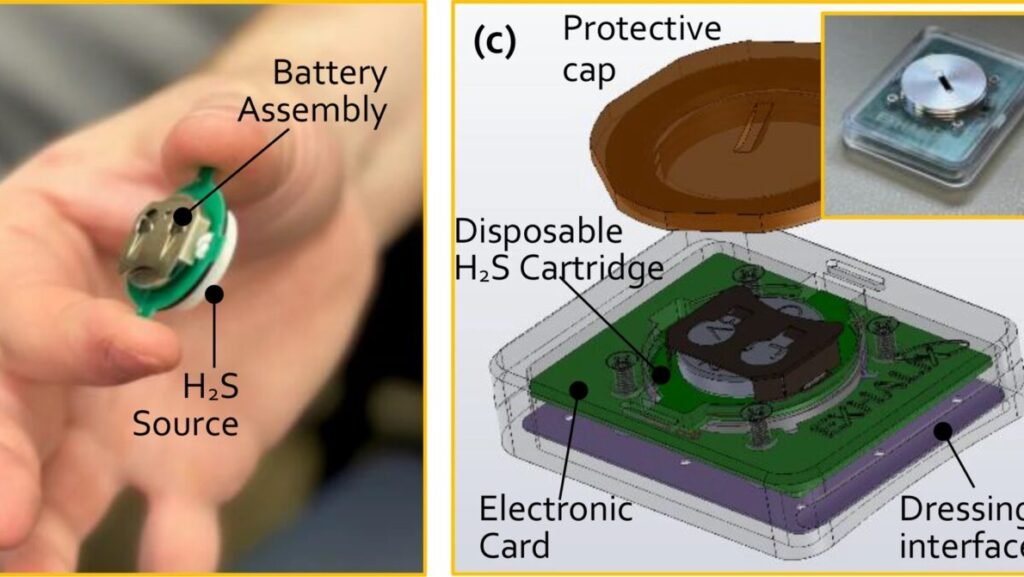
Abstract in the Journal of Biological Engineering: A novel device for in-situ on-demand hydrogen sulfide generation and delivery to increase tissue perfusion to chronic wounds
