
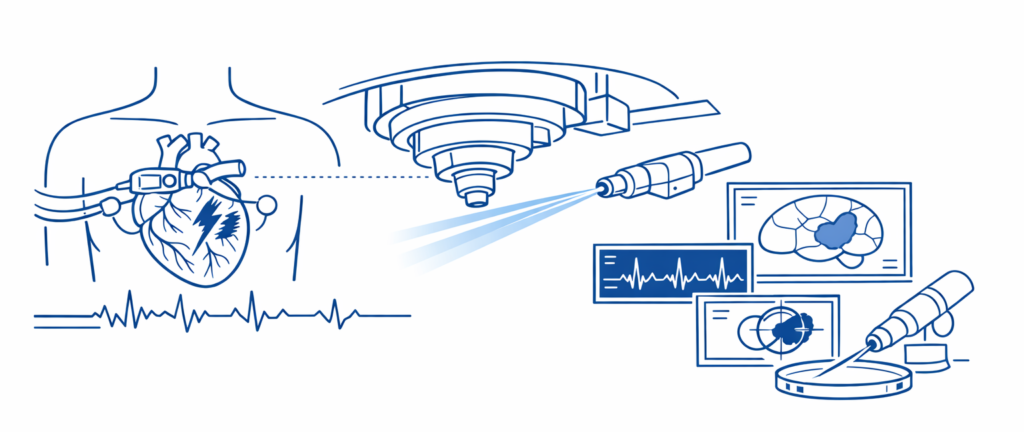
Patients with life‑threatening heart rhythm disorders such as ventricular tachycardia often face limited treatment options. Standard therapies include medications, implantable defibrillators, and catheter ablation, but these approaches can fail when the arrhythmia originates deep within scarred heart tissue. Researchers at the Mayo Clinic are testing a new, noninvasive method that uses proton beam therapy, which traditionally reserved for cancer treatment, to precisely target and neutralize the electrical circuits that trigger these dangerous rhythms.
Ventricular tachycardia occurs when damaged heart muscle creates abnormal electrical pathways that cause the heart to beat too fast. Catheter ablation, the current gold standard, destroys these pathways using heat or cold delivered through a catheter inserted into the heart. However, the procedure can be risky for patients with severe heart failure or those who cannot tolerate anesthesia. Proton beam therapy offers a way to reach the same tissue without surgery.
The technique relies on the unique physical properties of protons, which deposit most of their energy at a specific depth known as the Bragg peak. This allows doctors to deliver radiation precisely to the affected area while sparing surrounding healthy tissue. Using advanced imaging and electroanatomic mapping, the Mayo Clinic team identifies the arrhythmogenic zone and directs the proton beam to that region. The goal is to disrupt the faulty electrical circuits without damaging the rest of the heart.
Early results from preclinical studies and initial patient treatments suggest that proton therapy can reduce arrhythmia episodes and improve quality of life. The noninvasive nature of the procedure means patients can avoid the risks associated with catheter insertion and general anesthesia. Researchers are now conducting further trials to refine dosing, improve targeting accuracy, and evaluate long‑term safety.
If successful, this approach could transform care for patients with refractory ventricular tachycardia, offering a safer alternative when conventional ablation fails. It also demonstrates how technologies developed for oncology can be repurposed for cardiovascular medicine. By combining precision radiation with cardiac imaging, the Mayo Clinic team is opening a new frontier in noninvasive heart rhythm therapy—one that could help stabilize patients who previously had no viable options.
Article from the Mayo Clinic: Noninvasive proton beam therapy may help treat dangerous heart rhythm disorder
Abstract in HeartRhythm: Early Feasibility Study of Catheter-Free Cardiac Radioablation with Proton Beams for Refractory Ventricular Tachycardia
