
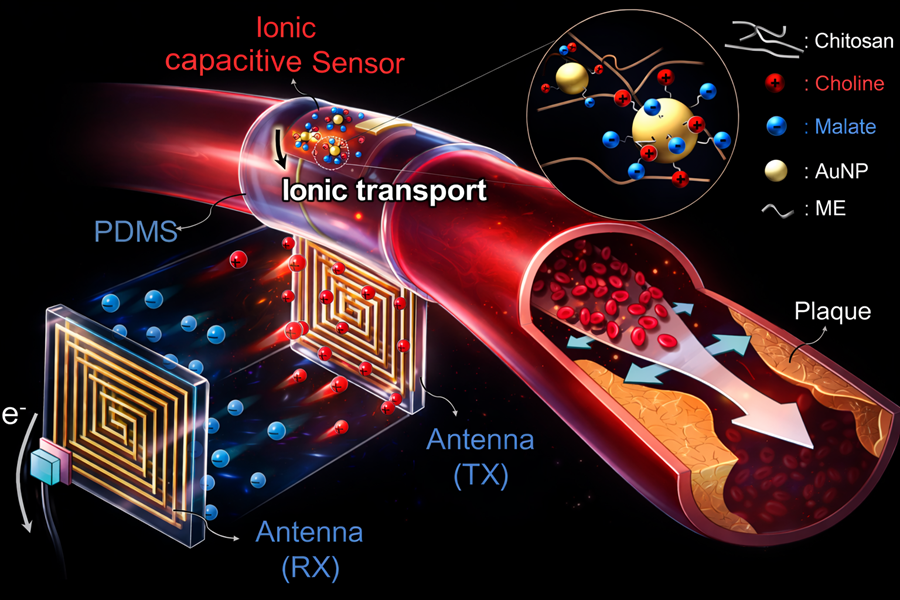
Arteriosclerosis, the stiffening and thickening of arterial walls, is a major driver of heart attacks and strokes, but it is difficult to monitor continuously in daily life. Most current diagnostic tools rely on hospital equipment, short snapshots of vascular health, or wired sensors that are not practical for long-term use. Wireless systems exist, but they often operate at higher frequencies that can raise concerns about electromagnetic interference with other devices or with the human body. A research team from the Korea Advanced Institute of Science and Technology (KAIST) has addressed this gap by developing a low-frequency wireless sensor designed specifically for real-time monitoring of arteriosclerosis without these interference concerns.
The new sensor measures changes in arterial stiffness by tracking subtle variations in blood vessel properties over time. It uses a low-frequency wireless communication scheme that greatly reduces the risk of electromagnetic interference while still transmitting data reliably. By focusing on low-frequency operation, the device can coexist more safely with other medical and consumer electronics and is better suited for long-term, continuous use on or near the body.
The system is built to be compact and energy efficient, which makes it a strong candidate for wearable or patch-like formats. In laboratory tests, the sensor successfully captured changes related to arterial stiffness and transmitted the information in real time. This capability could allow clinicians to follow disease progression more closely, adjust treatments earlier, and better understand how lifestyle or medications affect vascular health over days, weeks, or months rather than during a single clinic visit.
The researchers emphasize that reducing electromagnetic interference concerns is critical for any technology intended for continuous health monitoring. By combining low-frequency wireless communication with targeted sensing of arteriosclerosis, their work points toward safer and more practical cardiovascular monitoring tools. In the future, such sensors could be integrated into everyday wearables to provide ongoing insight into arterial health, support earlier detection of risk, and help prevent serious cardiovascular events.
