
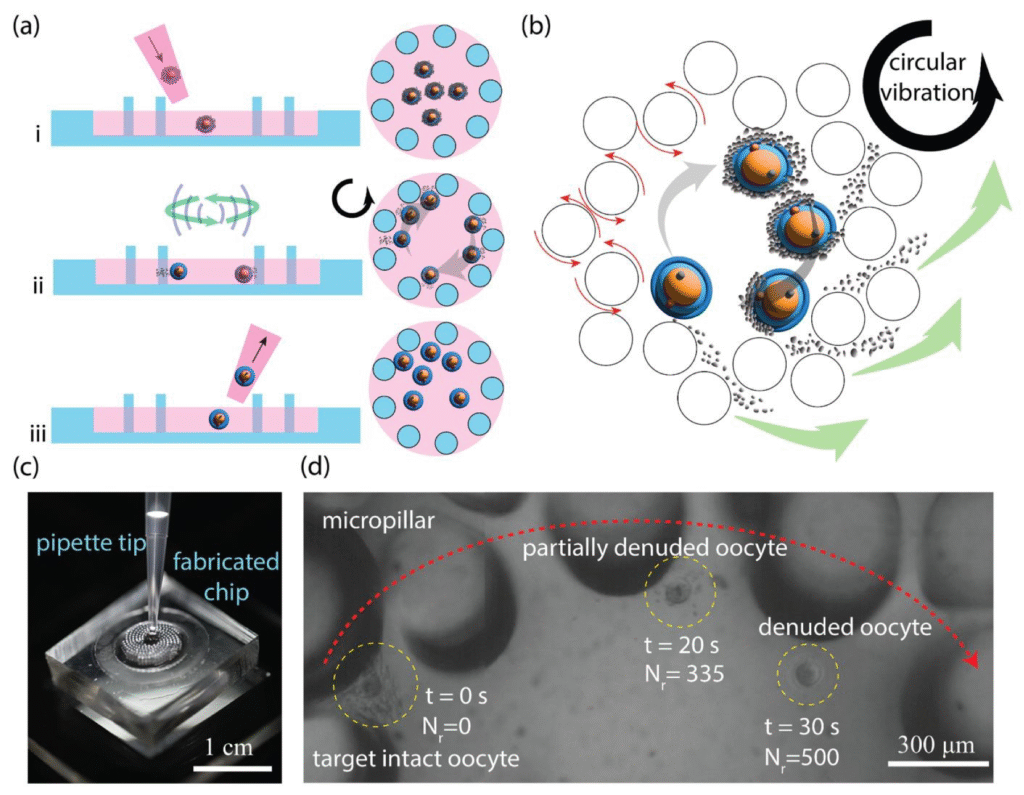
A new device developed at Cornell University could transform assisted reproductive technology by automating a delicate step in fertility treatment. The innovation uses vibration-induced flow to separate cumulus cells from oocytes, a process known as cumulus removal, which is essential for successful fertilization in procedures like in vitro fertilization and intracytoplasmic sperm injection.
Traditionally, cumulus removal is performed manually using micropipettes, a time-consuming and skill-intensive technique that requires trained embryologists. Mistakes during this step can damage the oocyte or reduce the chances of fertilization. Cornell’s solution is a disposable chip with a spiral array of micropillars that creates a swirling flow when vibrated. This flow gently separates the smaller cumulus cells from the larger oocytes without harming them.
The chip was tested on mouse oocytes, which share genetic similarities with human eggs. Researchers found that the device could process up to 23 oocytes at once, including freeze-thawed samples, with no loss or damage. Fertilization and embryo development rates were comparable to those achieved with manual pipetting, confirming the safety and effectiveness of the method.
Because the chip is portable, low-cost, and easy to use, it could be especially valuable in clinics with limited resources or in regions where access to trained specialists is scarce. It also reduces contamination risks and improves consistency, making fertility procedures more reliable and scalable.
Beyond reproductive medicine, the technology may have broader applications in biomedical research, such as isolating cancer cells or sorting particles in microfluidic systems. The team plans to expand testing to human oocytes and explore its use in other cell manipulation techniques.
Article from Cornell University: Good vibrations could revolutionize assisted reproductive technology
Abstract in Lab on a Chip: On-Chip Oocyte Cumulus Removal using Vibration Induced Flow
