Scott Jung

Scott Jung is a Silicon Valley-based medical and health technology reporter and advocate, with a focus on wearables, telemedicine, and health technology in emerging countries. He previously was at Medgadget and represented them at CES and Digital Health Summit, TEDMED, Stanford Medicine X, and SXSW. Always on the lookout for innovative medical technology worldwide, Scott has been invited to visit Colombia, Poland, and many other countries around the world to share how medtech is enriching the lives of its people. Scott holds a B.S. degree in Biomedical Engineering from the University of Southern California and an M.S. degree in Medical Product Development Management from San José State University. Scott is always looking for the next big thing in medical technology and digital health. Interested in helping him transform lives? Get in touch with him at https://scottju.ng

PRIME Fiber-Optic Device Enables Scalable Deep-Brain Stimulation With Unprecedented Precision

A new fiber-optic technology developed at Washington University in St. Louis is poised to transform neuroscience by enabling multi-site, reconfigurable optical stimulation deep within the brain. The device, called PRIME (Panoramically Reconfigurable IlluMinativE) fiber, delivers light to thousands of neural

PRIME Fiber-Optic Device Enables Scalable Deep-Brain Stimulation With Unprecedented Precision Read More »

Researchers Develop Molecular Tools for Early Cancer Detection and Targeted Treatment

A new review from Oregon Health & Science University (OHSU) explores how advanced biomedical tools are helping scientists study cancer in its earliest stages. The paper focuses on three key technologies—organoids, organs-on-a-chip, and 3D bioprinting—that replicate human tissue environments more

Researchers Develop Molecular Tools for Early Cancer Detection and Targeted Treatment Read More »

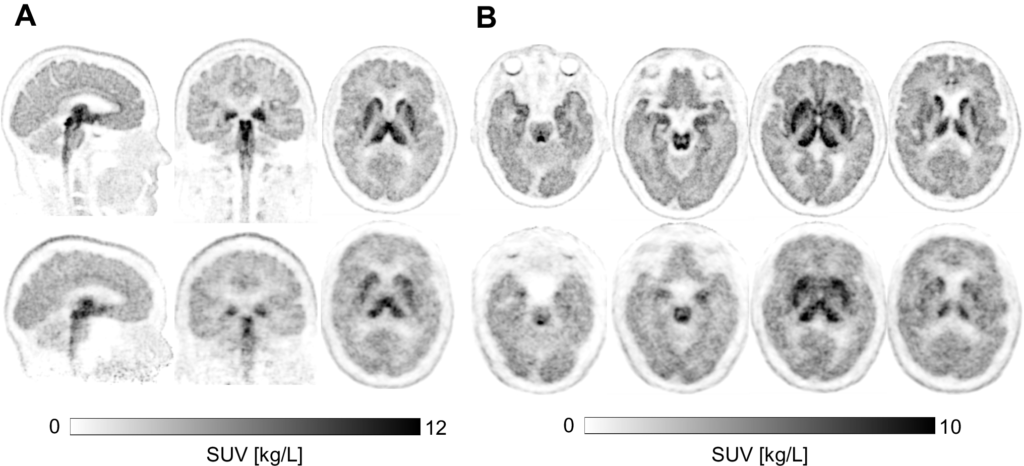
Wearable Brain Imaging System Reveals New Insights Into Multiple Sclerosis Progression

A team at the University of Nottingham has developed a wearable brain imaging system that enables researchers to study multiple sclerosis in real-world conditions. The device uses optically pumped magnetometers (OPMs) to measure magnetic fields generated by neural activity, offering

Wearable Brain Imaging System Reveals New Insights Into Multiple Sclerosis Progression Read More »

“Lab-on-a-Scalpel” Concept Integrates Electrochemical Sensor for Real-Time Tissue Diagnostics During Surgery

A new proof-of-concept surgical tool developed at UCT Prague could one day allow surgeons to analyze tissue biochemistry in real time. Researchers from the Sofer Group have created a prototype scalpel with an integrated electrochemical sensor, fabricated using 3D printing

“Lab-on-a-Scalpel” Concept Integrates Electrochemical Sensor for Real-Time Tissue Diagnostics During Surgery Read More »

AI-Powered App Enables At-Home Sleep Stage Monitoring for Alzheimer’s Research

Sleep research is entering a new era of accessibility thanks to a wearable app developed by engineers at the University of Massachusetts Amherst. The app, called BIDSleep, transforms consumer-grade Apple Watches into advanced sleep monitoring tools, allowing researchers to track

AI-Powered App Enables At-Home Sleep Stage Monitoring for Alzheimer’s Research Read More »

Retina-on-a-Chip Model Recreates Retinal Vein Occlusion for Drug Testing and Personalized Therapies

A new retina-on-a-chip platform is offering researchers a powerful tool to study retinal vein occlusion, one of the leading causes of blindness worldwide. Developed by a multidisciplinary team from POSTECH in Korea, the model mimics the complex vascular and neural

Retina-on-a-Chip Model Recreates Retinal Vein Occlusion for Drug Testing and Personalized Therapies Read More »

Implantable Wafer Shows Promise for Preventing Glioblastoma Recurrence After Surgery

A biodegradable implant developed by researchers at Massachusetts General Hospital and Harvard Medical School may offer new hope for patients with glioblastoma, an aggressive brain cancer known for its high recurrence rate. The device, called the CANDI wafer, is designed

Implantable Wafer Shows Promise for Preventing Glioblastoma Recurrence After Surgery Read More »

Scroll to Top