
Understanding how sleep supports brain health requires tools that can capture subtle physiological changes without disrupting rest. During sleep, the glymphatic system clears metabolic waste by moving cerebrospinal fluid through channels around blood vessels and exchanging it with interstitial fluid in neural tissue. This fluid movement, often described as brain water dynamics, plays a central role in memory processing, cognitive function and neural recovery. When sleep quality declines, the efficiency of this clearance can fall, allowing waste to accumulate and potentially affecting long‑term brain health. Traditional methods for studying these processes rely on MRI or polysomnography, which are invasive, expensive and limited to clinical settings.
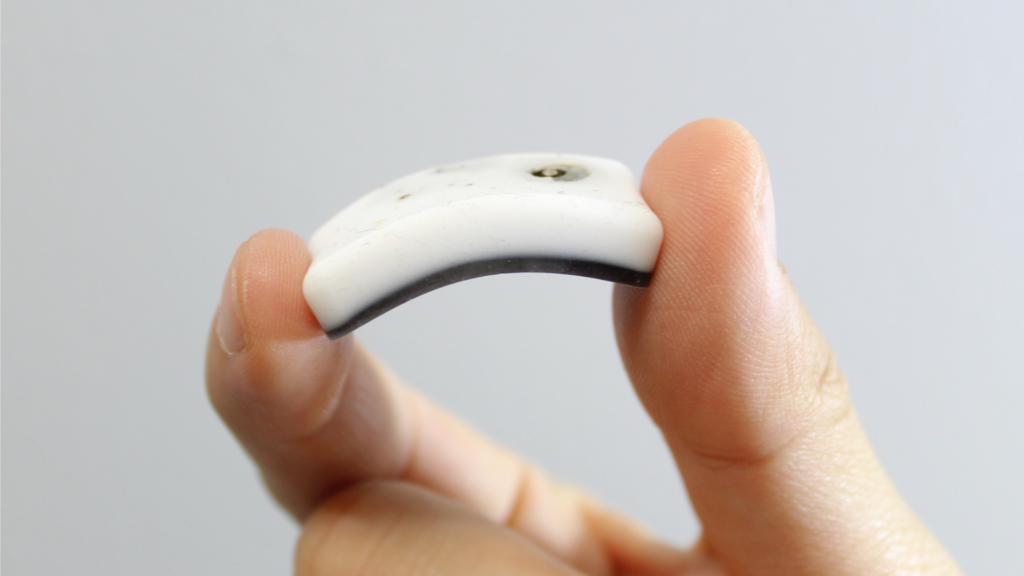
Researchers at Georgia Tech developed a soft, wireless wearable device that brings this type of monitoring into the home. The system uses near infrared spectroscopy to observe optical signals that shift as tissue and fluid near the brain change during sleep. The device emits LED light at specific wavelengths, and a photodetector on the skin captures the reflected signals. These signals are transmitted wirelessly to a nearby device for analysis, allowing researchers to study sleep in a natural environment without the constraints of clinical equipment.
The biological processes the device aims to track are complex. Glymphatic clearance depends on slow, rhythmic fluid movement that changes across sleep stages. As cerebrospinal fluid pulses through perivascular spaces, it alters how light interacts with tissue. These shifts are subtle, and the researchers emphasize that optical measurements can be influenced by many factors beyond brain water dynamics. Breathing depth, forehead pressure, body position, motion and temperature drift can all affect the signal. Some of the measured changes may come from the skin or scalp rather than the brain itself. For this reason, the team focused on identifying long term trends rather than claiming precise quantification of fluid content.
By integrating soft materials, wireless communication and light‑based sensing, the device provides a way to observe sleep‑related physiological patterns that are difficult to capture outside a laboratory. It offers a more comfortable and accessible approach for studying how glymphatic activity varies across nights and how sleep quality influences waste removal. The researchers see this technology as a step toward broader home‑based monitoring of brain health.
Article from Georgia Tech: New Soft Wearable Device Could Support At-Home Sleep Monitoring
Abstract in Science Advances: A soft wearable near-infrared spectroscopy system for detecting brain water dynamics linked to glymphatic activity during sleep
