
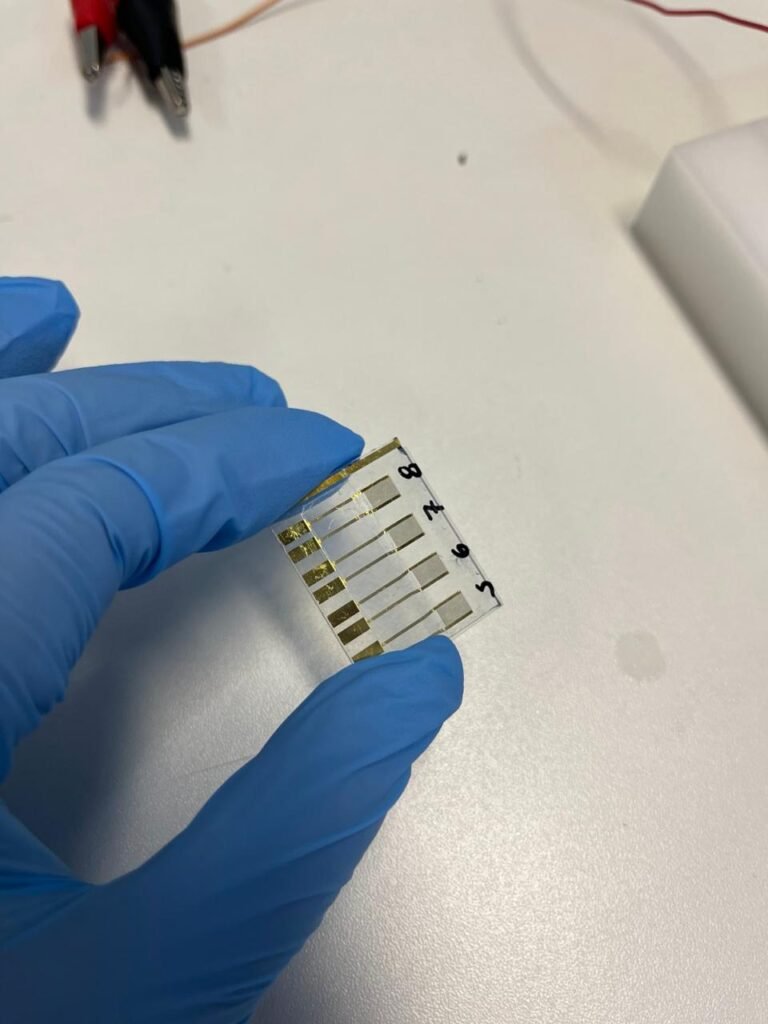
Pancreatic cancer remains one of the deadliest forms of cancer because it rarely causes symptoms until it has already spread. By the time most patients are diagnosed, treatment options are limited and survival rates are extremely low. Researchers at the the São Paulo Research Foundation (FAPESP) have developed a new biosensor that could change this timeline by detecting pancreatic cancer in its earliest stages through a quick and inexpensive blood test. The device identifies the biomarker CA19‑9, a glycoprotein associated with pancreatic tumors, at very low concentrations, offering a faster and more accessible alternative to conventional laboratory assays.
The sensor works through a simple electrochemical principle. Its surface is coated with antibodies that specifically bind to the CA19‑9 protein. When a patient’s blood sample touches the electrode, the antibodies capture the biomarker, altering the distribution of electrical charges on the surface. The device measures this change in capacitance and translates it into a quantitative signal. The higher the concentration of CA19‑9, the greater the variation detected. Within about ten minutes, the system compares the result to a calibration curve and estimates the amount of the biomarker in the sample. This rapid process enables early detection without the need for complex equipment or specialized technicians.
In tests using twenty‑four blood samples from patients at different disease stages and from healthy controls, the biosensor produced results statistically similar to those obtained with the standard enzyme‑linked immunosorbent assay, or ELISA. That validation suggests the device could serve as a reliable screening tool in clinics that lack advanced laboratory infrastructure. The researchers are now expanding their study to include saliva and urine samples from patients at a local hospital to further confirm the sensor’s accuracy across different biological fluids.
The team is also developing two additional sensors with distinct architectures and detection mechanisms. Their goal is to combine the responses from all three devices to improve diagnostic precision. In parallel, they are applying machine learning to create a “bioelectronic tongue,” a system that analyzes large datasets from blood, urine, and saliva to identify patterns and correct reading errors automatically. This integration of biosensing and artificial intelligence could make cancer screening faster, cheaper, and more reliable.
By turning a complex laboratory test into a portable, ten‑minute procedure, the São Paulo researchers hope to make early pancreatic cancer detection accessible to far more people, increasing the chances of successful treatment and survival.
