
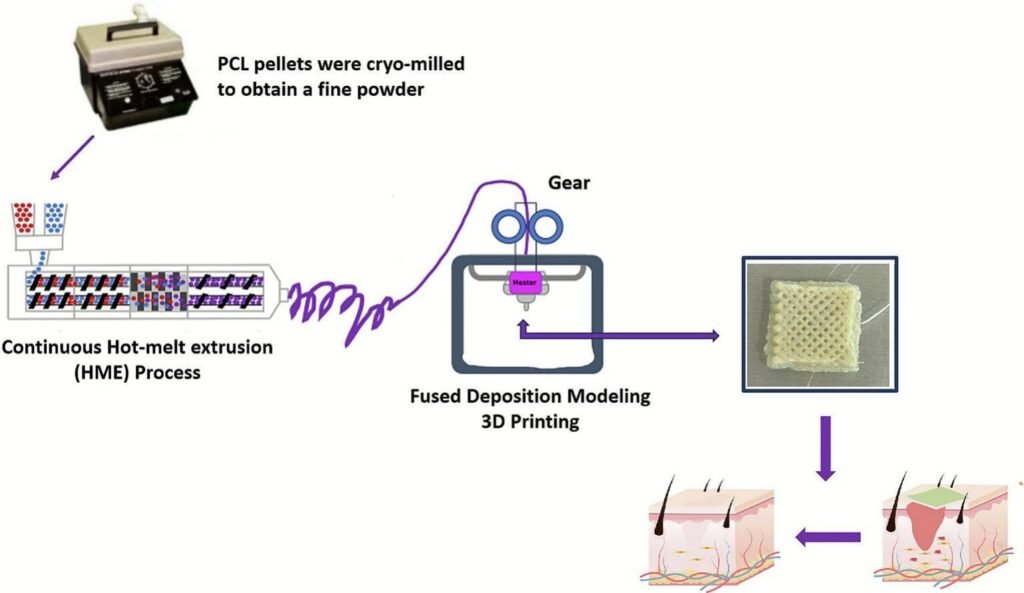
A new effort from the University of Mississippi is advancing how clinicians might treat chronic wounds by developing a 3D‑printed bandage that delivers natural antimicrobial compounds while supporting tissue repair. Chronic wounds such as diabetic ulcers and pressure sores can persist for months or years, often because poor circulation limits oxygen supply and slows the body’s ability to regenerate skin. These wounds are also highly vulnerable to infection, and long‑term antibiotic use can contribute to resistance. The Ole Miss team set out to design a customizable scaffold that could protect the wound, promote healing, and reduce infection risk without relying on harsh solvents or conventional antibiotics.
The researchers created a breathable, patch‑like structure using chitosan, a biodegradable material derived from crustaceans, insects, and fungi. Chitosan is known for its ability to accelerate skin cell growth, reduce inflammation, and inhibit bacterial activity. To enhance antimicrobial performance, the team incorporated plant‑derived natural compounds that can suppress bacterial growth without contributing to antibiotic resistance. Because the scaffold is produced through 3D printing, it can be tailored to the exact size and shape of a patient’s wound, improving coverage and comfort.
One of the advantages of the design is that it avoids organic solvents, which are commonly used in medical bandages but can damage tissue and slow healing when applied directly to open wounds. The researchers emphasize that their solvent‑free approach is gentler on the skin and better suited for long‑term use. The scaffold is also fully biodegradable, meaning it gradually breaks down and is absorbed by the body. This eliminates the need for removal procedures, which can be painful and disruptive, especially for wounds located in sensitive or hard‑to‑reach areas.
The team notes that the technology could be adapted for a wide range of wound types, including injuries where traditional bandages are impractical. Because the scaffold can be printed on demand, it may also be useful in field settings such as military environments, where clinicians need rapid access to customized wound‑care materials. Before the bandage can be used clinically, it will require additional testing and regulatory review, but the researchers are optimistic about its potential to move from laboratory development to patient care.
By combining biodegradable materials, natural antimicrobials, and customizable 3D‑printing techniques, the Ole Miss team has created a promising platform for treating chronic wounds more effectively. The approach offers a path toward safer, more adaptable wound care that supports healing while reducing infection risk.
Article from Ole Miss: Pharmacy Team Develops 3D-printed Bandage to Help Heal Chronic Wounds
Abstract in the European Journal of Pharmaceutics and Biopharmaceutics: Development of 3D-printed chitosan/p-coumaric acid scaffolds for wound healing: antibacterial properties and drug release kinetics
