
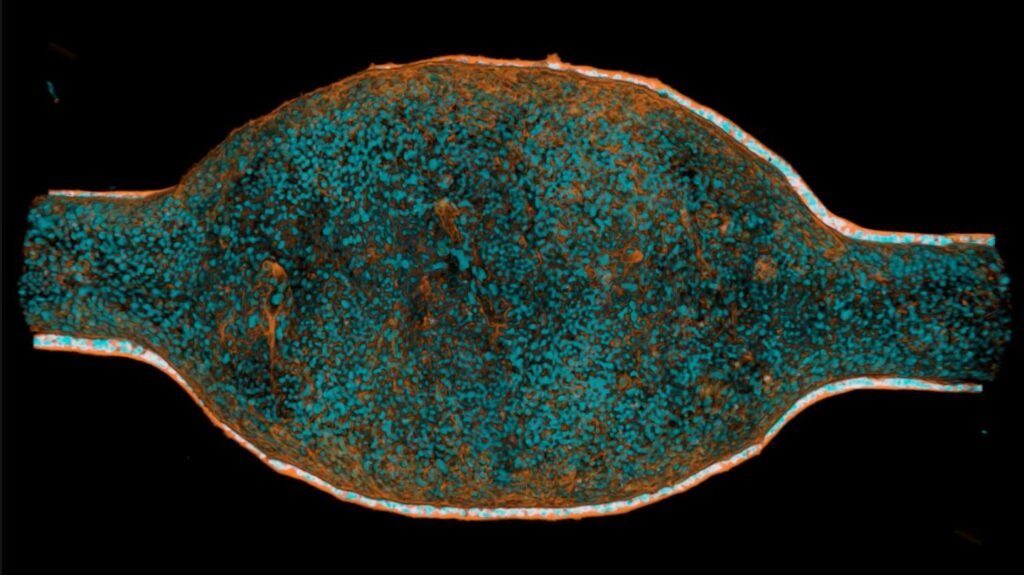
A research team at Ecole Polytechnique Fédérale de Lausanne (EPFL) in Switzerland has developed a human mini‑bladder model that uncovers a key mechanism behind recurrent urinary tract infections, offering new insight into why some infections return even after treatment. The scientists created a three dimensional organoid that mimics the structure and function of the human bladder, including the layered architecture of the urothelium. This model allowed them to observe how uropathogenic bacteria interact with bladder tissue in ways that are difficult to study in animals or traditional cell cultures.
The researchers found that certain bacteria can invade deeper layers of the bladder lining and enter a dormant state, effectively hiding from antibiotics and the immune system. These dormant reservoirs can later reactivate, triggering new infections that appear to come out of nowhere. The mini‑bladder model revealed that this process is influenced by the dynamic turnover of bladder cells, which periodically shed and regenerate. As new cells form, dormant bacteria can reemerge and begin replicating again, explaining why some patients experience repeated infections despite appropriate treatment.
The organoid system also allowed the team to test how different antibiotics penetrate bladder tissue and affect bacterial behavior. Their findings suggest that some drugs fail to reach the deeper layers where dormant bacteria reside, which may contribute to treatment failure. The researchers believe that the mini‑bladder could serve as a platform for evaluating new therapies that target these hidden reservoirs more effectively.
By recreating the human bladder environment in the lab, the EPFL team has provided a clearer picture of the biological processes that drive recurrent UTIs. The work opens the door to more precise drug testing and could guide the development of treatments that prevent bacteria from establishing long‑term footholds in bladder tissue. It also highlights the value of organoid models for studying chronic infections that depend on complex interactions between pathogens and human tissue.
Here’s a video that explains more about the mini-bladder:
Article from EPFL: A human mini-bladder shows the culprit of recurrent infections
Abstract in Nature Communications: A microphysiological human mini-bladder reveals urine-urothelium interplay in tissue resilience and UPEC recurrence in urinary tract infections
