Neurology

Algorithmic Advances: A Monthly Recap of AI in Healthcare (July 2025)

Artificial intelligence may not be a classic “gizmo,” but it’s become an undeniable, rapidly evolving force in healthcare. From streamlining clinical workflows to flagging anomalies in imaging, algorithms are working their way into nearly every corner of medicine. The jury’s […]

Algorithmic Advances: A Monthly Recap of AI in Healthcare (July 2025) Read More »

Global Review Maps the Future of Implantable Brain-Computer Interfaces

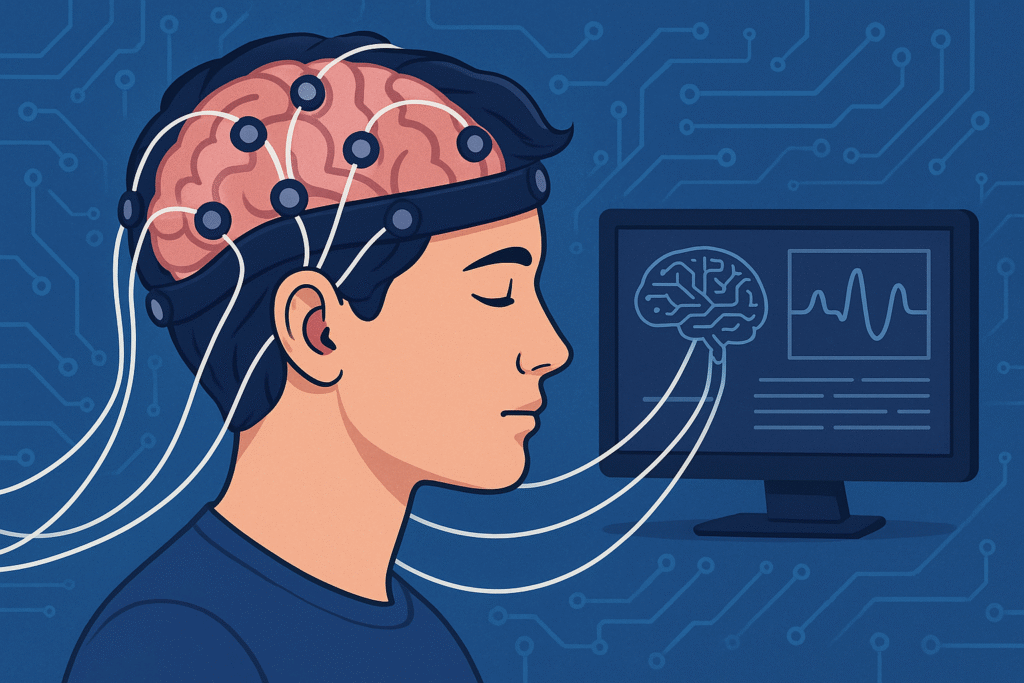
A comprehensive review published in Advanced Science has mapped the evolution of implantable brain-computer interfaces (iBCIs), which decode brain signals to control external devices like robotic limbs or communication tools. The study identified 112 trials involving 80 participants, nearly half published since

Global Review Maps the Future of Implantable Brain-Computer Interfaces Read More »

Computational Model Helps With Customized Brain Shunt Design

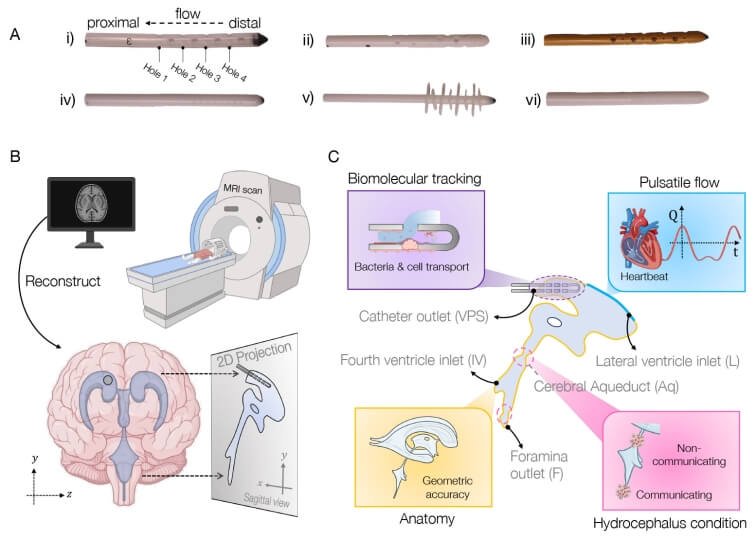
Shunts used to treat hydrocephalus—a condition involving excess cerebrospinal fluid (CSF) in the brain—frequently fail due to infection, mechanical blockage, or improper placement. These failures often result in repeated surgeries and lifelong monitoring, especially in pediatric patients. Now, researchers at

Computational Model Helps With Customized Brain Shunt Design Read More »

Vanderbilt’s Brain-Computer Interface Boosts Learning and Flexibility

Brain-computer interfaces (BCIs) have long been associated with restoring movement in patients with spinal cord injuries or Parkinson’s disease. But a new study from Vanderbilt University suggests that BCIs could also serve as “electroceuticals”—devices that substitute pharmaceuticals by directly modulating

Vanderbilt’s Brain-Computer Interface Boosts Learning and Flexibility Read More »

Skin-Like Biosensor Monitors Both Physical Movement and Electrical Signals in the Body

Researchers at Penn State have developed a flexible, skin-like sensor that can monitor both physical movement and electrical signals—internally and externally. Designed to mimic the properties of human skin, the device combines electrical and ionic conductivity, allowing it to interface

Skin-Like Biosensor Monitors Both Physical Movement and Electrical Signals in the Body Read More »

Scroll to Top