Neurology

Researchers Develop Magnetic Microrobots for Targeted Drug Delivery in Stroke and Cancer Treatment

A team at ETH Zurich has unveiled magnetic microrobots designed to deliver drugs directly to targeted sites in the human body, offering new possibilities for treating strokes, infections, and tumors. This innovation addresses a critical medical challenge: every year, millions

Researchers Develop Magnetic Microrobots for Targeted Drug Delivery in Stroke and Cancer Treatment Read More »

Researchers Develops Tabletop Blast Device to Study Traumatic Brain Injury

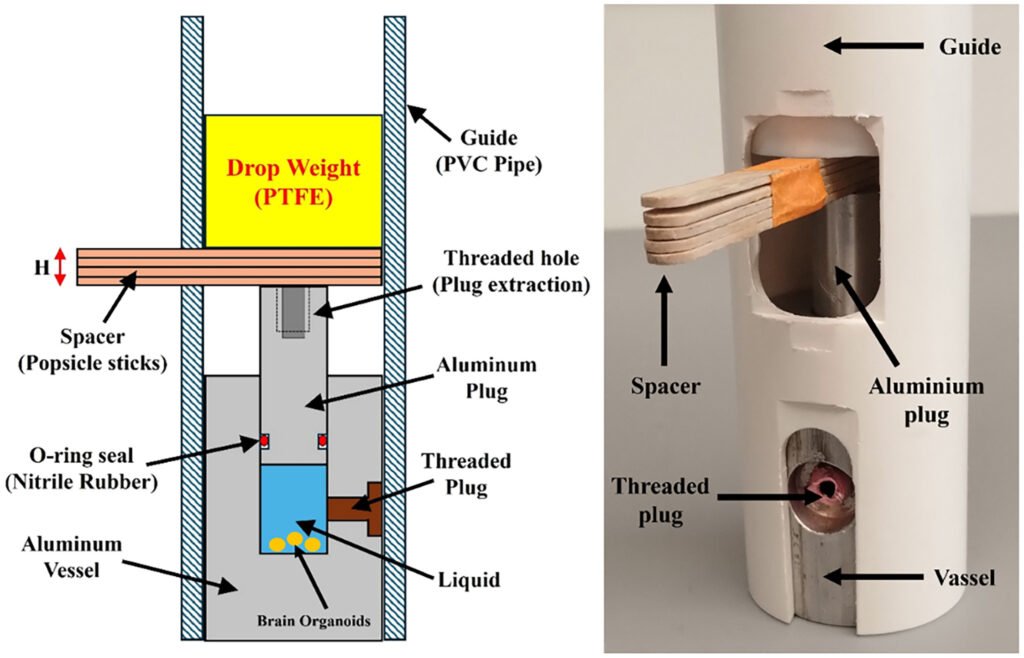
Researchers at the University of Rhode Island have introduced a tabletop blast simulator designed to investigate the long-term effects of traumatic brain injury. The innovation provides a safe and accessible way to replicate blast conditions in a laboratory setting, allowing

Researchers Develops Tabletop Blast Device to Study Traumatic Brain Injury Read More »

PRIME Fiber-Optic Device Enables Scalable Deep-Brain Stimulation With Unprecedented Precision

A new fiber-optic technology developed at Washington University in St. Louis is poised to transform neuroscience by enabling multi-site, reconfigurable optical stimulation deep within the brain. The device, called PRIME (Panoramically Reconfigurable IlluMinativE) fiber, delivers light to thousands of neural

PRIME Fiber-Optic Device Enables Scalable Deep-Brain Stimulation With Unprecedented Precision Read More »

Wearable Brain Imaging System Reveals New Insights Into Multiple Sclerosis Progression

A team at the University of Nottingham has developed a wearable brain imaging system that enables researchers to study multiple sclerosis in real-world conditions. The device uses optically pumped magnetometers (OPMs) to measure magnetic fields generated by neural activity, offering

Wearable Brain Imaging System Reveals New Insights Into Multiple Sclerosis Progression Read More »

Implantable Wafer Shows Promise for Preventing Glioblastoma Recurrence After Surgery

A biodegradable implant developed by researchers at Massachusetts General Hospital and Harvard Medical School may offer new hope for patients with glioblastoma, an aggressive brain cancer known for its high recurrence rate. The device, called the CANDI wafer, is designed

Implantable Wafer Shows Promise for Preventing Glioblastoma Recurrence After Surgery Read More »

MagFlow Microcatheter Uses Blood Flow and Magnetic Steering to Deliver Therapies in Tiny Brain Vessels

A team at the École Polytechnique Fédérale de Lausanne (EPFL) has introduced MagFlow, an ultraminiaturized neurovascular microcatheter designed to reach the smallest and most complex blood vessels in the human body. Unlike conventional catheters that rely on guidewires and manual

MagFlow Microcatheter Uses Blood Flow and Magnetic Steering to Deliver Therapies in Tiny Brain Vessels Read More »

New Magnetic Coil Technology Enables Safe Non-Contact Nerve Stimulation for Chronic Pain Treatment

A team at the Daegu Gyeongbuk Institute of Science and Technology (DGIST) has introduced a novel coil design that significantly improves the efficiency and safety of peripheral magnetic stimulation (PMS). This technology allows nerves to be stimulated using magnetic fields

New Magnetic Coil Technology Enables Safe Non-Contact Nerve Stimulation for Chronic Pain Treatment Read More »

Scroll to Top