
Scott Jung

Scott Jung is a Silicon Valley-based medical and health technology reporter and advocate, with a focus on wearables, telemedicine, and health technology in emerging countries. He previously was at Medgadget and represented them at CES and Digital Health Summit, TEDMED, Stanford Medicine X, and SXSW. Always on the lookout for innovative medical technology worldwide, Scott has been invited to visit Colombia, Poland, and many other countries around the world to share how medtech is enriching the lives of its people. Scott holds a B.S. degree in Biomedical Engineering from the University of Southern California and an M.S. degree in Medical Product Development Management from San José State University. Scott is always looking for the next big thing in medical technology and digital health. Interested in helping him transform lives? Get in touch with him at https://scottju.ng

Magnet-Guided, Light-Triggered Drug Delivery System for Precision Cancer Treatment

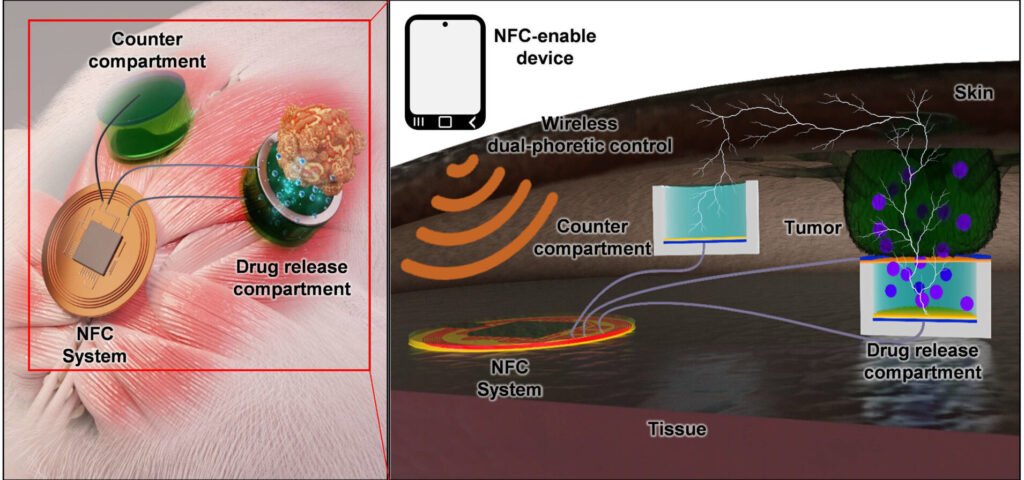
Researchers at the University of Illinois Urbana-Champaign have developed a precision drug delivery system that combines magnetic steering with light-triggered release, offering a new approach to targeted therapies—especially for cancer. The system uses lipid vesicles, which are microscopic containers similar

Magnet-Guided, Light-Triggered Drug Delivery System for Precision Cancer Treatment Read More »

Microneedle Wearable Monitors Both Glucose and Metformin for Diabetics

A new wearable device developed by researchers at the Technion–Israel Institute of Technology and Sun Yat-sen University in China could redefine how diabetes is monitored and treated. The system uses a microneedle-based patch to continuously track both glucose levels and

Microneedle Wearable Monitors Both Glucose and Metformin for Diabetics Read More »

Global Review Maps the Future of Implantable Brain-Computer Interfaces

A comprehensive review published in Advanced Science has mapped the evolution of implantable brain-computer interfaces (iBCIs), which decode brain signals to control external devices like robotic limbs or communication tools. The study identified 112 trials involving 80 participants, nearly half published since

Global Review Maps the Future of Implantable Brain-Computer Interfaces Read More »

Scroll to Top