
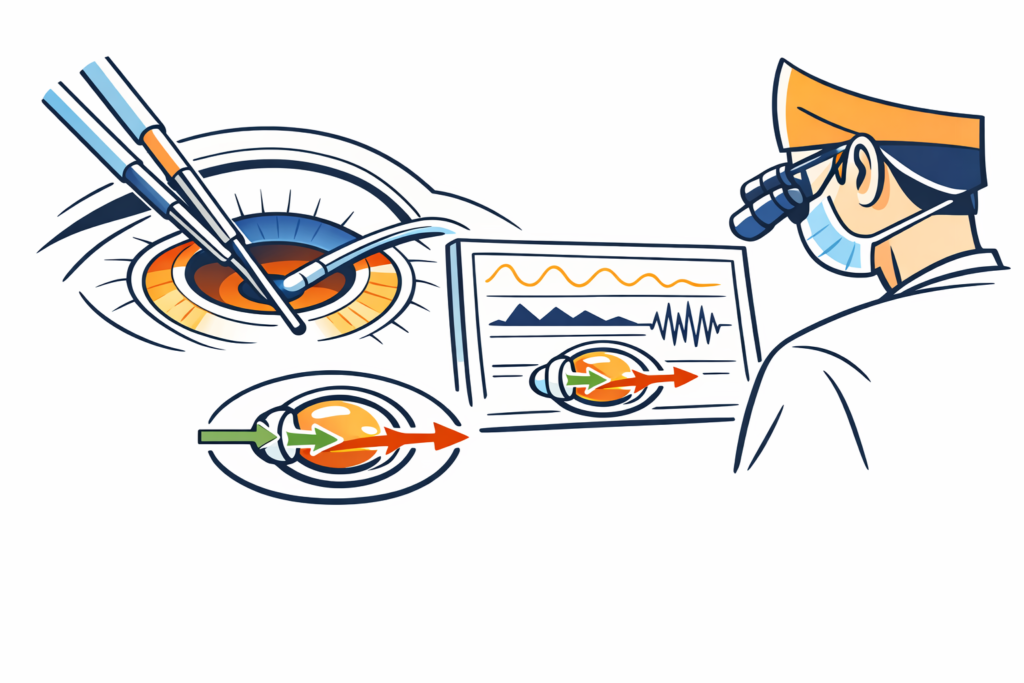
Glaucoma surgery has long faced a major limitation: surgeons cannot see how fluid is actually moving inside the eye while they operate. They can measure eye pressure before and after a procedure, but not during the critical moments when surgical decisions matter most. This gap makes outcomes unpredictable, and more than half of patients undergoing common glaucoma surgeries still fail to achieve full success without medications. A new technology developed at the Icahn School of Medicine at Mount Sinai in New York aims to change that.
The system, called miDOC (micro‑interventional Dynamic Outflow Curve), gives surgeons real‑time insight into how fluid flows through the eye during surgery. Instead of working blindly, surgeons can now monitor pressure, flow, outflow resistance, and even the eye’s mechanical stiffness as they operate. This level of feedback has never been available in ophthalmic surgery and could bring glaucoma procedures into the same era of precision that transformed cataract surgery.
Developed by ophthalmologist Sean Ianchulev and his team at the New York Eye and Ear Infirmary of Mount Sinai, miDOC is the first technology to measure these parameters continuously inside the eye. The device has already been used in the first 20 human cases, all completed successfully with biometric guidance. Surgeons report that the system reveals how each surgical step affects the eye in real time, allowing them to adjust their technique for each patient’s unique anatomy.
This capability addresses one of the biggest challenges in glaucoma care: unpredictable outcomes. Without intraoperative measurements, surgeons often discover problems only at follow‑up visits, when it may be too late to correct them. miDOC could help reduce these failures by giving surgeons immediate feedback on whether the procedure is working as intended.
Although designed for glaucoma, the technology may have broader uses. Cataract surgery — the most common surgery in the world — can sometimes trigger dangerous spikes in eye pressure during recovery. Real‑time monitoring could help identify at‑risk patients before complications occur. Early experience also suggests that miDOC may detect choroidal blood flow, a key indicator of retinal health, opening possibilities for use in retinal disease management.
Researchers are exploring whether the system could even provide insights into blood flow and pressure patterns relevant to the brain, heart, and lymphatic system, hinting at applications beyond ophthalmology.
The device is still investigational and awaiting regulatory clearance, but Mount Sinai plans to refine the technology and expand clinical testing. If successful, miDOC could usher in a new era of digitally guided, high‑precision eye surgery — giving surgeons the real‑time data they’ve never had and patients the more predictable outcomes they deserve.
