
Many chronic conditions — from high blood pressure to diabetes — are now understood to involve miscommunication within the nervous system. As a result, neuromodulation, a technique that uses gentle electrical signals to rebalance nerve activity, is emerging as a promising alternative to long‑term drug therapy. A research team at POSTECH in South Korea has developed a new spinal cord stimulator that could make these treatments safer, more effective, and easier to use.
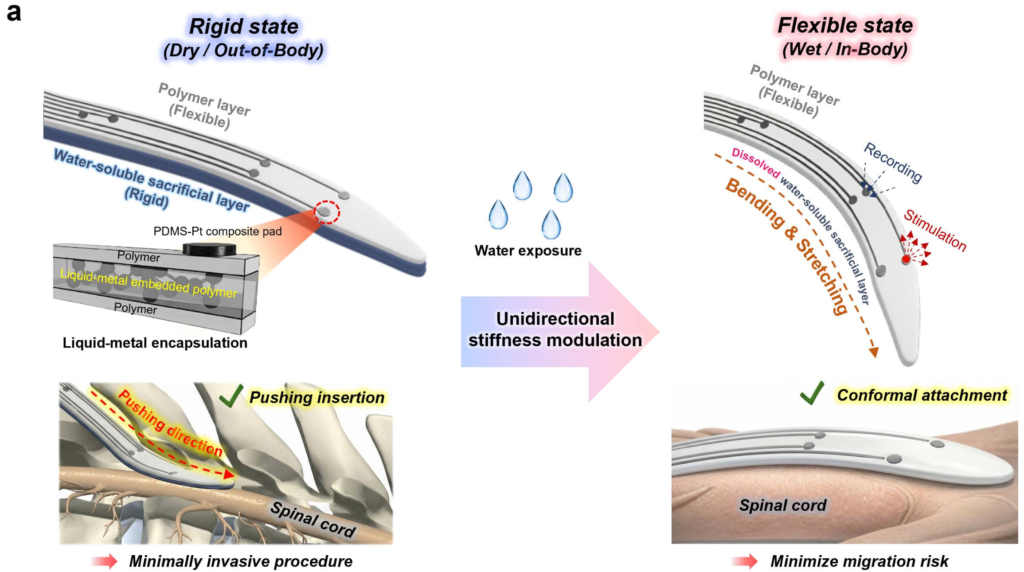
One of the biggest challenges in neuromodulation is designing a device that can be inserted safely into the narrow spinal canal while still being soft enough to move naturally with the surrounding nerves once in place. Traditional implants are either too stiff, which can irritate tissue, or too soft to insert accurately. The POSTECH team solved this problem with a clever shape‑shifting design. Their device stays rigid during insertion but becomes soft within minutes after contacting bodily fluids. This transformation is made possible by a water‑soluble layer that dissolves inside the body, similar to how a capsule melts in the stomach. Once softened, the implant conforms closely to the spinal cord, reducing irritation and improving long‑term comfort.
The researchers also rethought how electrical signals should be delivered. Instead of using solid metal wires, which can produce unstable signals as the body moves, they turned to liquid metal. Because liquid metal maintains consistent electrical performance even when stretched or bent, it allows the implant to send and receive signals more reliably. This approach also lowers manufacturing costs by avoiding expensive semiconductor processes and gold materials.
In animal tests, the device showed strong potential as a two‑way communication tool for the nervous system. When placed on the spinal cords of rats, it successfully lowered blood pressure by regulating the sympathetic nervous system. It also recorded sensory signals triggered by pain, demonstrating its ability to both stimulate nerves and monitor their responses.
The technology could eventually support treatments for a wide range of conditions, including epilepsy, depression, hypertension, paralysis recovery, and overactive bladder. Because it combines mechanical adaptability, stable electrical performance, and cost‑efficient manufacturing, the device represents a meaningful step toward practical, intelligent neuromodulation systems for chronic disease management.
Article from POSTECH: Softens Inside the Body? The Emergence of ‘Transformation Electrodes’
Abstract in npj Flexible Electronics: Unidirectional dynamic stiffness modulation enables easily insertable and conformally attachable spinal bioelectronic device
