
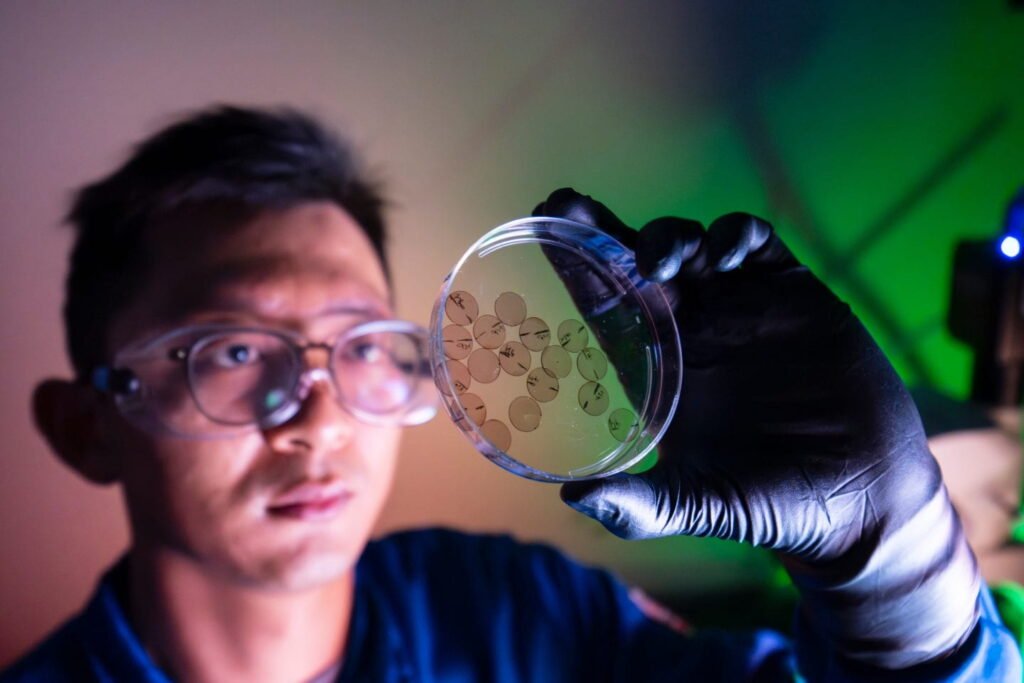
Studying and treating heart disease has long been constrained by the limitations of metal electrodes, which can damage tissue, introduce contamination, and fail to replicate the soft, dynamic environment of the beating heart. Researchers at the University of California, Irvine have engineered a polymeric biohybrid cardiac device that overcomes these barriers by using light instead of metal to electrically and mechanically control living heart tissue. Their work introduces a soft, flexible interface that converts visible light into photocurrents capable of pacing cardiac cells in synchrony.
The platform is built by layering conjugated optoelectronic polymers onto an elastomeric base. The top layer contains donor‑acceptor junctions that generate photocurrents when illuminated with gentle green light. A second composite layer improves charge transport, stability in aqueous environments, and compatibility with living cells. When submerged in culture medium, the illuminated polymer blend produces a charge‑transfer state that drives ionic redistribution at the polymer‑electrolyte interface. This creates a localized electrical stimulus that activates cardiac cells growing on the surface. The researchers note that this mechanism differs from optogenetics because it does not require genetic modification, making it suitable for native cardiac tissue.
To test the system, the team cultured neonatal rat ventricular myocytes on the optoelectronic substrate in an anisotropic, micropatterned arrangement that mimics the organized fiber structure of heart muscle. They then shaped the layered construct into a muscular thin film with a cantilever geometry, allowing them to directly observe bending motions produced by contractions in response to light pulses. This setup enabled simultaneous measurement of electrical pacing and mechanical function.
The device acts as a light‑powered interface that communicates with heart tissue using the same electrical and mechanical language as the myocardium, but without the drawbacks of rigid electrodes, which opens up two immediate applications: drug screening and cardiac disease research. Current in vitro drug‑testing systems rely on electrode‑based pacing or simplified models that fail to capture the complex electromechanical environment of the heart. The UC Irvine platform allows researchers to apply a drug directly to light‑paced cardiac tissue and observe real‑time effects on electrical responsiveness, contractile strength, mechanical strain, and long‑term structural remodeling.
Looking ahead, the team envisions implantable cardiac patches that wrap around diseased or damaged heart muscle to deliver precise, light‑driven pacing therapy. Because the platform is mechanically compliant and free of metal components, it is better suited to the constantly moving heart than conventional pacemaker electrodes. The researchers are working toward versions responsive to longer wavelengths, such as near‑infrared light, which can penetrate deeper into tissue.
Article from UC Irvine: UC Irvine researchers engineer a light-powered biohybrid cardiac interface
Abstract in Cell Biomaterials: Optoelectronic biohybrid platform enables light-controlled cardiac structural and functional feedback
