
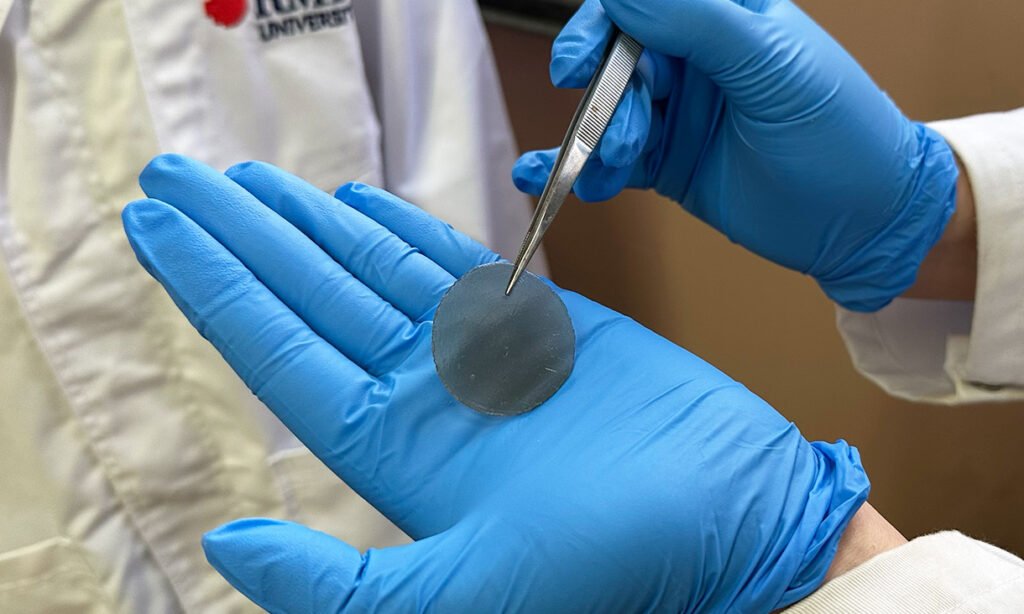
Chronic wounds place a heavy burden on health care systems because they require constant monitoring and frequent adjustments in treatment. Clinicians often struggle to detect infection early enough to intervene effectively, and most dressings are limited to either monitoring or delivering therapy, not both. Researchers at RMIT University in Australia have developed a new type of smart wound dressing that addresses these challenges by integrating real‑time sensing and on‑demand therapeutic release into a single, scalable platform.
The team created a hydrogel dressing embedded with tiny carbon‑based nanoparticles known as carbon dots. These multifunctional nanomaterials act as both sensors and therapeutic agents. Carbon dots are biocompatible and can image and sense chemical changes in a wound while also functioning as artificial enzymes, or nanozymes, that help reduce inflammation. By incorporating them directly into a medically ready hydrogel, the researchers produced a dressing that can detect infection and respond automatically.
The smart patch changes color when the wound’s pH shifts, a common sign of infection. This color change can be read easily using portable smart devices, allowing clinicians or patients to monitor the wound without specialized equipment. When the patch detects infection‑related pH changes, it automatically releases therapeutic nanozymes into the wound to promote healing. Users can also trigger additional release manually by applying gentle pressure to the dressing, giving clinicians more control when extra treatment is needed.
The researchers explain that early detection is essential for managing chronic wounds, and the dual‑function design supports timely intervention. They also note that the fabrication process is simple and scalable because it relies on hydrogels and carbon dots, materials that are already compatible with medical applications. This streamlined approach reduces the complexity that has prevented many smart dressings from reaching clinical use.
Many laboratory‑developed smart dressings fail to translate because they depend on complicated architectures or expensive sensing systems. The RMIT design integrates sensing and therapy into one straightforward platform, addressing key barriers to commercialization. The work also establishes clear design principles that can guide future smart‑dressing development.
Article from RMIT: Smart bandage could heal and monitor wounds at the same time
Abstract in Chemical Engineering Science: Carbon-dot nanozyme-empowered responsive hydrogels for smart wound dressing
