
Chronic wounds often linger because they receive too little oxygen, heal slowly, and are highly susceptible to bacterial growth. These challenges are especially common in people with diabetes or limited mobility, whose impaired circulation makes even small sores difficult to repair. Conventional dressings can protect the wound surface, but they do not deliver antibacterial compounds in a controlled way or adapt to the unique shape of each ulcer. Researchers at the University of Mississippi are developing a 3D printed medicated patch that aims to overcome these limitations by combining customizable structure with sustained antibacterial release.
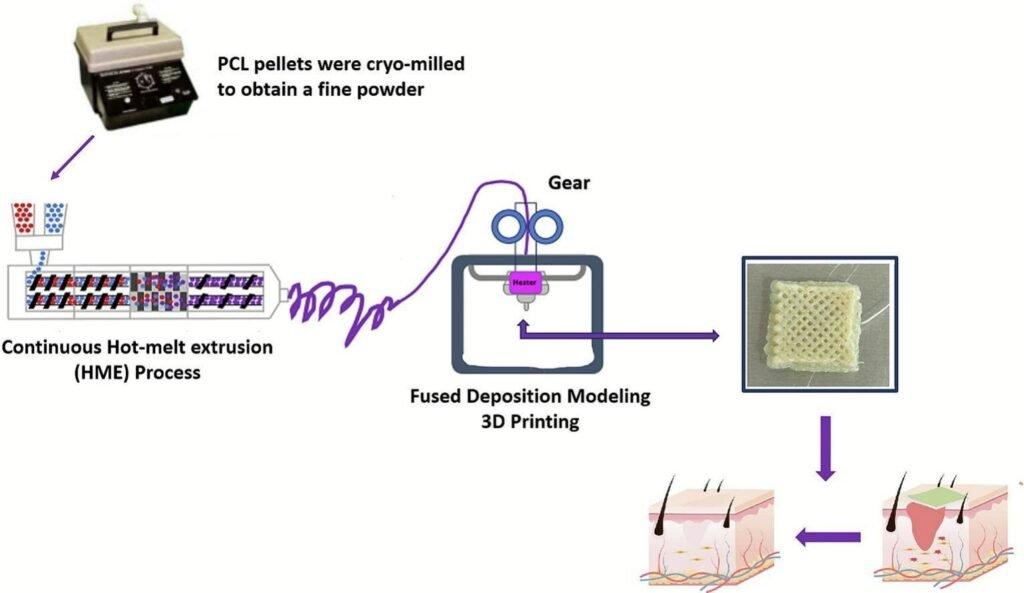
The Ole Miss team created a wound scaffold that can be tailored to the size and geometry of a patient’s ulcer. Because the scaffold is produced through 3D printing, its porosity, thickness, and drug‑loading characteristics can be adjusted to match the needs of different wound types. This flexibility is important for chronic wounds, which vary widely in depth, moisture level, and tissue condition. The printed material is designed to release natural, biodegradable antibacterial agents over time, helping maintain a cleaner wound environment during the extended healing period typical of chronic ulcers.
According to researchers, wounds with poor oxygen supply are particularly prone to becoming persistent. Reduced oxygen slows tissue regeneration and creates conditions in which bacteria can thrive. By delivering antibacterial agents directly to the wound bed, the 3D printed patch is designed to counter these challenges and support more effective healing. The approach reflects a broader shift toward personalized wound care, where treatments are shaped to the patient rather than relying on one‑size‑fits‑all dressings.
Although the current work focuses on antibacterial delivery, the researchers note that future versions of the scaffold could incorporate additional therapeutic ingredients or structural features to further enhance healing. Their progress demonstrates the potential of 3D printing to create low‑cost, customizable wound treatments that address both infection risk and the biological barriers that slow recovery.
Article from Ole Miss: Pharmacy Team Develops 3D-printed Bandage to Help Heal Chronic Wounds
Abstract in European Journal of Pharmaceutics and Biopharmaceutics: Development of 3D-printed chitosan/p-coumaric acid scaffolds for wound healing: antibacterial properties and drug release kinetics
