
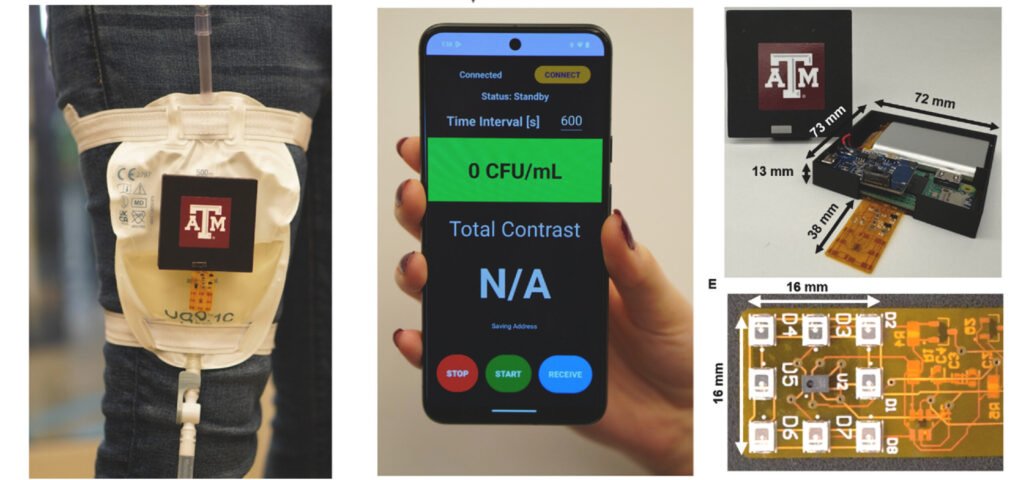
A recent project from Texas A&M University introduces a catheter‑mounted sensor that can detect urinary tract infections at an earlier stage by pairing real time bacterial monitoring with a smartphone app. Urinary tract infections remain one of the most common bacterial infections worldwide, and catheter associated UTIs account for more than half of all hospital acquired cases. Traditional diagnostic methods often require lab cultures that take days to return results, leaving clinicians with limited information during the critical early window when treatment is most effective. The Texas A&M team set out to create a faster, more accessible way to identify infection risk before symptoms escalate.
The new system integrates a small, flexible sensor directly onto the surface of a urinary catheter. As bacteria begin to accumulate, the sensor detects biochemical changes associated with early infection and transmits the data wirelessly to a smartphone. This approach allows clinicians or caregivers to monitor infection risk continuously rather than relying on periodic sampling. The researchers emphasize that early detection is essential because catheter associated UTIs can progress quickly and lead to complications such as bloodstream infections if not treated promptly.
A key advantage of the design is its ability to function without altering the catheter’s normal use. The sensor is thin enough to avoid discomfort and does not interfere with fluid flow. It is engineered to detect bacterial activity rather than waiting for large colonies to form, which is why it can identify infection earlier than standard culture based diagnostics. The smartphone interface provides a simple readout that could be used in hospitals, long term care facilities, or even home care environments where catheterized patients require ongoing monitoring.
The team notes that the technology could reduce unnecessary antibiotic use by distinguishing between early bacterial presence and more advanced infection, helping clinicians make more informed decisions. It may also lower healthcare costs by preventing severe complications that require extended treatment. Future work includes refining the sensor’s sensitivity, expanding the range of detectable pathogens, and validating performance in clinical studies.
By combining catheter embedded sensing with smartphone based analysis, the Texas A&M system offers a practical and timely method for identifying UTIs before they become dangerous. It reflects a broader shift toward real time infection monitoring and could significantly improve outcomes for patients who rely on catheters for long periods.
Article from Texas A&M: New sensor could diagnose UTIs right from your phone
Abstract in Biosensors and Bioelectronics: An integrated wearable fluorescence sensor for E. coli detection in catheter bags
