
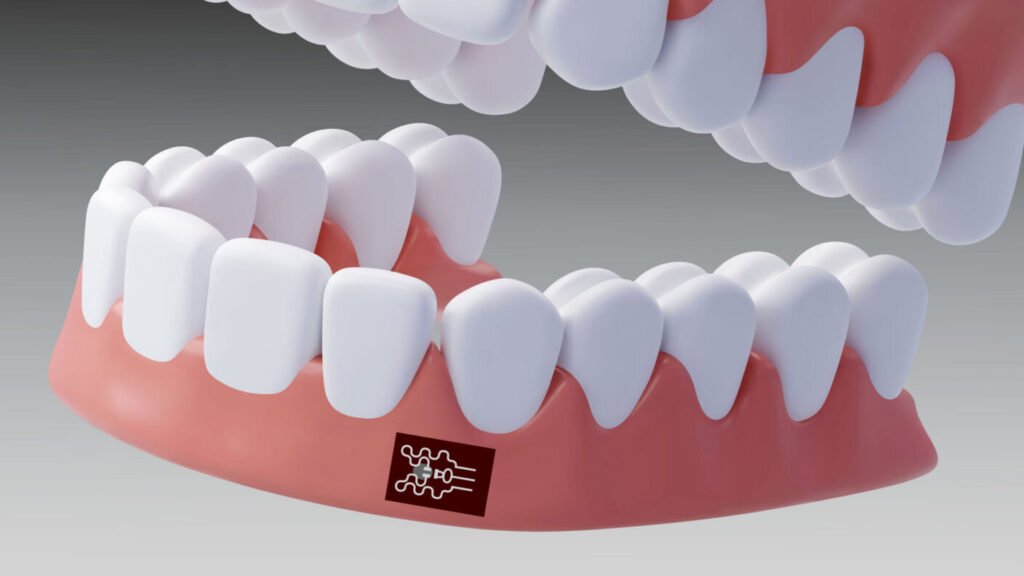
Texas A&M University researchers have introduced an oral biosensor designed to detect early molecular signs of disease by analyzing biomarkers present in saliva. The team developed the device to address a major limitation in preventive healthcare, where clinicians often lack a simple, noninvasive way to monitor biochemical changes that occur before symptoms appear. Saliva contains many of the same biomarkers found in blood, and the researchers aimed to create a platform that could capture these signals without needles, laboratory processing, or specialized equipment.
The biosensor is built around a small, flexible oral insert that sits comfortably in the mouth and continuously samples saliva. Its surface is coated with engineered recognition molecules that bind to specific biomarkers associated with inflammation, infection, metabolic imbalance, and other early indicators of disease. When a target molecule attaches, the sensor produces a measurable signal that reflects its presence and concentration. The team focused on maximizing sensitivity so that the device can detect extremely low biomarker levels, which is essential for identifying disease processes at their earliest stages.
A key advantage of the oral format is its ability to collect fluid passively throughout the day. Unlike blood draws or sweat‑based sensors that require stimulation, saliva is continuously available, allowing the biosensor to track molecular changes in real time. The researchers also designed the platform to be adaptable. By swapping out the recognition elements, the same device architecture can be tuned to detect different biomarkers or multiple markers at once. This flexibility supports the development of diagnostic panels that capture complex disease signatures rather than relying on a single indicator.
The team emphasizes that the biosensor is intended to work with simple readout equipment, making it accessible to a wide range of clinical settings. Its rapid response time could enable clinicians to identify emerging conditions earlier, monitor disease progression more precisely, and evaluate treatment effectiveness with greater immediacy. Ongoing work includes validating the device with clinically relevant samples and expanding the range of detectable biomarkers.
By transforming saliva into a continuous molecular data stream, the Texas A&M oral biosensor represents a step toward more proactive and accessible disease detection. It offers a path to identifying health changes long before symptoms appear, supporting earlier intervention and more personalized care.
Article from Texas A&M: New biosensor offers early warning system for disease
Abstract in Science Advances: Tissue-adhesive hydrogel–MXene biosensor for in situ intraoral TNF-α detection
