
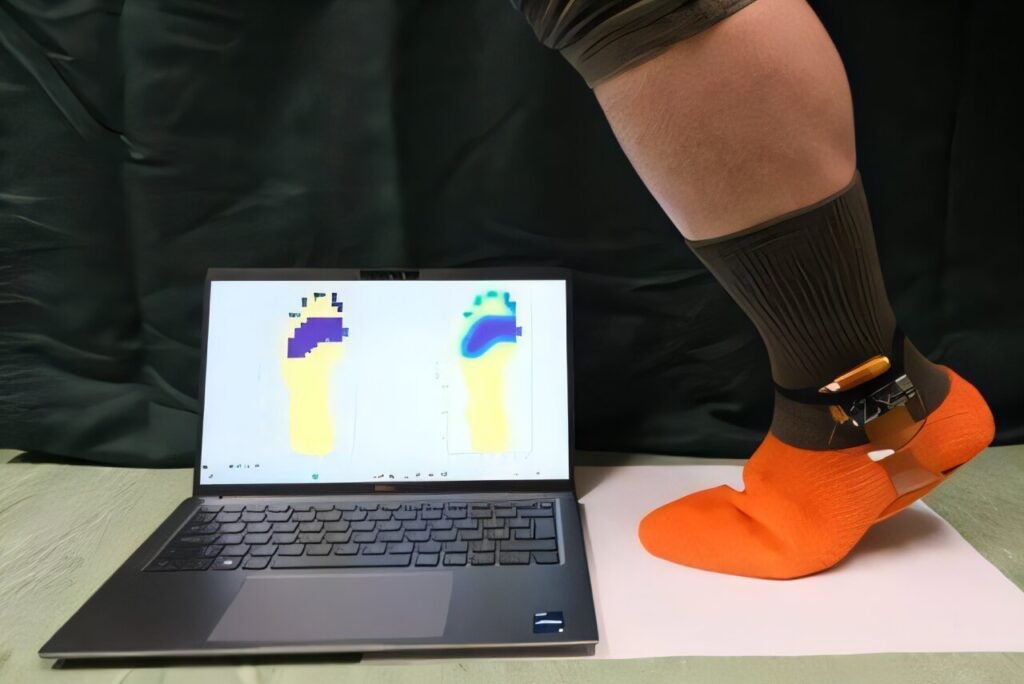
A new invention from a University of Bristol scientist introduces a sensor‑rich shoe designed to monitor gait, balance, and mobility in older adults, inspired by the needs of the researcher’s own 89‑year‑old mentor. The project began when Professor Dave Bull noticed that his former PhD supervisor, Professor David Mayne, was struggling with walking stability after a series of health challenges. Rather than relying on bulky wearables or clinic‑based assessments, Bull set out to create a discreet, everyday tool that could capture clinically meaningful movement data without disrupting daily life.
The result is a shoe embedded with a network of microchips and motion sensors that continuously track how a person walks. The system measures parameters such as stride length, foot pressure, balance shifts, and gait symmetry, all of which can reveal early signs of mobility decline or neurological conditions. The data can be transmitted to clinicians or caregivers, offering a way to detect subtle changes that may indicate increased fall risk or emerging health issues. The team emphasizes that shoes are an ideal platform for this type of monitoring because they are worn consistently and naturally, eliminating the compliance problems that often affect wristbands or clip‑on devices.
A major focus of the design was comfort and discretion. The sensors are embedded in the sole and upper structure of the shoe in a way that preserves normal feel and flexibility. Bull collaborated with engineers and clinicians to ensure that the data captured would be medically useful, not just activity‑tracking metrics. Early testing showed that the shoe could identify gait irregularities that are difficult to spot with the naked eye, providing a richer picture of mobility than standard assessments performed during short clinic visits.
The project also reflects a personal commitment. Bull credits Mayne as a formative influence in his career and wanted to create something that could meaningfully improve his mentor’s independence and safety. The team is now exploring how the technology could be adapted for broader use, including for people recovering from injury, individuals with Parkinson’s disease, or older adults who want to maintain mobility for as long as possible. They are also considering how the shoe could integrate with digital health platforms to support remote monitoring and early intervention.
By embedding advanced sensing technology into an everyday item, the Bristol team has created a practical tool for tracking mobility decline in real time. The smart shoe offers a path toward earlier detection of gait changes, more personalized care, and greater independence for older adults navigating age‑related mobility challenges.
